Cameron Henderson Reappointed Unopposed as DairyNZ Deputy Chair
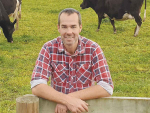
DairyNZ deputy chair Cameron Henderson has been re-appointed unopposed for another term.
 increase font size
 Dan Schmidt, DairyNZ.
Most migrant applicants for a special South Island Contribution Work Visa are in farming, as shown by figures from Immigration NZ.
This data does not reveal how many apply to each sector but DairyNZ says most would be for dairying.
DairyNZ wants farm employers to urge potentially eligible people to apply for the special one-off visa, open to people who hold an essential skills work visa and have worked in the South Island for five years or more.
Applications close on May 22.
Daniel Schmidt, of DairyNZ, said it allows certain workers previously “stuck in a no-man’s-land” to apply for residency.
Despite their having contributed to NZ for years they have had no pathway to residency. Their children may have grown up and attended school here but then had to return to their home country for university or face being charged international student fees here.
Immigration NZ figures reveal that by the end of April, 1329 people had applied for the visa: 916 (69%) had been approved and 413 (31%) declined.
Nearly half of the applicants (419) were farm, forestry and garden workers; 207 were farmers and farm managers.
Schmidt said Immigration NZ has asked the industry to tell migrants the applications will close soon.
Meanwhile, he says the South Island contribution work visa has helped fix one problem but DairyNZ is still pushing for changes to other forms of migrant visa.
Eligibility for different visas is decided on pay rates and ANZSCO (Australian and New Zealand Standard Classification of Occupations) job classifications, and DairyNZ says mismatches affect mid-range workers.
Under current rules, migrants earning at the low end of the pay scale are eligible only for one-year work visas, renewable for up to three years before a one-year mandatory stand-down, and they may not bring family.
High earners may apply for five-year visas, with family and a pathway to residency.
Mid-earners can apply for three-year visas, with family, but not if their positions are classified under ANZSCO as low-skilled, level 5; these include herd manager and dairy assistant.
DairyNZ wants those positions reclassified as level 3 to qualify for the three-year visa.
“That’s quite different,” said Schmidt. “When you think about the stresses involved when you’re applying for a visa, and you don’t know if you’ll be able to stay in the country, having a three-year instead of a one-year visa is significant.
“And there’s the training that goes with it; for an employer the incentives [to employ] are limited if you’re unsure whether you’ll be able to keep the person you’re investing in.”
Schmidt says the long-term solution would be a review of ANZSCO, but it is not clear when that would happen. NZ may have to wait for the Australian authorities.
Meanwhile, DairyNZ is working to “get the ducks in a row”.
DairyNZ deputy chair Cameron Henderson has been re-appointed unopposed for another term.
Farms across the upper North Island are trialling different pasture mixes as part of a research programme that aims to build greater resilience into farming systems.
Election years are always a concerning time for farmers, according to DairyNZ chair Tracy Brown.
Most dairy regions around the country have had a pretty good season so far says Tracy Brown.


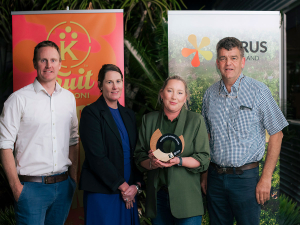
New Zealand's citrus growers were challenged to build their future on the value embedded in their fruit rather than the volume they produce, at Citrus New Zealand's annual gathering in Gisborne on 17 September.
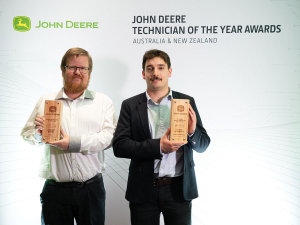
Leading John Deere technicians and apprentices from New Zealand and Australians were recognised at the recent sixth annual JD Technician of the Year Awards, held in Brisbane.
In Dacre, near Invercargill in New Zealand’s South Island, Bruce Dinnington is running a dairy operation unlike any other.
A free online platform aggregating governance vacancies across rural and regional New Zealand has been launched.
Environment Minister Nicola Grigg has announced details of a new rural plastics recycling scheme.
Agricultural drone operators say that a government decision to allow lower-risk drone work without certification won’t lower standards but drive innovation and efficiency.