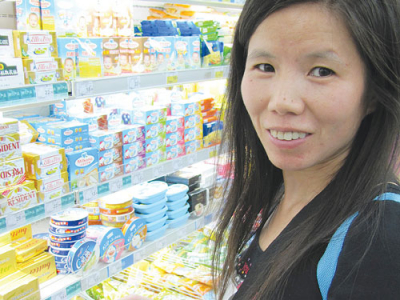
What happens inside the border in China is something this country needs to understand much better, says Tim Knox, MPI director for market access, policy and trade.
“It is a very, very complex and tightly held distribution system,” he says.
The infant formula industry probably has a better grasp, but more broadly we all need to get more savvy.
Chinese regulators are moving to more regulation in the post-border environment.
“Some provinces are putting in place regional traceability schemes, for example, to try to deal with unbelievably complex and not very well structured distribution systems that I have observed in the market,” he told an Infant Formula Council conference in Auckland.
“Any confidence I had that our products sort-of flowed up through the supply chain and ended up with the consumer in the way they left… in the main I would say that is not the case.”
The infant formula industry it is probably much better, but for some of the other primary products we export it is just not possible to have that confidence.
It is “a risk to New Zealand” and something we need to get more focused on.
Knox says maintaining and building relationships is key for MPI.
“We need to keep pace with the fast moving environment and consumer expectations up there which then drive the regulators.”
Having a strong team in Beijing is important for monitoring that.
The Belt and Road initiative – a trade pathway from Oceania through Asia to Europe planned by China — will provide NZ with opportunities to get in behind some of its trade facilitation ambitions.
“If we can provide win-win benefits for China as well, it can provide significant benefits.”
Companies need to play their role, Knox says. Infant formula manufacturers play a very active part.
“But all need to be as savvy as they can be because it is a very different part of the world to operate in.”