
Federated Farmers Welcomes ACT’s New Farming Policies
Federated Farmers has welcomed new rural policies released by ACT, saying they align closely with its own election priorities.
 increase font size
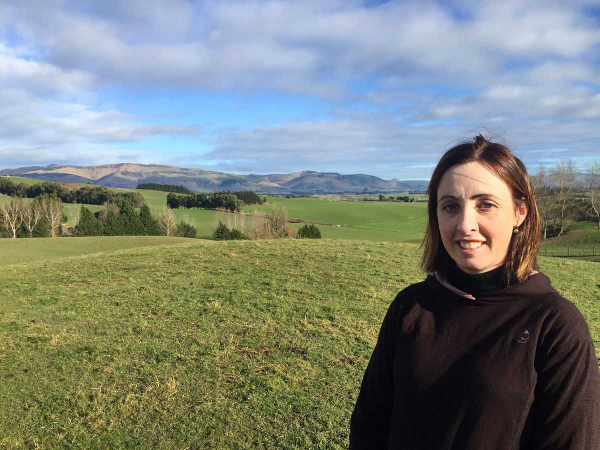 Southland farmer Bernadette Hunt says there are so many different regulatory processes underway now and most farmers have understandably lost track, and many have lost interest.
After a decade of consultation and court battles, Environment Southland has officially adopted a plan to prevent further decline in the region's water quality.
However, for most farmers in the region the milestone has passed without much attention.
Federated Farmers Southland spokesperson Bernadette Hunt says the rules in the Southland Water and Land Plan are largely assumed to have been operative already - and in many cases they are.
"There are so many different regulatory processes underway at the moment that most farmers have understandably lost track, and many have lost interest," she told Rural News.
The plan adopted the approach that land and water should be managed in a holistic way, recognising the connectivity between surface and groundwater, and between freshwater, land and the coast. The plan also introduced new rules for activities like intensive winter grazing, stock access to waterways and land use intensification.
Hunt believes the adoption of the plan this month will have little impact as most farmers already consider them to be the rules.
She notes that plan has been unfolding for around 10 years now since the initial pre-consultation work, is incredibly large and complex, and has wide ranging ramifications.
"However, by and large these have already been implemented across the province and are already considered to be the rules by most," she says.
"The plan was intended to be a first step to 'hold the line' on water quality while limit setting processes were developed. In reality, and because of the long and drawn-out process involved, it goes much further than that."
Hunt, who has led the Federated Farmers' charge on environment issues in the region, believes that all parties recognise that the plan isn't perfect.
"It was always intended to be a first step in the process, but took way longer than anyone expected and has had a lot of legal input, which doesn't necessarily equate to practical outcomes.
"But it has been through a very long and tedious process of submissions, hearings and court, and the most impractical provisions have been addressed."
Environment Southland chairman Nicol Horrell said this decision marks the culmination of nearly ten years' work, six of which have been in the Environment Court working through the resolution of parties' appeals.
"This plan is the product of a robust process over many years and is underpinned by Southland-specific science presented by all parties.
"While this has been a long process, it's produced a plan that is tailored for Southland and has involved many parties and individuals who have an interes in Southland's environment.
"Individuals from the community to major stakeholders, industry bodies and other councils have had their say, and this level of engagement provides real benefits for the region."
Horrell says the plan, along with the on-farm and community actions it requires, provides a robust, foundation for continuing to develop a Southland solution to its water quality challenges.
"It is tailored to our region and our communities."
Federated Farmers has welcomed new rural policies released by ACT, saying they align closely with its own election priorities.

Federated Farmers is backing Feilding High School’s call to keep Agriculture and Horticultural Science as a standalone subject in Year 11.
National’s pledge to introduce 19 new national standards shows the party is serious about getting Wellington out of farming, Federated Farmers says.
Mobile phone coverage and reliability are deteriorating in rural areas, and farming families are bearing the cost, according to a Federated Farmers survey.
Central Otago District Council (CODC) has voted against a plan to spread treated sewage sludge from Cromwell and Alexandra on farmland near Lauder, a decision Federated Farmers says reflects strong opposition from rural residents.


Federated Farmers has welcomed new rural policies released by ACT, saying they align closely with its own election priorities.

Rural Contractors NZ says proposed changes to land transport rules for agricultural vehicles are a welcome response by the Government to out of date regulations which have seen members hit with huge fines.
Alliance is calling for final applications for its 2027 Graduate Programme, with applications closing on Sunday 25 October.
Decades piloting planes has ensured vet and farmer David Hayes is focused on safety. So, after a serious accident while welding on farm, he is sharing his experience so others can learn from it.
Canterbury milk processor, Synlait Milk has confirmed Leon Fung as its chief executive officer.
OPINION: Making it easier to collect rainwater and use it to grow crops and livestock is a no brainer.