Egmont Honey Buys Tweeddale's, Now NZ's Biggest Apiary
New Plymouth-based Manuka honey exporter Egmont Honey has completed its acquisition of Taihape beekeeping business Tweeddale's Honey, with settlement finalised on Friday, 18 September.
 increase font size
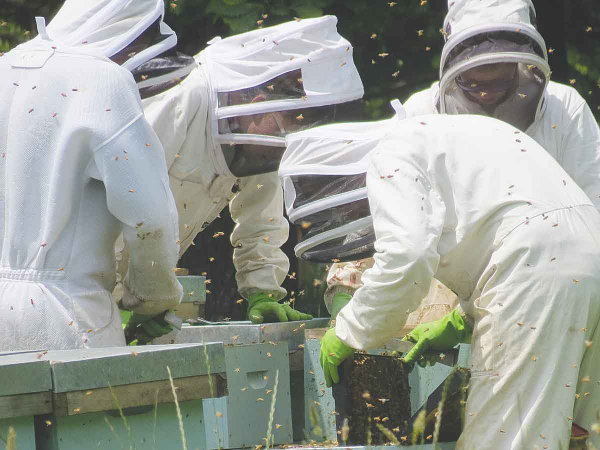
New Zealand's apiculture industry is still growing, according to a new report.
The Ministry for Primary Industries has released its annual Apiculture Monitoring Programme Report for the 2018/19 season, which confirms the New Zealand apiculture industry is still growing.
The number of registered hives increased 4% on the previous season to 918,026 in June last year while the number of registered beekeeping businesses also increased, up 8% to 9,282.
The report estimates the 2018-19 season produced an estimated 23,000 tonnes of honey, up by 3,000 tonnes (15%) on the previous year, driven by the increase in hive numbers.
“While it was a good result from a production and yield perspective, along with a small increase in export value, there was a significant fall in average honey prices paid to New Zealand beekeepers in the 2018-19 season for most honey types apart from monofloral mānuka honey,” says Sean Goodwin, deputy chair of Apiculture New Zealand.
While the data is not yet available for the 2019-20 season, industry participants estimate the total honey crop increased further, possibly up 10% on the record 2018-19 crop.
For producers of non-mānuka honey, this represents mixed fortunes.
Goodwin says prices have continued to fall in this category over the past year and have weakened further recently. However, more competitive prices have generated renewed international interest recently, and export volumes have started to rise.
Unlike the below average yields for mānuka honey in 2018-19, weather conditions over the recent summer enabled a much stronger mānuka harvest across the country.
International demand for mānuka honey is still positive and has recently benefited from consumers responding to Covid-19 with a renewed interest in natural food sources like honey.
This was evident in April 2020 trade figures. “Monofloral mānuka honey exports were up 23% on March. Total honey exports from New Zealand were higher in April than in any previous month,” says Mr Goodwin.
Looking ahead, awareness of mānuka honey has certainly been raised internationally, however it is likely to be some time before we know how much of that demand will be retained long-term.
“The key challenge for the industry to remain sustainable is to increase the market profile of New Zealand honey to help boost international sales, and lift returns to beekeepers.”
The report is available here.
New Plymouth-based Manuka honey exporter Egmont Honey has completed its acquisition of Taihape beekeeping business Tweeddale's Honey, with settlement finalised on Friday, 18 September.

Testing confirms H5 bird flu in a single northern giant petrel, found dead on a remote Cape Palliser beach in the Wairarapa, says Dr Mary van Andel, the Ministry for Primary Industries' (MPI) Chief Veterinary Officer.
The apple sector is working with the Government to unlock access to two key markets that could bring millions in revenue for apple growers.
A Palmerston North shearer has been sentenced to six months' community detention and 12 months' supervision after being found to have physically abused three lambs while shearing them.
OPINION: A simpler, clearer, more effective Recognised Seasonal Employer (RSE) scheme.


Farmer-owned fertiliser company, Ballance Agri Nutrients is welcoming National’s plan to negotiate security agreements with key supplier countries to protect New Zealand-bound products from export restrictions and greater supply chain certainty.

Carrfields has announced the appointment of Stu Hall to the newly created role of chief operating officer, Carrfields Ltd, reflecting the continued growth of their agribusinesses and the need to ensure the company has the leadership capacity and support in place as it pursues the emerging opportunities ahead.
New Zealand's role is not to compete with Indian growers, according to NZ Apples and Pears.
The potato industry is celebrating the success of two rising stars - James Blair, the 2026 Young Grower of the Year and runner-up and innovation award winner, Amber Davy.
Twenty-eight emerging leaders from across the horticulture sector spent two days last month learning valuable skills and connecting with industry experts.
There are five entrants in this year’s Young Horticulturist of the Year, competing in a series of technical, practical, business and leadership challenges.