Northland Study: Emissions Cuts "Unsustainable" for Dairy
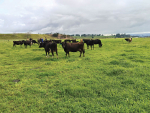
A five-year study has found that the cost of reducing emissions without technology may be significant and unsustainable for Northland dairy farmers.
 increase font size
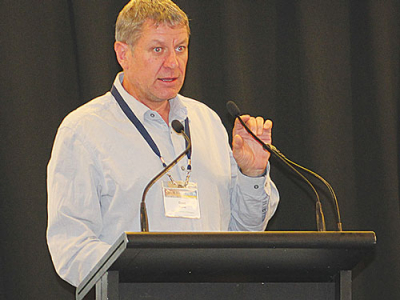 Dave Frame.
A reduction of only 0.3% annually in methane emissions is required to ensure this gas no longer contributes to climate temperature warming, says Dave Frame, professor of climate change, Victoria University.
Any further methane reduction would have a cooling effect on global temperature. But if reducing short-lived gases like methane came at the expense of carbon dioxide (CO2) reductions, we could end up with a warmer world, he told the Climate Change and Business Conference 2018 in Auckland.
Frame suggests the conversation about methane could be “tied up with a whole lot of issues” other than climate change.
He says short-lived pollutants like methane only hang around for a period of time, so at a stable level new pollutants are just replacing ones that have decayed and the problem isn’t getting worse. Long lived gases such as CO2 have a cumulative effect.
Frame says in considering what level of emissions reduction is required to prevent warming by greenhouse gases (GHG), in the case of CO2 and nitrous oxide (N2O) you need negative emissions immediately.
“But for methane you can retain 99.7% per annum total emissions. So if you decline 0.3% per annum you are no longer warming the climate; we think this difference is significant,” he told the conference.
“It is a dramatic difference and shows the difference between long-lived and short-lived gases. You have time flexibility with short-lived gases that you don’t have with long-lived gases. So with CO2 -- because every unit adds to the climate -- you have to start now and reduce as fast as possible. With methane and other short-lived gases you can wait and end up on the same temperature trajectory that you would have whether you made the cuts now or later.”
This is provided you make the same level of cuts eventually, he says.
“You can buy a bit of time for CO2 by going after methane…. But you can go after methane now or later and get the same benefit. If you don’t go after it at all you don’t get any benefit. If methane cuts come at the expense of CO2 cuts, you end up with a warmer world.”
Frame, who works with international researchers, says they have developed a better way to compare the different GHG effects on warming than the previous method used called GWP100.
“We have a better way to compare gases than we did. Previous statements, e.g. that methane makes up 48% of emissions, are based on GWP100 equivalents – always comparing to CO2 equivalents; it is not a good method for measuring temperature change.”
CO2 reduction is the “main event” for reducing global warming, he says.
“I think sometimes people in New Zealand forget that, because the conversation about methane is tied up with a whole bunch of other issues; they want to advance their interests one way or another.”
A five-year study has found that the cost of reducing emissions without technology may be significant and unsustainable for Northland dairy farmers.
OPINION: With the winter months officially here, I trust all is well at your place.
OPINION: The global crusade against fossil fuel is gaining momentum in some regions.
Specialist horticulture and viticulture weather forecasters Metris says the incoming Cyclone Vaianu is likely to impact growers across the country.
OPINION: Your old mate has long dismissed the Greens as wooden bicycle enthusiasts with their heads in the clouds, but it looks like the ‘new Greens’ may actually be hard-nosed pragmatists when it comes to following voters.



Celebrating 50 years in the rural landscape of Central Canterbury and beyond, Ashburton-based Carrfields, has been the exemplar for all aspects of modern agriculture via its extensive range of services including supply, growing, agronomic advice and marketing.
For Taupiri dairy farmers Logan and Sian Dawson, their involvement in the NZ Dairy Industry Awards has been a key catalyst in the growth of their business - the experience helping shape how they approach the farm ownership pathway they are pursuing today.
West Otago dairy farmer Luke Kane has been awarded the 2026 Rabobank Dr John Morris Business Development Prize.
OPINION: As the general election approaches, political parties are churning out policies in the hope of attracting more votes.
An LIC bull, Tronnoco AR Sadio-ET S3F, bred by Tony and Keri O'Connor of Tronnoco Farming Co Ltd near Timaru, has won the 2026 Mahoe Trophy.
With forecasters advising El Niño conditions will develop through winter and strengthen into spring and summer, Ballance Agri-Nutrients is encouraging farmers and growers to think ahead about nutrient planning and be prepared to work around challenging weather conditions.