
Susan O'Regan Appointed New Chair of QEII National Trust
Minister of Conservation Hon Tama Potaka has appointed Susan O'Regan as Chair of the Queen Elizabeth II National Trust (QEII) for a three-year term.




 increase font size
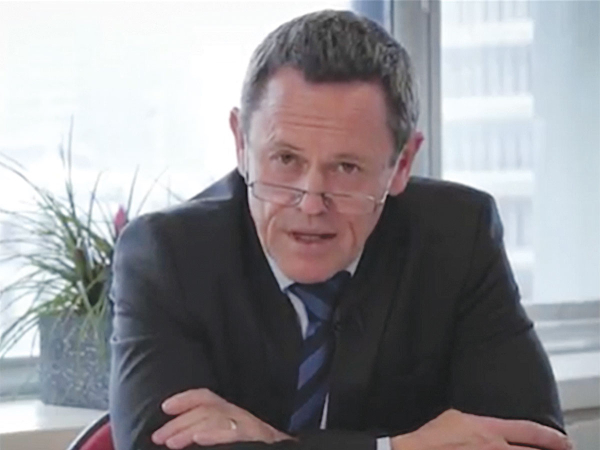 Parliamentary Commissioner for the Environment, Simon Upton.
The Parliamentary Commissioner for the Environment, Simon Upton, wants environmental information to be treated as critical national infrastructure.
Upton says New Zealand has good environmental information but the problem is that the system used to collect, manage and share it lacks coordination, leadership and long-term stewardship.
A report released last week by Upton noted that New Zealand is undertaking major reforms across resource management, science, water services, local government and environmental reporting.
This presents a rare opportunity to place environmental information at the centre of environmental management.
The report - Unlocking New Zealand's Environmental Information - finds that while vast amounts of environmental data are collected across government, councils, research organisations, iwi, industry and community groups, much of it remains difficult to find, access and use.
The report argues that high-quality environmental information is fundamental to good decision-making, effective environmental management, public accountability and investment decisions.
"Whether we're managing water, planning infrastructure, responding to climate risks or protecting biodiversity, good decisions depend on good information," says Upton.
"The problem is not that we lack environmental information - the problem is that the system used to collect, manage and share it lacks coordination, leadership and long-term stewardship."
The report identifies fundamental weaknesses in New Zealand's current environmental information system, including fragmentation, duplication, data gaps, inconsistent standards, and barriers to accessing and reusing information.
Rapid advances in technologies, such as remote sensing, automated sensors, environmental DNA (eDNA) and artificial intelligence as well as digital infrastructure and communications technologies, present a significant opportunity to improve how environment information is collected and used.
"Innovative technologies can help us better understand what is happening in our environment, often more quickly, comprehensively and cost-effectively than before.
"But technology alone will not solve the problem. To realise these benefits, we need stronger leadership, common data standards and a system designed to make information accessible and useful."
The report notes that recent investments in environmental data and digital infrastructure through Budget 2026 are a positive first step but says broader system-wide reform is required.
"If we can afford to fast-track ports, mines and motorways, we can afford to fast-track the upgrading of our environmental management system.
"Better information will not make difficult decisions for us. But without it, we are making those decisions in the dark."
Minister of Conservation Hon Tama Potaka has appointed Susan O'Regan as Chair of the Queen Elizabeth II National Trust (QEII) for a three-year term.
Climate, nature and animal wellbeing make up Fonterra's refreshed sustainability roadmap released last week.
New Zealand's Emissions Trading Scheme (NZ ETS) encourages afforestation while not achieving climate goals, says a new report released by the Parliamentary Commissioner for the Environment, Simon Upton.
A new digital assistant is now helping Ballance Agri-Nutrients farmers speed up nutrient information and ordering.
OPINION: At Fieldays this year, one theme kept surfacing across the sector: global shocks are no longer something that happens “over there”. They are now translating quickly into local, farm-level impacts through increasingly complex and connected channels.


New Zealand's citrus growers were challenged to build their future on the value embedded in their fruit rather than the volume they produce, at Citrus New Zealand's annual gathering in Gisborne on 17 September.
Leading John Deere technicians and apprentices from New Zealand and Australians were recognised at the recent sixth annual JD Technician of the Year Awards, held in Brisbane.
In Dacre, near Invercargill in New Zealand’s South Island, Bruce Dinnington is running a dairy operation unlike any other.
A free online platform aggregating governance vacancies across rural and regional New Zealand has been launched.
Environment Minister Nicola Grigg has announced details of a new rural plastics recycling scheme.
Agricultural drone operators say that a government decision to allow lower-risk drone work without certification won’t lower standards but drive innovation and efficiency.





OPINION: The same mainstream media muppets that brought you Jacindamania in 2017 have been flat out pimping for the Opportunities…
OPINION: Your old mate reckons the atrocious way farmers in the UK are treated by their lords and masters in…




