India FTA Removes 33% Tariff on NZ Sheepmeat
New Zealand’s red meat sector has welcomed the India-New Zealand Free Trade Agreement taking effect, which removes India’s 33% tariff on New Zealand sheepmeat.
 increase font size
 The primary sector is forecast for a bumper year ahead after some challenging past seasons.
The primary sector is forecast for a bumper year ahead after some challenging past seasons of wet conditions, earthquakes, cyclones, and volatile global commodity prices.
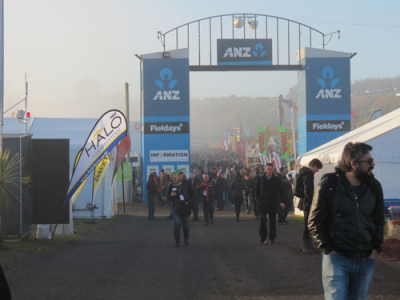
Primary Industries Minister Nathan Guy made the comments as he Ministry for Primary Industries (MPI) released its latest Situation and Outlook for Primary Industries (SOPI) at the National Fieldays.
MPI is forecasting that primary sector exports will grow to $41.6 billion in the year to June 2018 – this is an increase of 9.1% and would be the highest level ever, says Guy.
“Strong forestry and dairy prices, combined with increasing production of apples, wine, and kiwifruit have underpinned growth for the year ending June 2017.
“Dairy prices for most products are forecast to remain at or near current levels as global demand and supply rebalance, while high forestry prices will continue to encourage record harvest levels.
“Horticulture exports are also forecast to continue their strong growth across a range of wine, fruit, and vegetable products. Meat and wool exports are forecast to recover to $8.5 billion following an almost 10 percent fall in export values for the year ending June 2017,” says Guy.
New market opportunities and diversification into higher value products such as chilled meat, retail ready products, and nutraceuticals will help to further increase the value of our primary sector exports.
“This week’s National Fieldays is a great showcase of the range of innovative and world-leading kiwi food producers who are really helping underpin the performance of our economy,” says Guy.
“The Government will continue to back the sector and support our exporters on-farm, such as through the Primary Growth Partnership and the Sustainable Farming Fund.
“The Government is also supporting our exporters in-market by investing $134 million over the next four years to achieve the objectives in Trade Agenda 2030.
“This strategy provides more support to primary sector exporters to diversify, greater resource to government to tackling non-tariff barriers, and aims to have 90 percent of our goods exports covered by free trade agreements (FTAs) by 2030,” says Guy.
Link to SOPI (June 2017) - http://www.mpi.govt.nz/document-vault/18443
New Zealand’s red meat sector has welcomed the India-New Zealand Free Trade Agreement taking effect, which removes India’s 33% tariff on New Zealand sheepmeat.

New Zealand's role is not to compete with Indian growers, according to NZ Apples and Pears.
The red meat sector is in great heart.
New Zealand's red meat and fifth-quarter exports reached $867 million in August, up 23% on the same month last year, as stronger returns lifted earnings across all major markets.
Meat Industry Association data, released alongside the Red Meat Sector conference in Wellington, shows export value climbing across the US, China, UK and Canada.


Alliance is calling for final applications for its 2027 Graduate Programme, with applications closing on Sunday 25 October.
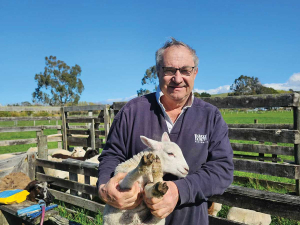
Decades piloting planes has ensured vet and farmer David Hayes is focused on safety. So, after a serious accident while welding on farm, he is sharing his experience so others can learn from it.
Canterbury milk processor, Synlait Milk has confirmed Leon Fung as its chief executive officer.
OPINION: Making it easier to collect rainwater and use it to grow crops and livestock is a no brainer.
As part of its Election 2026 coverage, Rural News asked political parties how they would help pull the arable sector out of the doldrums. Here's what they said:
Farmers are being encouraged to rethink how they manage waste on farm with the launch of ruralwastesorted.co.nz, a new website bringing together practical tips, real farmer experiences and resources.