Federated Farmers Welcomes ACT’s New Farming Policies
Federated Farmers has welcomed new rural policies released by ACT, saying they align closely with its own election priorities.
 increase font size

Federated Farmers told Environment Southland (ES) at an annual plan hearing their proposal to heap additional costs on to the region's dairy farmers, by increasing a rating differential on dairy land use, makes no sense.
"It is our view that you are simply imposing an environmental tax on one land use in Southland based entirely on perception," said Russell McPherson, Southland provincial president.
"Dairy farms comprise only 3.6% of the total number of rating units yet, if this proposal goes ahead, will be paying 41% of the property value based general rates.
"In total, the dairy sector is already paying their fair share for what are Environment Southland's public good resource management responsibilities, but it is specifically and solely targeted through the differential as if it was failing to meet its obligations. That could not be further from the truth.
"Taken at face value the dairy differential indicates that if there was no dairying in the region then there would be no water quality issues. Clearly, this is not the case. Nor is it the case that the dairy sector is the only sector which needs to do better to address water quality.
"If the differential is nothing about recognising the costs attributed to ES work and a blatant environmental tax then the differential does not recognise or incentivise individual farmer behaviour. It is like handing a speeding ticket to every driver just for getting in the car. It is simply a tax for being a dairy farmer.
"If you are trying to put dairying in Southland on the back foot and alienate farmers then you are on the right track. You will not engage at a farm level with dairy farmers during any response to the NPS for freshwater by telling them they have to pay you to tell them what to do.
"The dairy differential detracts from the goodwill felt towards council from the very dairy farmers council should be supporting – the dairy farmers who are doing things the right way and leading environmental on farm best practice though massive investment and innovation.
"Council's decision on whether or not to increase the costs allocated to the dairy sector through the dairy differential this year is actually a decision on how it perceives the sector and how water quality issues in Southland will be addressed.
"If the intention is to develop a partnership approach to identifying the mechanisms to best address resource management issues, then the dairy differential is a bad idea.
"If the intention is to recognise and incentivise good practice, then the dairy differential is a bad idea. If the intention is to require all sectors of the community to do a better job of resource management then the dairy differential, is a bad idea.
"If the differential is an attempt to identify a scapegoat, distance this council from a key sector in the region and absolve all other resource management users from responsibility, then the dairy differential is a good step," McPherson says.
Federated Farmers has welcomed new rural policies released by ACT, saying they align closely with its own election priorities.

Federated Farmers is backing Feilding High School’s call to keep Agriculture and Horticultural Science as a standalone subject in Year 11.
National’s pledge to introduce 19 new national standards shows the party is serious about getting Wellington out of farming, Federated Farmers says.
Mobile phone coverage and reliability are deteriorating in rural areas, and farming families are bearing the cost, according to a Federated Farmers survey.
Central Otago District Council (CODC) has voted against a plan to spread treated sewage sludge from Cromwell and Alexandra on farmland near Lauder, a decision Federated Farmers says reflects strong opposition from rural residents.


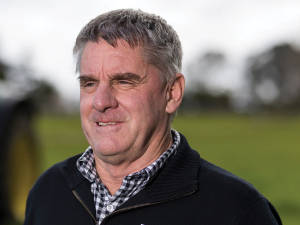
Federated Farmers has welcomed new rural policies released by ACT, saying they align closely with its own election priorities.

Rural Contractors NZ says proposed changes to land transport rules for agricultural vehicles are a welcome response by the Government to out of date regulations which have seen members hit with huge fines.
Alliance is calling for final applications for its 2027 Graduate Programme, with applications closing on Sunday 25 October.
Decades piloting planes has ensured vet and farmer David Hayes is focused on safety. So, after a serious accident while welding on farm, he is sharing his experience so others can learn from it.
Canterbury milk processor, Synlait Milk has confirmed Leon Fung as its chief executive officer.
OPINION: Making it easier to collect rainwater and use it to grow crops and livestock is a no brainer.