Federated Farmers Backs Year 11 Agricultural Science
Federated Farmers is backing Feilding High School’s call to keep Agriculture and Horticultural Science as a standalone subject in Year 11.
 increase font size
 Education Minister Erica Stanford.
Rural Women New Zealand (RWNZ) and Federated Farmers say they welcome the announcement last week that the Government will increase the conveyance allowance by 30%.
The conveyance allowance is a payment made to parents and caregivers to contribute toward the cost of getting students to school or to the nearest school bus stop.
For rural families whose school bus routes were cancelled before the Ministry of Education paused further changes in March, it is often the only financial support available to meet the cost of getting children to school.
The increase is the first since 1985 and will remain in place for 12 months or until fuel prices drop below $3 per litre for four consecutive weeks.
Education Minister says the fuel price volatility, caused by Iran's blockade of the Strait of Hormuz, is hitting some schools harder than others.
She says those particularly impacted are the schools reliant on diesel and schools where students face longer distances when travelling to and from school.
“Our priority is to ensure students are attending school and are engaged in their learning. Recently, I directed the Ministry of Education to contact every single school to understand the impact of fuel cost pressures on their individual circumstances so that targeted, temporary and timely responses can be designed.
“As a result of this engagement, we are rolling out interim support for the schools most likely to experience challenges from fuel cost-pressures, while simultaneously planning for a range of potential future scenarios.”
Federated Farmers education spokesperson Richard Dawkins says the funding is "sensible, financially prudent and targeted assistance that will make a difference for rural schools".
"The huge spike in fuel prices - particularly diesel - from the Middle East conflict has hit rural schools particularly hard," Dawkins says.
"Students and teachers in rural areas face longer distances when travelling to and from school.
"Smaller rural schools have the same or similar fixed costs to much bigger schools but when your roll is a couple of dozen, vs 200-300-plus, dividing costs that are per-pupil based across that smaller roll is a lot tougher."
RWNZ Education Policy Action Advisory Group Convenor, Frances Beeston says that while the increase in the conveyance allowance is a welcome step, her organisation is keen to see policy review progress.
Recent changes to the Ministry for Education's school bus routes have made getting to school more difficult for rural families.
"The cancellation of rural school bus routes is death by a thousand cuts for rural communities. It is not just about getting children to school, it is about the long-term health and wellbeing of the communities we live and work in,” Beeston says.
RWNZ says it has been working closely with Federated Farmers and the NZ Rural Schools Leadership Association calling for a review of school bus routes and eligibility criteria.
Federated Farmers is backing Feilding High School’s call to keep Agriculture and Horticultural Science as a standalone subject in Year 11.

National’s pledge to introduce 19 new national standards shows the party is serious about getting Wellington out of farming, Federated Farmers says.
Mobile phone coverage and reliability are deteriorating in rural areas, and farming families are bearing the cost, according to a Federated Farmers survey.
Pāmu has welcomed Taranaki student Paige Burston as its newest First Foundation Scholar, supporting her journey towards a career in agriculture and animal science.
Central Otago District Council (CODC) has voted against a plan to spread treated sewage sludge from Cromwell and Alexandra on farmland near Lauder, a decision Federated Farmers says reflects strong opposition from rural residents.


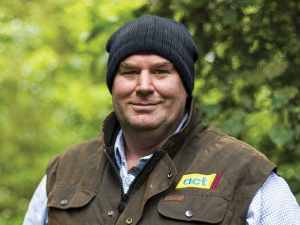
As part of its Election 2026 coverage, Rural News asked political parties how they would help pull the arable sector out of the doldrums. Here's what they said:
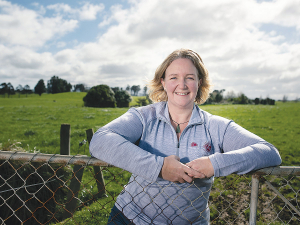
Farmers are being encouraged to rethink how they manage waste on farm with the launch of ruralwastesorted.co.nz, a new website bringing together practical tips, real farmer experiences and resources.
New Zealand Winegrowers (NZW) is celebrating the India-New Zealand Free Trade Agreement (FTA) coming into force today, bringing New Zealand wine improved access to one of the world’s fastest-growing economies.
New Zealand’s red meat sector has welcomed the India-New Zealand Free Trade Agreement taking effect, which removes India’s 33% tariff on New Zealand sheepmeat.
More than 95 per cent of New Zealand’s forestry and wood exports to India can now enter tariff free as the New Zealand-India Free Trade Agreement comes into force today.
Federated Farmers is backing Feilding High School’s call to keep Agriculture and Horticultural Science as a standalone subject in Year 11.