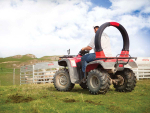
Patterson: Rural NZ Faces a "Massive" Infrastructure Deficit
The Minister for Rural Communities, Mark Patterson, says there's a massive infrastructure deficit in rural areas.
 increase font size
 The Copper Services Investigation is focused on determining whether competitive, affordable alternatives to copper exist.
The Commerce Commission says connectivity options for rural New Zealanders are front-of-mind as it begins a formal investigation into the future of the copper network.
Telecommunications Commissioner, Tristan Gilbertson says an approach paper released yesterday for the Copper Services Investigation is the first step in the process, scheduled for completion by 31 December 2025.
The investigation could see copper deregulated outside fibre areas.
“Our copper network has been the backbone of telecommunications services for generations and has served us well – as have the regulatory protections wrapped around it. This investigation is about making sure that regulation keeps pace with change and remains fit-for-purpose,” he explains.
The Copper Services Investigation is focused on determining whether competitive, affordable alternatives to copper exist – and, if so, whether removing or reshaping copper regulation is in the best interests of consumers.
Gilbertson says it comes at a time of unprecedented technological change in the telecommunications sector, including the arrival of satellite-based broadband which the Commission claims could be a game-changer for rural New Zealand.
“This investigation coincides with a shift in the dynamics of competition in rural areas that we’ve never seen before,” Gilbertson says.
“Satellite-based services such as Starlink are bringing urban levels of broadband performance to the most remote areas of New Zealand,” he says. “Mobile operators and regional wireless internet service providers are also expanding the capacity and reach of their broadband services.”
Gilbertson says the Commission’s monitoring shows that less than half of rural households outside fibre areas are served by copper.
“Rural consumers are increasingly shifting off copper as demand for more robust connectivity and internet performance grows,” he says.
The Commission is seeking submissions from stakeholders on the proposed approach by 5pm, Wednesday 22 May 2024.
It will then invite cross-submissions by 5pm, Friday 7 June 2024.
The Commission must complete the investigation by 31 December 2025 and determine a recommendation to the Minister.
The Minister for Rural Communities, Mark Patterson, says there's a massive infrastructure deficit in rural areas.

Federated Farmers' new vice president Sandra Faulkner says the issue of adverse events emergency management and infrastructure needs to be taken out of the three-year political cycle.
The Commerce Commission has finalised new information disclosure requirements for local councils and water organisations that deliver water supply and wastewater services.
OPINION: The phasing out of copper network from communications is understandable.
Rural communities say support is required to shift away from the copper network that has been the only source of internet connection for some parts of rural New Zealand.


Safer Farms is urging farmers to make sure everyone working on farm has safe, suitable footwear for the job.

The Government is backing work on a community-led water storage scheme that could irrigate up to 11,000 more hectares of the Poverty Bay flats, Agriculture Minister Todd McClay says.
Agri-tech company Herd-i has become a new all-region sponsor of the New Zealand Dairy Industry Awards (NZDIA), the largest nationwide celebration of excellence in the dairy sector.
Four candidates have been confirmed for two director positions on Fonterra’s board.
Returning to the family dairy farm after playing 20 years of professional rugby around the world is no easy task.
After delivering another record farmgate milk price to 100 supplying farms, independent milk processor Tatua is entering thee new financial year with a positive outlook.