
Federated Farmers Welcomes ACT’s New Farming Policies
Federated Farmers has welcomed new rural policies released by ACT, saying they align closely with its own election priorities.
 increase font size
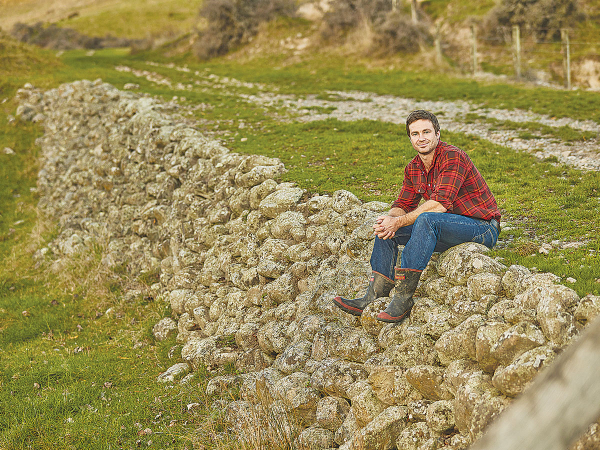 Richard Dawkins
Sheep and beef farmers are urging the Government to do more to stop productive farmland overrun by pine trees.
An environment select committee recommendation tightening the temporary exemptions that would allow land converted after 4 December 2024 to enter the Emissions Trading Scheme (ETS) has failed to allay farmer concerns.
Federated Farmers meat and fibre section chair Richard Dawkins says the Government had a chance to stop our productive farmland and rural communities being completely overrun by pine trees – and they blew it.
Farmers were promised that whole-farm conversions to carbon forestry would be brought to an end but the rules, as they’re currently written, won’t even come close to achieving that goal, he says.
“Unfortunately, what’s being proposed completely misses the mark and will achieve only a minor reduction in whole-farm conversions.
“Unless the Minister steps in and makes urgent changes, we’ll continue to see our productive hill country swallowed up by permanent pine forests at an alarming rate.”
The Government are currently proposing to put a 25% cap on registering forestry in the Emissions Trading Scheme – but that will apply only to land classes 1 – 5.
Dawkins says that might sound like progress on paper, but in reality only 12% of carbon farming conversions have happened on that land anyway.
“The remaining 88% of conversions have been on classes 6 and 7 – on which two-thirds of this country’s sheep and beef farmers operate.These farms are the engine room of the agricultural industry. So, what protections do they get under the new rules? Practically none.”
Beef + Lamb New Zealand (B+LNZ) chair Kate Acland agrees that the select committee recommendation leaves the door wide open for the continued wholesale conversion of productive sheep and beef farmland into carbon farms.
While the select committee has proposed tightening the temporary exemptions that would allow land converted after 4 December 2024 to enter the ETS, it has not fixed the land use class rules – the very section driving most conversions, says Acland.
Federated Farmers has welcomed new rural policies released by ACT, saying they align closely with its own election priorities.

Federated Farmers is backing Feilding High School’s call to keep Agriculture and Horticultural Science as a standalone subject in Year 11.
National’s pledge to introduce 19 new national standards shows the party is serious about getting Wellington out of farming, Federated Farmers says.
Mobile phone coverage and reliability are deteriorating in rural areas, and farming families are bearing the cost, according to a Federated Farmers survey.
Central Otago District Council (CODC) has voted against a plan to spread treated sewage sludge from Cromwell and Alexandra on farmland near Lauder, a decision Federated Farmers says reflects strong opposition from rural residents.



Federated Farmers has welcomed new rural policies released by ACT, saying they align closely with its own election priorities.

Rural Contractors NZ says proposed changes to land transport rules for agricultural vehicles are a welcome response by the Government to out of date regulations which have seen members hit with huge fines.
Alliance is calling for final applications for its 2027 Graduate Programme, with applications closing on Sunday 25 October.
Decades piloting planes has ensured vet and farmer David Hayes is focused on safety. So, after a serious accident while welding on farm, he is sharing his experience so others can learn from it.
Canterbury milk processor, Synlait Milk has confirmed Leon Fung as its chief executive officer.
OPINION: Making it easier to collect rainwater and use it to grow crops and livestock is a no brainer.