NZ Beef Mince Now Over $24/kg as Export Demand Stays Strong
New Zealand consumers are paying more for beef mince than ever before, with the average retail price now sitting above $24 per kilogram, according to Rabobank.
 increase font size
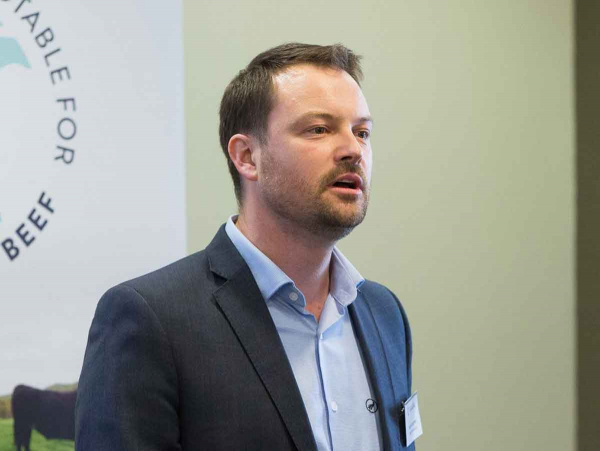 SFF spokesman Justin Courtney.
Silver Fern Farms (SFF) says it applied for the wage subsidy to ensure it could retain workers when production levels decreased by up to 50% at some of its processing sites.
“This led to projected revenues being over 30% lower during April than the previous year, which met the criteria for being eligible for the wage subsidy,” SFF spokesman Justin Courtney told Rural News.
He says SFF also implemented significant new controls with physical distancing, hygiene practices and PPE in its plants to protect staff.
“This slowed our production levels by up to 50% at some of our sites – though we ramped up efficiency levels across all species. Through all of this we were able to retain and pay our staff.”
Courtney says SFF worked with the support of the union through this period.
“We committed to those employees that were still working during the Alert Level 4 and 3 periods that their pay will not be less than 95% of a normal pre-COVID-19 production day, despite lower throughputs and we also implemented a bonus for production staff.
“For any staff that could not work at all due to COVID-19 restrictions they continued to be paid at a weekly rate higher than the wage subsidy.”
Courtney says this covered those who were solo-carers, employees aged over 70 years and those who meet the Ministry of Health guidelines to self-isolate.
“[The wage subsidy] was applied for during considerable uncertainty for our company – both domestically around our ability to operate under Level 4 restrictions,” he added. “There was significant global market disruption for our products, with containers held-up in China, airfreights to Europe cancelled, disruptions in the Middle East and delays in containers returning to New Zealand for future shipments.”
Courtney says SFF is still monitoring its operating conditions, honouring commitments to staff and will pay any unneeded funds back.
“We are engaging with government in order to keep them updated on our progress given the situation has been so fluid through this period.”
New Zealand consumers are paying more for beef mince than ever before, with the average retail price now sitting above $24 per kilogram, according to Rabobank.

After delivering a strong financial year, rural trader PGG Wrightson says the coming months will depend on customer confidence and weather.
As dairy farmers lock in plans for the upcoming mating season, a partnership between Fonterra and Silver Fern Farms has been formed with the aim of making it simpler to create additional value from calves not entering the replacement herd.
Prime Minister Christopher Luxon says the red meat sector is doing an excellent job promoting our pasture-fed system around the globe.
Applications for Silver Fern Farms Co-operative's next board-appointed farmer director are open.


OPINION: David Seymour and James Meager's plan to make it easier for farmers and orchardists to operate drones can best be described a 'courageous' move.

New Zealand wool is reaching new heights as air filtration companies move away from synthetic products to biodegradable alternatives.
Opuha Dam's ability to protect South Canterbury communities from major flooding has taken a significant step forward, with Opuha Water Limited (OWL) successfully commissioning a new outlet valve capable of releasing record volumes of water from the dam ahead of a weather event.
There's been widespread support from the primary sector for the Government's announcement on changes to freshwater farm plans that come under the Natural Environment Bill, which is now set to replace the existing RMA.
A partnership between state-owned enterprise Pāmu (Landcorp Farming Limited) and charity Meet the Need is putting more than quality New Zealand beef into food bank parcels this year.
The Opportunity Party has faced criticism during the election campaign that its policies are too urban-focused and offer little for rural communities.