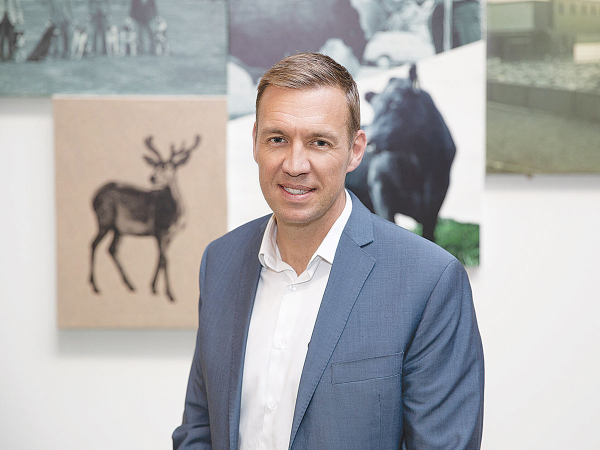
Silver Fern Farms chief executive Dan Boulton says the meat processor wants to find ways of getting product destined for Middle East markets into those markets as opposed to try and place them elsewhere.
He says there is a possibility of utilising a port in Jordan on the Red Sea. But if product was landed there, then it would have to be transported by land to places such as Dubai.
The other and less attractive option is diverting product destined for the Middle East elsewhere, but this poses a completely new set of complex problems. The meat may be returned to NZ to be repackaged and relabelled or to get a dispensation around certification - all of which is expensive.
Boulton says they are looking closely at the cost implications of this.
"We are just working with our shipping lines and NZ officials that, if we had to divert product into those other ports, what would we have to change in terms of documentation, health certificates, all those sorts of things, and also the implications of getting the product overland to reach the big cities where our markets are," he says.
Boulton believes that farmers need to understand the risk and uncertainty of the present situation and also the fact that the effects of it may last for some time, even if things settle down. He says, whatever happens, there will be additional costs and in an ideal world these would be passed onto the consumer.
But he's quick to point out that in some markets the consumer cannot bear the brunt of such costs and some may have to be absorbed by SFF and potentially the farmers back here in NZ.
Read More:
"Farmers need to understand this. We talk very favourably about the market conditions, but we also talk about the risks and they need to understand that these could impact at the farm gate, not only in the schedule but also the operating costs as well," he says.
Boulton says it's a dynamic situation and one SFF have navigated well in the past.
He says they are committed to keeping farmers up-to-date and sharing with them where things are going and the cost implications in the supply chain.
He says it's really important that farmers are informed, especially if they are making decisions around pricing.
"I have confidence that NZ processors have the right partners in the supply chain to get the best outcome and navigate this volatility, be it in the Middle East or somewhere else in the future," he says.