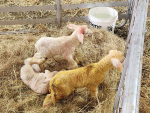
Beef + Lamb NZ's Lambing Kit Checklist for a Tough Season
With lambing underway in many regions, Beef + Lamb New Zealand is encouraging farmers to put together a wellequipped lambing kit to help minimise lamb losses, particularly in bad weather.
 increase font size

The Wools of NZ board considers its 2019 financial outcomes to be satisfactory given “the first year as a fully commercial company, operating in a very challenging wool market”.
Revenue for the year to June 30, 2019 was $22.8 million (versus $25.4m for the previous year) following the cessation of the Wool Market Development Commitment (WMDC), says the annual report.
Total expenses were significantly down at $2.8m (2018: $4.3m), including a one-off impairment cost of $200,000 relating to the UK sampling joint venture.
Wools of New Zealand saw a $1.7m turnaround in profit before tax, excluding WMDC. Profit after tax and attributable to shareholders of the company was $100,000 (2018: $300,000).
“The balance sheet remains strong with growing inventory levels due to growth in forward contracts,” the annual report says.
Wool transacted through Direct-2-Scour was 6.2 million kg, representing an 8% improvement on last year.
Following the resignation of chief executive Rosstan Mazey in September, there have been changes to the governance structure.
Mark Shadbolt has stepped down as chair and into an executive director role, while Rebecca Smith, a director since August 2017, has stepped in as chair. Shadbolt will take a greater lead in developing partnership opportunities and negotiations while Smith will bring a refreshed strategy to the next phase of growth.
In the market, the year saw weakening demand from China, which historically has accounted for at least 60% of total New Zealand wool exports. This year it decreased below 50%, the annual report says.
“Total New Zealand wool export volume for the year ended June 30 2019 was back to 90,799 clean tonnes compared with the prior year at 100,216 clean tonnes -- a reduction of 9.4%.
“The US/China trade situation has provided an uncertain backdrop for global commerce, impacting on China’s ability to competitively operate as a transitional processor and manufacturer of wool products for the US and other markets.
“Although Wools of New Zealand forward contracts are largely focused on the UK and European markets, the total impact of the reduced demand from China has weakened the overall supply and demand situation for New Zealand wool.”
With lambing underway in many regions, Beef + Lamb New Zealand is encouraging farmers to put together a wellequipped lambing kit to help minimise lamb losses, particularly in bad weather.

New Zealand wool is reaching new heights as air filtration companies move away from synthetic products to biodegradable alternatives.
Will a stronger, more coordinated voice help rebuild confidence and improve returns in the wool sector?
OPINION: Confidence in the wool sector is rebounding as prices hit levels not seen in more than 15 years.
The recently signed free trade agreement with India is an invitation to strengthen relationships between the New Zealand and Indian strong wool industries, says Wool Impact chief executive Andy Caughey.



The potato industry is celebrating the success of two rising stars - James Blair, the 2026 Young Grower of the Year and runner-up and innovation award winner, Amber Davy.
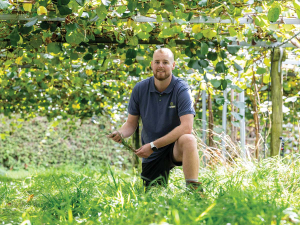
Twenty-eight emerging leaders from across the horticulture sector spent two days last month learning valuable skills and connecting with industry experts.
There are five entrants in this year’s Young Horticulturist of the Year, competing in a series of technical, practical, business and leadership challenges.
A seasoned horticulturist has been appointed to deliver the Apple Action Plan, a key initiative of the India-New Zealand Free Trade Agreement.
New Zealand's citrus growers have been told to compete on the value built into their fruit rather than the volume they grow.
Hawke's Bay fruit growers are being reminded of the need to prepare for whatever the El Niño weather system may bring in the coming months.