PGG Wrightson Revenue Tops $1.1b as Profit Jumps 46%
After delivering a strong financial year, rural trader PGG Wrightson says the coming months will depend on customer confidence and weather.
 increase font size
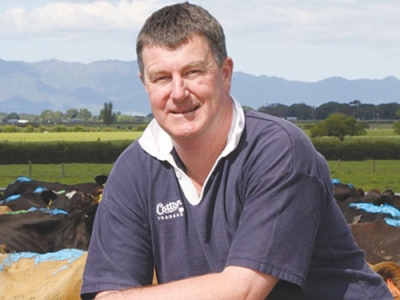 Mark Dwedney.
Despite PGG Wrightson's half-year earnings being down on last year's record – the rural services company still posted its second-best result in nearly a decade.
Operating earnings were $30.93 million for the six months ended December 31 2015, down from $33.64m a year earlier. After-tax profit was $16.06m, compared to $19.7m for 2014.
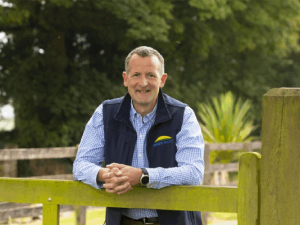
PGG Wrightson (PGW) managing director Mark Dewdney says it's a very strong result in challenging trading conditions. Dewdney says low dairy prices and the threat of an El Nino drought had led to more conservative spending by the farmer customers.
Total revenues fell by 5% to $623m.
Gains in some divisions were offset by weaker trading in others. The retail business lifted Ebitda to $24.8m from $24.3m on slightly lower revenues. Horticulture and the performance of the Fruitfed business were particularly strong in the first half, Dewdney added
Livestock Ebitda was $2.6m, compared to $3.35m a year earlier – with the company blaming the decrease on no live cattle exports during the period. Domestically, cattle and sheep tallies were higher, but sheep prices were lower and dairy volumes were lower.
"The net effect was neutral, with earnings from domestic livestock overall in line with the prior period."
PGW says a wet spring in South America had hurt its seed and grain earnings where earnings fell to $11.7m from $13.5m. However, the New Zealand seed business was strong with farmer demand for forage and crop seeds – notably brassica and fodder beet for winter feed. Demand for summer feed such as chicory was also growing.
The company has stuck with its earlier guidance of full-year profit in the $61m to $67m range, but Dewdney warns that market conditions may push the final figure to the lower end of this range.
He says the sheep and dairy sector sentiment has deteriorated over the last three months, but confidence remained strong in horticulture. The second half of the year was typically the biggest for livestock trade.
However, Dewdney says higher processing figures in the first half – because of hot, dry conditions in many areas and the expectations for an El Nino weather pattern – are likely to produce lower trading volumes this financial year.
After delivering a strong financial year, rural trader PGG Wrightson says the coming months will depend on customer confidence and weather.

Tatua chair Stephen Allen says he leaves the co-op with a deep sense of gratitude for the people who have contributed to its success.
Tatua Co-operative Dairy Company has confirmed that chair and director Stephen Allen will retire at the co-operative's annual general meeting (AGM) on 3 December 2026, ending 30 years of service, including more than 20 years as Chair.
Strong competition and tightening supply have seen wool reach its highest prices paid at auction since 2011.
A firm belief in the agricultural sector has kept the PGG Wrightson business going for 175 years, says chief executive Stephen Guerin.


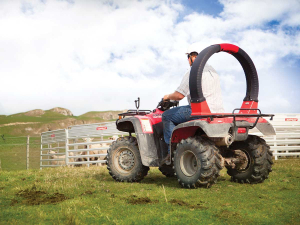
When Northland leather worker Vernon Suckling started making horse saddles 50 years ago, quad bikes and side-by-side vehicles were unheard of.
Alliance Group has confirmed that eligible farmer-shareholders who supply and continue to back the business will receive up to $20 million later this year, following the strategic investment partnership with Dawn Meats.
With a general election under five weeks away, Rural News is asking major political parties about their policies and positions on key issues facing the primary sector. We will run their responses to each question over the next four weeks. The ACT Party and the Greens didn't respond in time.
The red meat sector is in great heart.
Dr Scott Champion, Foundation for Arable Research chief executive, says that everyone in the supply chain had a role to play in driving the sector's long-term success.
Entries opened on Monday, 5 October 2026 for the 2027 New Zealand Dairy Industry Awards (NZDIA), which organisers describe as the nation's biggest celebration of excellence in the dairy sector.