
NZ Beef’s US Opportunity and the Dairy Beef Initiative
Good medium to long term prospects for NZ beef, especially in the US, has heighted the focus on various initiatives to capitalise on this situation.
 increase font size
 Stephen Guerin
PGG Wrightson chief executive Stephen Guerin says the agriculture sector remains in a tough spot.
Guerin spoke to Rural News earlier this month following the release of the rural retailer’s half-year results.
Those results saw operating earnings before interest, taxes, depreciation, and amortisation (EBITDA) drop by $17 million to $44.2 million.
The retailer also reported a net profit after tax (NPAT) of $3.1 million, down from $14.5 million in the previous financial year.
“It’s a reflection of the market,” Guerin says. “It’s not a result that we would like because the environment’s tough and we’re not declaring a dividend for our investor shareholders, so that’s always important to any commercial business.”
He told Rural News that PGG Wrightson staff have been operating in a difficult environment.
“Our customers have faced some challenging times for the returns of their businesses, so that’s been a tough environment,” he adds.
“Having said that we have made a profit. Some others in the sector haven’t done that and are challenged in that regard… and we’re pleased that we’ve held up our market shares as well.”
Guerin says PGG Wrightson has been working to adapt to the current environment by managing its operating costs, securing good prices for goods produced on farm like velvet and wool, and by advising farmers and growers.
However, he says supply chain pressures are starting to ease.
“As a rule of thumb, if we were sitting here a couple of years ago, you could be talking five to six months for supply chain product to arrive.”
Guerin says this was not the case for every product.
“You’re now down to a two-to-three-month window, so that’s good at that level,” he adds.
Guerin says there have been some pricing eases as well, particularly for fertiliser.
“Equally on the output side… we’ve seen some container prices ease.”
He says that so far 2024 has been a good year for PGG Wrightson’s velvet business but import restrictions going into the China market could prove to be a headache. Late last year, Chinese officials notified the Ministry for Primary Industries (MPI) of changes to China’s rules for imported frozen velvet used in traditional Chinese medicine.
So from 1 May 2024 towards the end of the half-year captured in the PGG Wrightson results, only dried velvet could be imported into China, from any source, for use as a traditional Chinese medicine.
“It’s not a supply chain issue as you would traditionally think about it, but it is a supply chain issue if you can’t sell it,” Guerin says.
“New Zealand effectively ends up with one market because we sell premium velvet, that’s the South Korean market… if you don’t have a competitive market future, customers can be a bit challenged in that space,” he explains.
He says that if the issues regarding those imports are not solved, New Zealand would, effectively, sell velvet to one single market.
“There are other markets, but from a volume perspective, the South Korea and China markets dominate, and it would create some price tension on the downward side.”
Guerin says he’s hopeful, however, that dialogue with Deer Industry New Zealand (DINZ) and MPI will help matters.
“We’re hearing good things and we’re hopeful that this issue is going to be resolved, but it’s not resolved yet,” he concludes.
Good medium to long term prospects for NZ beef, especially in the US, has heighted the focus on various initiatives to capitalise on this situation.

Carrfields has announced the appointment of Stu Hall to the newly created role of chief operating officer, Carrfields Ltd, reflecting the continued growth of their agribusinesses and the need to ensure the company has the leadership capacity and support in place as it pursues the emerging opportunities ahead.
State farmer Pāmu is bracing for a $30 million hit from soaring farm input costs this financial year.
Pāmu has released its FY26 Integrated Annual Report, reporting a Net Operating Profit of $113 million, more than double the $49 million recorded in FY25.
Meat Industry Association data, released alongside the Red Meat Sector conference in Wellington, shows export value climbing across the US, China, UK and Canada.



Farmlands has reported higher operating earnings and a profit before income tax of $4.5 million, up 118.9%, for the year ended 30 June 2026.
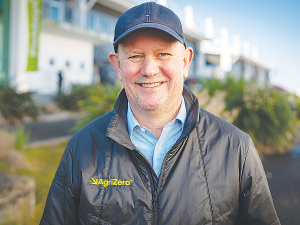
AgriZeroNZ has invested a further NZ$17.7 million in methane vaccine developer ArkeaBio and NZ$5.1 million in BioLumic, a New Zealand-founded company that uses ultraviolet light to develop low-emissions pasture..
Good news for Fonterra farmers. The co-op has raised this season’s farmgate milk price mid-point by 25c to $9.75/kgMS.
OPINION: Political parties are getting plenty of advice and recommendations from sector groups as the election approaches.
In farming there are external factors that can influence behaviour of a whole herd, such as a bad weather event, triggering false positive heat detections or health attentions.
For Canterbury dairy farmer Cameron Henderson, supporting Meet the Need comes down to a simple question: how can the success of New Zealand farming benefit more than just those within the industry?