What Would Synlait Be Worth to Fonterra or a2 Milk?
Speculation of a possible joint move by Fonterra and a2 Milk to buy Synlait raises a much bigger strategic question, says agribusiness expert Dr Nic Lees.
 increase font size
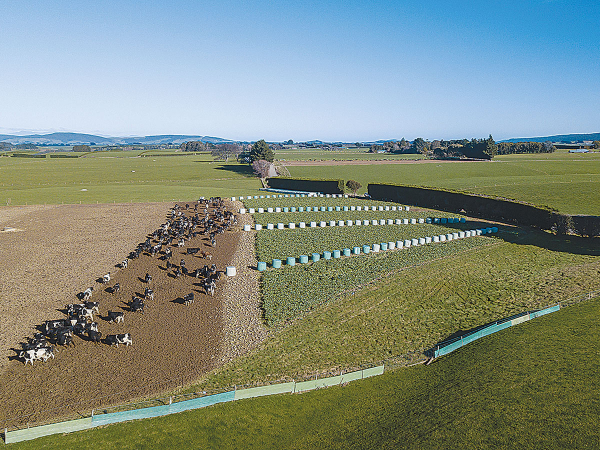 A proposal to reduce future international tourism visitor numbers could create problems for agricultural exporters.
The Government’s proposal to reduce future international tourism visitor numbers post Covid-19 to concentrate on higher spending visitors may solve one problem but create others, according to Lincoln University researchers.
Research by Dr Rob Radics, Dr Muhammad Umar, and associate professor Anthony Brien, highlighted that most of our agricultural products delivered fresh to market are transported on passenger planes, and tourists contribute to the cost.
The drop in tourism numbers could push up transport costs to the point some businesses do not export at all and are put out of business.
Their work showed that before Covid-19 hit, there were 550 international flights into and out of New Zealand each week, which carried 80% of New Zealand’s overall export airfreight in their belly-holds, and that it was worth $10.8 billion in December 2019.
Only 20% of New Zealand’s airfreight was carried by dedicated air cargo-only freighters.
Before Covid-19, air freight was less than 1% of New Zealand’s total trade by volume, but about 16% in terms of dollar value.
The report raised that the decision may only show a lack of understanding of the inter-relatedness of industries.
“What Covid-19 has highlighted is the not previously considered symbiotic relationship of some sectors of the New Zealand agriculture industry and tourism.”
Transport costs have already gone up because of reduced flights, as in March 2020, Covid-19 bought tourism to a halt and reduced airfreight capacity.
This resulted in an immediate increase in competition for freight space and the Government stepped in to fund additional dedicated airfreight cargo flights to ensure the export of perishable products.
It initially funded 53 weekly flights to key export markets. By November 2020, airfreight flights (dedicated cargo and empty-of-passenger flights) has increased to 120 per week; however, export freight costs also increased as producers competed for space on flights.
The top product categories transported by planes are fish and crustaceans, followed by meat, fruit, dairy produce, and vegetables.
“The general seafood industry consensus is that once the government IAFCS (funding) stops, some presently exported products will be priced out of the export market resulting in some business significantly reducing production or going out of production completely. A similar outcome would exist should flights be reduced as part of a strategic tourist reduction.”
The research report also stated the Government had not signalled how it would achieve the tourism re-think aimed at targeting high-value tourists and the subsequent restriction of people coming to New Zealand.
“Further, there has not been any discussions with major air freight agri-fresh export companies about any impact this may have on their products.”
It also said the aid to exporters itself had issues.
“Long-term it could be said to be a form of subsidy and a breach of Free Trade Agreements. Further, the government assistance is helping only one sector of the countries exporters, a bias, and the assistance cannot continue indefinitely.”
While it saw the effects as unintentional from the Government, it stated reducing passenger flights would lower export volumes, increase costs, and reduce New Zealand’s competitiveness.
It rejected increasing dedicated air-cargo freighters, to fill the reduced passenger flight gap.
“While this is a possibility, the seasonal nature of the four products used in this research, which are significant airfreight users, would present issues for a consistent and sustainable air cargo service – yet another supply chain challenge.”
In addition, increasing cargo-only flights to compensate for a reduction in passenger flights would not reduce the global issues of increasing CO2 from aircraft.
“Therefore, for New Zealand going forward, it must balance its desire to maintain and increase its exportable perishable agri-fresh products, its desire for sustainable tourism, and its consideration of global emissions, all while not breaching any Trade Agreements. Such challenges need constant attention by all actors in the overall supply chain.”
Speculation of a possible joint move by Fonterra and a2 Milk to buy Synlait raises a much bigger strategic question, says agribusiness expert Dr Nic Lees.

Lynnette Hudson's 30-year obsession with Pinot Noir was sparked working vintage in Burgundy, seeing how subtle changes in terroir were expressed in the glass. It was, she says, "an elightening moment in every way".
A four year trial has reaffirmed that mixing plantain into dairy pastures can help reduce nitrogen losses to freshwater while maintaining milk production and profitability, say researchers.
Twenty five secondary school students from around New Zealand recently completed a three day residential programme designed to explore career opportunities across the food and fibre production supply chain.
A Lincoln University student is set to become the first person to contest both the Young Viticulturist and the Young Winemaker national titles in one year.


Waikato milk processor Tatua has again declared a record milk payout to farmer shareholders, leaving other processors in the dust.

A Labour-led Government won’t be bringing back the controversial freshwater rules of 2020.
National’s much-touted free trade deal with India featured in the Rural Issues Debate at Mystery Creek, Hamilton on Wednesday night.
New Zealand's 2026-27 freshwater fishing season has opened, with anglers encouraged to head to rivers and lakes over the coming days as conditions look favourable across much of the country.
Central Otago District Council (CODC) has voted against a plan to spread treated sewage sludge from Cromwell and Alexandra on farmland near Lauder, a decision Federated Farmers says reflects strong opposition from rural residents.
Pāmu has released its FY26 Integrated Annual Report, reporting a Net Operating Profit of $113 million, more than double the $49 million recorded in FY25.