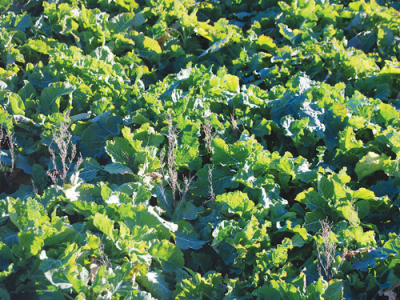
The Ministry for Primary Industries (MPI) is cautioning farmers not to plant left-over seed from any of the six lines of fodder beet seed imported last year and known to be contaminated with velvetleaf.
MPI is working with industry players and regional councils to manage the incursion of the pest weed resulting from the importation of the contaminated seed.
Response incident controller David Yard says there are hundreds of properties around New Zealand that have velvetleaf on them and we don’t want any more.
"MPI has banned the importation of any of the affected lines, but we believe there are likely to be farmers out there who bought contaminated seed lines last year and could have left-over seed in their sheds.
"Our advice is quite simply - don’t plant it this year," Yard stresses. "While velvetleaf may not have seemed a significant problem last season, individual velvetleaf plants produce up to 17,000 seeds, so undetected plants that grew last season may result in a major infestation this season. If left unmanaged, those plants will be a significant farm and biosecurity issue."
The six contaminated seed lines MPI is warning farmers against using are:
Kyros DNK–16UB128
Bangor DNK–15UB079
Bangor DNK–16UB126
Bangor DNK- 16UB114
Feldherr DNK–16UB131
Troya DNK–16UB112
Velvetleaf is an unwanted organism and under the Biosecurity Act 1993 it is an offence to knowingly plant and grow it. Farmers and contractors need to understand that it is illegal to plant these lines that are known to contain velvetleaf seed.
Farmers who planted these fodder beet lines last season (not knowing they were contaminated) are also urged to check paddocks where they planted the seed.
"If velvetleaf plants are found, our advice, if they are not yet flowering, is to note and mark the location (for checking in future years), pull them out immediately and dispose of by deep burial – e.g. in the farm offal pit,” Yard says.
"If you find plants that are flowering or seeding, mark the location and then tie a large bag over the flower head and bend the plant in half (so if any seeds are present they can be captured). Again, pull up the plant and safely dispose of it.”
MPI recommends any new detections of velvetleaf (that have not already been reported to MPI) are phoned through to the MPI hotline 0800 80 99 66. A technical expert will be able to provide advice on future management.