
Hort systems must meet expections of the future
Plant & Food Research has just begun a major research programme focusing on designing horticultural growing systems to meet the expectations of society in the future.
 increase font size

A new wasp is being tested to help control coddling moth in the pipfruit industry.
Plant & Food Research scientists, with support from Pipfruit New Zealand, have been investigating the potential for Mastrus ridens, a small parasitoid wasp, to control the codling moth, one of the major pests affecting the New Zealand pipfruit industry.
Following EPA approval, field appraisal will take place over the next few years to measure the effectiveness of the wasp as a long term biological control agent. The first release in commercial orchards, of 1000 individuals, has been made in Hawke's Bay this week.
"Codling moth is a major issue for the pipfruit industry, with control of the pest costing between $8 and $12 million each year," says Mike Butcher, technical manager of Pipfruit New Zealand.
"Whilst the presence of a single moth in a shipment can impact on market access for all New Zealand apple exports to codling moth sensitive markets, the industry is also focused on reducing the use of chemical pesticides.
"This ultimately means we must find new ways to control pests, and the introduction of the Mastrus wasp as a biological control agent is an important new component to our system that currently includes mating disruption, a codling moth specific virus and selective chemistry. This release is an important step in meeting quarantine requirements for our premium markets."
The Mastrus female attacks the cocoons of codling moths, laying its eggs on the moth larvae. When the wasp larvae hatch, they feed on, and eventually kill, the codling moth larva. They then emerge as adult wasps to disperse and seek new codling moth larvae on which to lay their eggs.
"Biological control agents, such as parasitoid wasps, play an increasingly important role in controlling pests as chemical interventions are reduced," says scientist John Charles from Plant & Food Research.
"This species, which originated in Kazakhstan, has been established in other countries, particularly in the USA, for control of codling moth, and these initial releases in New Zealand will help us to determine how well they survive in our environment and control the pest."
The Mastrus wasp was approved for release by the Environmental Protection Agency in June, and thousands have since been reared in captivity.
A video showing the female Mastrus wasp laying her eggs can be found at http://plantandfood.us5.list-manage.com/track/click?u=1b46d14e528ad30bae8b3663c&id=4098e51aff&e=e26d8a2d96.
Plant & Food Research has just begun a major research programme focusing on designing horticultural growing systems to meet the expectations of society in the future.

“Aged wine” may have an alternative meaning in future, as researchers learn more about how individuals process and perceive aromas while tasting wines.
Aquaculture is the fastest-growing animal production sector, experiencing global annual growth rates of 6% over the past 15 years.
Plant & Food Research’s Vaughn Bell has seen a lot of mealybugs in his time, but even he was stunned to see photos of infestations in Marlborough this past vintage.
One aspect of the Pinot Noir Programme is taking a reductionist approach to conduct research on individual berries and is set to make scientific history.


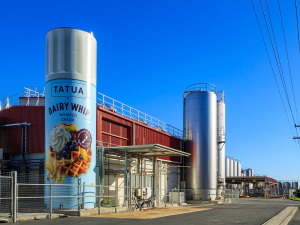
Waikato milk processor Tatua has again declared a record milk payout to farmer shareholders, leaving other processors in the dust.

A Labour-led Government won’t be bringing back the controversial freshwater rules of 2020.
National’s much-touted free trade deal with India featured in the Rural Issues Debate at Mystery Creek, Hamilton on Wednesday night.
New Zealand's 2026-27 freshwater fishing season has opened, with anglers encouraged to head to rivers and lakes over the coming days as conditions look favourable across much of the country.
Central Otago District Council (CODC) has voted against a plan to spread treated sewage sludge from Cromwell and Alexandra on farmland near Lauder, a decision Federated Farmers says reflects strong opposition from rural residents.
Pāmu has released its FY26 Integrated Annual Report, reporting a Net Operating Profit of $113 million, more than double the $49 million recorded in FY25.