Ah Tatua, You've Done It Again!
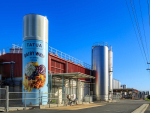
Waikato milk processor Tatua has again declared a record milk payout to farmer shareholders, leaving other processors in the dust.
 increase font size
 Synlait chair George Adams.
In a “watershed vote”, Synlait shareholders have approved a recapitalisation plan that hands over control of the listed milk processor to China conglomerate Bright Dairy.
The result also means a lifeline for the troubled Canterbury processor facing unsustainable debt levels of $560 million, including under-utilised North Island investment worth $450m.
To reduce Synlait’s debt, shareholders were asked to vote on the issuance of approximately $217.8 million of new equity capital to the company’s two largest shareholders, Bright Dairy Holdings and The a2 Milk Company, as well as Synlait’s settlement with The a2 Milk Company. Shareholders were also asked to vote on certain administrative amendments to Synlait’s constitution. All resolutions passed with around 95% support from shareholders excluding Bright Dairy, which could not vote. Synlait’s independent directors had warned that should any of the resolutions fail, the company would be forced to cease trading and initiate a formal insolvency process.
The vote has lifted Bright Dairy’s shareholding from 39% to 65% while a2MC’s stake remains at 19%.
Synlait chair George Adams says this is a watershed vote for Synlait.
“Shareholders have given us the opportunity to create a positive future for the company, its investors, farmer suppliers, customers, suppliers and for our 1,400 employees. Thank you for support.”
On behalf of Bright Dairy’s appointed directors Julia Zhu says that their decision to participate in this process has been about protecting the long-term value of Synlait.
“And it further reflects the scale of our commitment to see it rebuild stronger, while restoring farmer supplier confidence over coming years.”
Synlait will use the money raised from new shares to reduce debt and pay $180m due to retail bondholders.
Speaking at the special shareholder meeting earlier Adams expressed faith in Synlait’s viability.
He noted that Synlait retains all of the components that underpinned its earlier financial success.
Its world-class facilities have exceptional capability in quality and innovation, he says.
“Synlait can deliver products that other New Zealand companies cannot – it is the largest infant milk formula manufacturer in the southern hemisphere. That is why it has committed global customers. And in addition, at Pokeno we now have a facility that can produce advanced nutritional products incorporating plant-based ingredients.
“That makes Synlait a company worth saving – as long as we can meet the forthcoming payments and get our debt to a sustainable level.”
Waikato milk processor Tatua has again declared a record milk payout to farmer shareholders, leaving other processors in the dust.
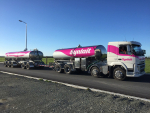
Synlait has swung to second-half profit as operations stabilise, but the dairy processor still posted a $75.4m annual loss.
OPINION: It seems Canterbury processor Synlait is still in the doldrums.
Speculation of a possible joint move by Fonterra and a2 Milk to buy Synlait raises a much bigger strategic question, says agribusiness expert Dr Nic Lees.
South Waikato farmer Bas Nelis is always interested in fine-tuning his business to improve results.



Global dairy giant Lactalis has integrated its Australian operations with the Mainland Dairy consumer business it acquired from Fonterra earlier this year.
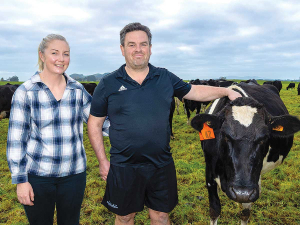
After almost two decades of sharemilking, saving and building equity, Aaron and Marcia Flay this year realised their long-held dream of settling on their first dairy farm.
Good medium to long term prospects for NZ beef, especially in the US, has heighted the focus on various initiatives to capitalise on this situation.
High country stations, mixed sheep and beef farms, Māori-owned farms, corporates and family operations are among the nine commercial farms taking part in the Livestock Innovation Farming Transformation programme, known as LIFT.
OPINION: New health and safety guidance unveiled by the Government recently provides farmers greater certainty about what is expected of them when managing risks on farm.
The National Animal Welfare Advisory Committee (NAWAC) is seeking public feedback on proposed changes to the Code of Welfare for Rodeos.