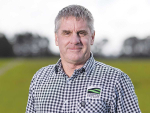
Made in New Zealand is a feature that looks at the wealth of design and manufacturing ability we have in New Zealand making innovative and cost-effective products for the agricultural sector. This week, we take a closer look at Te Pari Products, catching up with global sales manager Jeremy Blampied.
When was the company founded, by whom and why?
Te Pari was founded in Palmerston North back in 1980, when the French family decided there was a better way to dock lambs and designed and manufactured their first docking iron.
Where are you located? Is it single or multiple sites, and how many people are employed?
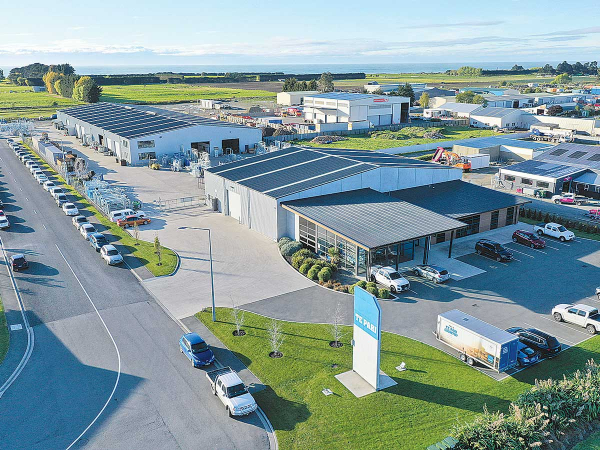
Te Pari is a global business employing over 130 people. Our headquarters and all our manufacturing is based in Oamaru. We have sales and distribution centres in Melbourne Australia, Minneapolis and Minnesota in the US and Perth in Scotland.
What are your key products and which markets do they serve?
Our key products are cattle and sheep handling equipment for farmers and ranchers globally. These are sold direct to the customer in our four main markets – NZ, AUS, USA and the UK. The range includes cattle crushes, automated sorting equipment, yards and loading ramps, while our sheep equipment includes handlers and auto drafters. We also sell automatic dosing guns, weigh scales and other animal management products.
Are your products unique? If so, what are the key benefits?
We are the only supplier that manufactures handling, dosing and data recording equipment that can bundle it all together as a single solution. Many of our products have patented IP that fully integrates with one another. This leads to a seamless operator experience, delivered from one supplier. In the case of our Taurus Automated Cattle Sorter, this is the only completely automated system on the market globally. In regards to research and development, the fact that we deal directly with our customers means that we receive much better feedback on our products, allowing us to address any issues quickly and re-engineer appropriate changes.
Looking at an everevolving market, what changes have you made over the last few years, or what will you have to do moving forwards?
We strive to innovate and continually improve products and our manufacturing processes every day.
On the product front, our relationships with the end user makes improvements happen more quickly. In the last 6-12 months, we have introduced the new Lenta Cattle Crush Range, new steel-stepped cattle loading ramps and the Racewell JR manual sheep handler, alongside many other products. On the manufacturing side, we continue to install more robotic and CNC machines, that allow us to deliver consistent quality and output.
What has been the company’s greatest success since its formation?
We believe that two areas contribute to the company’s success. Being 100% family-owned and operated in NZ means all our staff are treated like family and in return, go above and beyond to look out for one another and – importantly - our customers. Since we manufacture complete systems, we are only a phone-call away for the customer to get anything they need.
In contrast, what has been the biggest “Oh Bugger” moment or the steepest learning curve?
Thankfully, we haven’t had any as throughout Te Pari everything is carefully considered, planned and reviewed. Trials and testing are made in-house and then on-farm with customers. This means that when we decide to go ahead with a product, we have complete confidence that it will be a great fit for its intended use.
Where do you see the company in the next three, five and ten years. What changes do you foresee to keep relevant and grow your business?
The demand for our products continues to grow globally, so we expect to see a growing team and customer base in these markets.
To support that, we’ll have to continue to expand and invest in our manufacturing facilities here in NZ, as we are committed to NZ manufacturing.