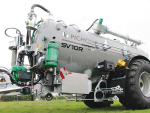
Pichon Adds SV10R and SV14 to SV Slurry Tanker Range
French manufacturer Pichon has expanded its SV slurry tanker range with the launch of two new models.
 increase font size
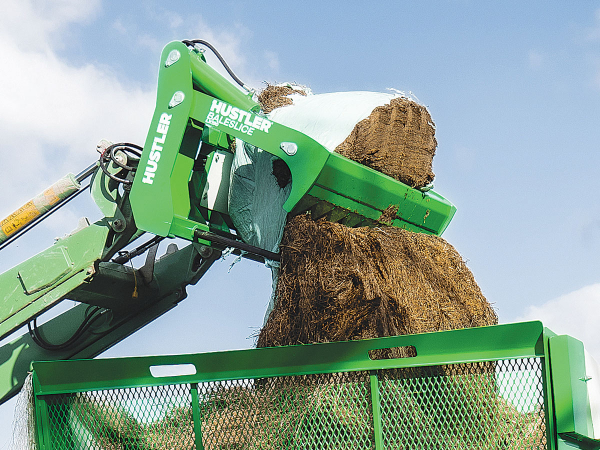 The BaleSlice cuts through any film or the net and is held by four, hydraulically-activated hooks mounted high on the rear frame.
There would be many farmers who cringe at the thought of pulling silage wrap off bales on a cold, miserable winter morning.
With bales being a major part of rural New Zealand’s feeding regime, the age-old problem of dealing with wrap and net prior to feeding is still a hurdle, both in terms of mess and safety.
The latest release from feeding specialists Hustler, the BaleSlice, helps deal with this issue.
As the name suggests, it slices four or five foot diameter bales through their centre axis, easing the work of mixer and feed-out wagons and also removing the need for cattle to tear bales placed in ring feeders.
Taking the form of a fork, with a top-mounted cutting mechanism, the latter is mounted to the upper frame. From here it is pushed through the bale by twin 100mm diameter hydraulic rams, travelling through an arc that is designed to pass through the centre of the bale. As the bale slices, any film, or the net beneath, is held by four hydraulically activated hooks mounted high on the rear frame to ensure a minimum of material is held or wasted. The cutting edge is manufactured from HB 500 grade steel for an extended service life.
The machine offers several benefits – including removing the need for operators to leave the cab to remove film and net, and/or to stand under or climb over bales to cut the plastic film. It also helps users to stay clean and dry.
Weighing in at 470kg, the BaleSlice is said to be easy to fit to existing loaders without the need for any additional plumbing or valves. It requires an oil flow of only 25 litres/minute and is supported by a fouryear warranty.
French manufacturer Pichon has expanded its SV slurry tanker range with the launch of two new models.
Recently revealed, Krone’s new Series Six, BiG Pack Plus and Pro balers are designed to use standardised components, interfaces, and control concepts, including pick-up, knotter systems and user interfaces.
Consuming around six years and more than 35,000 hours of physical and digital testing, the new sixth-generation Valtra T Series is being described as the most significant new release in the company’s history.
Strautmann has introduced a new Hay Edition auger for its Verti-Mix feed mixer wagons, aimed at operators using rations with larger proportions of hay or other long-fibre materials.
Twin rotor swathers have become the ‘go-to’ for forming swaths to feed hungry harvesters and balers, however, the design layout often means that crop located between the two rotors is not picked up, turned over or incorporated into the swath formed for subsequent harvesting.



Mark Hooper has been appointed the new chair of NZPork, the industry organisation representing New Zealand pig farmers.

As the India-New Zealand free trade agreement enters into force, New Zealand’s apple industry has reaffirmed its commitment to the long-term development of India’s apple sector.
Fonterra shareholders can begin voting on Tuesday 20 October in the 2026 Board of Directors’ election, a Co-operative Council election in one Ward, and seven Annual Meeting resolutions.
National’s pledge to introduce 19 new national standards shows the party is serious about getting Wellington out of farming, Federated Farmers says.
The National Party’s policies to make it easier to grow fresh vegetables, secure reliable water and energy and simplify farm planning are practical changes that will give growers the confidence to invest, according to Horticulture New Zealand (HortNZ).
Fonterra Co-operative Group chief financial officer Andrew Murray has resigned to take up a role outside the dairy giant.