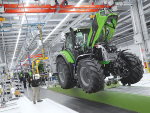
The Tractor and Farm Machinery Association (TAMA) is calling on the Government to take urgent measures to help its sector in the face of plummeting sales.
President John Tulloch has written to the Minister of Agriculture Damien O’Connor to request action to encourage farmers and contractors to invest in farm machinery.
Specifically, TAMA wants the Government to review its low value asset write-off limit to bring it to at least the same level as Australia ($150,000). The New Zealand Government has temporarily increased the threshold to $5,000 because of COVID-19.
“The fact is that $5,000 is far too low to assist the primary sector,” Tulloch says. “Especially when a new tractor can cost upwards of $100,000.”
While the Government was looking to the primary industry to help the economy recover from the pandemic fallout, TAMA suggests that COVID-19 is negatively impacting contractors’ and farmers’ income, which is already impacted by drought. Tulloch says this has limited their ability to invest in farm machinery and equipment, with April’s tractor sales down by more than 60% from April 2019.
The New Zealand tractor and farm machinery sector is worth about $1.3 billion annually and provides 2,500 jobs. In 2018 and 2019, tractor sales returned to 4,000-plus units, taking around eight years to recover from the GFC when sales tumbled by around 45%.
“If our sector declines by 45% again it means the potential for the loss of 1,200 jobs, within the primary industry that already needs 50,000 more workers,” says Tulloch.
“As well as facing job losses and business closures, we will also see flow-on effects – such as the loss of competition within our sector, plus barriers to farmers maintaining and obtaining tractors and machinery. We need urgent action from the Government now to enable our primary industry to keep investing in its future, otherwise the country will feel more pain later.”