Cameron Henderson Reappointed Unopposed as DairyNZ Deputy Chair
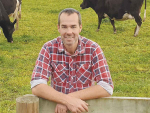
DairyNZ deputy chair Cameron Henderson has been re-appointed unopposed for another term.
 increase font size
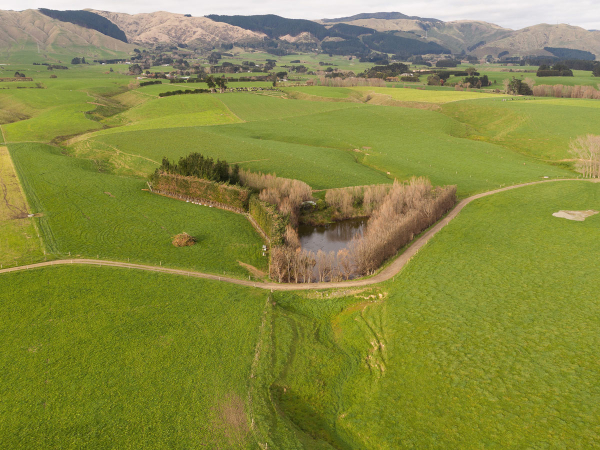 The upper Nguturoa catchment, looking back to where it starts in the Tararua foothills.
DairyNZ says its collaborative project with the Nguturoa Catchment Group in the Manawatu aims to understand, model and manage E. coli in rural waterways.
The five-year project aims to understand sources and sinks of E.coli. In doing so, it aims to deliver options for reducing E. coli losses from rural land to streams and inform regulations with respect to what mitigation levels are achievable in pastoral-dominated catchments.
DairyNZ general manager sustainable dairy Dr David Burger says the project will give DairyNZ a better understanding of E. coli processes in farming catchments.
“This will mean we can better build models to develop and demonstrate options for farmers to reduce losses and help build regulatory understanding,” Burger says.
He says the project is part of the levy body’s ongoing work to support farmers to reduce their environmental footprint while continuing to run successful farming businesses.
“Farmers and the sector have a wide range of initiatives underway on-farm to improve water quality, and we acknowledge there is more work to be done.”
The Nguturoa Catchment Group was formed in 2020, after farmers and landowners along the Nguturoa Stream in the Manawatu-Whanganui region began a study into water quality.
Terry Parminter of KapAg, who provides technical support to the group, says the farmers and landowners wanted precise information to establish their farming priorities for improving the waterway and monitoring the effects of management changes.
Monthly sampling and testing were carried out across the catchment. Results showed that E. coli levels were at times elevated compared to national standards, so solutions to address this were needed.
The Nguturoa catchment runs from the ranges behind Linton to the Tokomaru River and down to the Manawatu River. It comprises dairy, sheep and cattle farmers and lifestyle block owners.
“The Nguturoa catchment group is forward-thinking,” Burger says. “Many New Zealand farmers are making management changes to improve the quality of freshwater associated with their farms.”
“Often this occurs in the absence of specific data enabling farmers to understand how their on-farm activities influence water quality or without receiving feedback on how much difference they’re making.”
The catchment group works closely with the Horizons Regional Council science team.
Its initial funding came from Our Land and Water’s Rural Professionals Fund. It has also received funding for waterway testing from Horizons Regional Council, and technical support from Terry Parminter of KapAg.
DairyNZ deputy chair Cameron Henderson has been re-appointed unopposed for another term.
Farms across the upper North Island are trialling different pasture mixes as part of a research programme that aims to build greater resilience into farming systems.
Election years are always a concerning time for farmers, according to DairyNZ chair Tracy Brown.
Most dairy regions around the country have had a pretty good season so far says Tracy Brown.


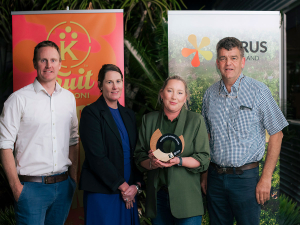
New Zealand's citrus growers were challenged to build their future on the value embedded in their fruit rather than the volume they produce, at Citrus New Zealand's annual gathering in Gisborne on 17 September.
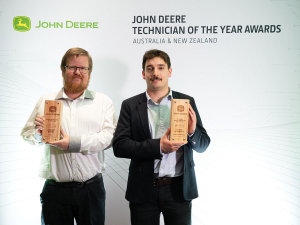
Leading John Deere technicians and apprentices from New Zealand and Australians were recognised at the recent sixth annual JD Technician of the Year Awards, held in Brisbane.
In Dacre, near Invercargill in New Zealand’s South Island, Bruce Dinnington is running a dairy operation unlike any other.
A free online platform aggregating governance vacancies across rural and regional New Zealand has been launched.
Environment Minister Nicola Grigg has announced details of a new rural plastics recycling scheme.
Agricultural drone operators say that a government decision to allow lower-risk drone work without certification won’t lower standards but drive innovation and efficiency.