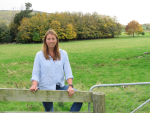
Mountain Warrior's words of wisdom
The Mountain Warrior Shane Cameron is coming back to his roots as key note speaker at the East Coast Farming Expo Property Brokers Evening Muster in February.
 increase font size
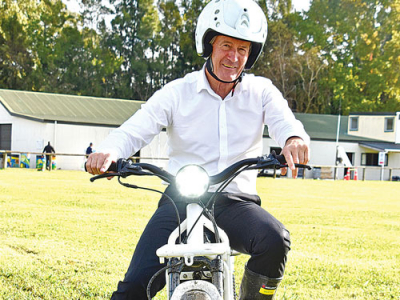 Minister of Primary Industries Damien O’Connor, seen on an UBCO 2x2, will be at the expo.
This year’s East Coast Farming Expo – on March 6 and 7 at the Wairoa A&P Showground – will again have energy high on its agenda.
Energy is high among farmers’ concerns — its source, usage, costs, potential cost savings, operating efficiencies and developments in the renewables sector.
Specialist exhibitors in the field will include Eastland Group and Water Right Ltd.
“Energy usage on farms — how much we use, opportunities to save and the exploration of renewable sources — is a hot topic now,” says expo director Dave Martin.
A major sponsor is Eastland Group, which runs the power lines for Wairoa and the East Coast — 25,000 connections across 12,000sq. km. Eastland Generation includes geothermal, hydro and diesel electricity generation plants and the Electric Village in Gisborne.
Electric Village energy champion Jaclyn Findon says the technology industry -- globally and in New Zealand -- is evolving faster than ever.
“It’s an exciting time for energy and emerging technologies, and our region is perfectly placed.
“Electric Village in Gisborne is the home of new energy: it’s a place to share ideas, challenge the norm and discover better and more efficient ways of working.
“It’s about the future of energy technology, including tips and tricks on clever ways to use your power, and information on solar energy and electric vehicles.”
Eastland will have electric vehicles (EVs) at the expo for test drives, including electric cars, a utility electric 2x2 vehicle by the NZ maker UBCO, ebikes and escooters.
Matt O’Kane, of Water Right Ltd, says energy is usually a farm’s highest cost.
“We’ve recently been to Europe to look at developments in irrigation equipment and efficiency gains. Several companies have huge R&D focused on solar technologies to power centre pivot irrigators and large pumps.”
O’Kane says the gap is currently in storage, “requiring either expensive, inefficient batteries or irrigating during the day which, although commonplace, is nowhere near the bang-for-buck as night-time application.
“I’m excited about solar technology and its pace of development, as well as the constant reduction in cost.”
O’Kane says although the irrigation sector is not quite there commercially, “a tonne of work is going on behind the scenes, plus a major push to make it cost effective and practical”.
The East Coast Farming Expo is industry-specific – sheep and beef farming businesses ranging from extensive hill country to intensive flat operations. It will appeal to husband-and-wife partnerships, managers, stock managers, shepherds, business partners, accountants and financial advisors.
Trade exhibits and public seminars allow Hawke’s Bay and East Coast farmers to talk to industry innovators and experts.
The expo is an ideal venue for launching new products or releasing new research and technology. Farmers and landowners can explore new ideas and talk to experts.
The popular Evening Muster on March 6 is for attendees and exhibitors to socialise and hear the keynote speaker, rural broadcaster Sarah Perriam.
The Mountain Warrior Shane Cameron is coming back to his roots as key note speaker at the East Coast Farming Expo Property Brokers Evening Muster in February.
Tradition meets some of the latest in technology at the 2026 East Coast Farming Expo.
There's a special sort of energy at the East Coast Farming Expo, especially when it comes to youth.
Farmers' health and wellbeing will take centre stage with a new hub at the 2026 East Coast Farming Expo.
Engaging, thought provoking speakers, relevant seminars and relatable topics alongside innovative produces and services are the order of the day at the 2026 East Coast Farming Expo.



Federated Farmers says it welcomes Labour's commitment to reviewing the Sharemilking Agreements Act, calling on other major parties to do the same.
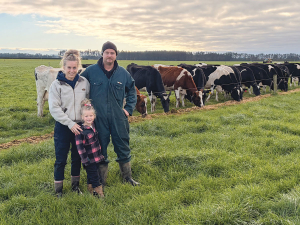
For Canterbury dairy farmers Sian Meijer and Rick Wobben, wearable technology has become one of their most valuable on-farm tools - helping manage 1850 cows across an expansive, high-performing dairy operation while improving efficiency, mating outcomes and day-to-day decision making.
Fonterra has unveiled its annual results for the 2026 financial year, posting $27 billion in revenue and close to $20 billion returned to New Zealand farmer owners and unit holders.
The first major update to the Dairy Cattle Code of Welfare in more than a decade has been released, marking what DairyNZ describes as an important step in ensuring animal welfare standards continue to evolve alongside scientific evidence and on-farm realities.
Ravensdown shareholders have elected Jane Montgomery and Kate Acland to the Ravensdown Board for three-year terms, following a closely contested director election.
Federated Farmers says new legislation replacing the Resource Management Act will cut red tape, unlock investment and help grow New Zealand's export-led economy, after the Planning Bill and Natural Environment Bill passed their third reading in Parliament yesterday.