Massey Uses Portable Analyser to Measure Pasture Soil GHGs
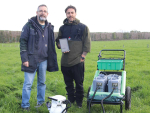
Researchers at Massey University are using a special piece of scientific equipment to improve the measurement of greenhouse gas emissions from pasture soils.
 increase font size
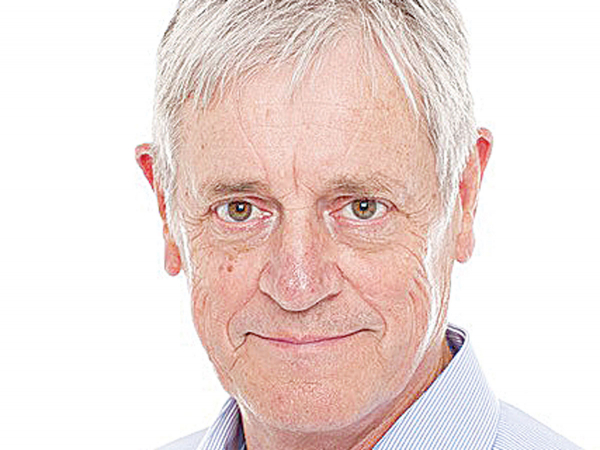 Doug Edmeades, principal of soil science company AgKnowledge Lts, is behind the new booklet.
A new tool that enables farmers to assess the fertility of their soils by looking closely at the pasture quality, vigour and clover content has recently been released.
“It is an easy way to score pastures to determine whether these are up to speed and pulling their weight,” says Dr Doug Edmeades, principal of soil science company AgKnowledge Ltd, which is behind the new booklet.
Edmeades describes clover as ‘the canary in the soil fertility mine’.
“It is the first pasture component to disappear if the soil fertility is not optimal,” he explains. “For these reasons, the clover content of a pasture is a good proxy for the underlying fertility of the soil.”
Edmeades says where clover is growing in the pasture, its leaf size, abundance, colour and vigour, and the presence or absence excreta patches, are all important indicators of the underlying soil fertility.
This is where the Pasture Visual Assessment (PVA) booklet comes in. It uses these indicators to systematically score pastures on a 1-10 scale.
A poor pasture (say 1-2/10 on the PVA scale), contains < 5% clover, the clover has small leaves and is only growing in the nutrient rich dung and urine patches. Weeds and weed grasses dominate and the excreta patches are obvious.
In contrast, a 9-10/10 pastures comprises 30-40% clover and the companion grass is ryegrass. The pasture is uniformly green, and the excreta patches are not apparent.
“The PVA booklet provides a simple technical explanation of the system and contains a series of photographs showing the key features of the different types of pasture on 1 to 10 scale,” Edmeades adds.
“A farmer simply matches his own pastures against the photographs. Obviously if the pastures are no ‘up-to-scratch’ professional advice should be sought.”
The system, Pasture Visual assessment (PVA), has been developed with financial support from DairyNZ and Barenbrug.
The booklet is available at: This email address is being protected from spambots. You need JavaScript enabled to view it. ($20 plus postage) or from www.barenbrug.co.nz
Researchers at Massey University are using a special piece of scientific equipment to improve the measurement of greenhouse gas emissions from pasture soils.
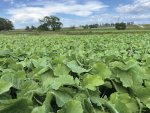
It's only just hit the market, but a new forage rape bred for dryland farms has already won the approval of lambs and young cattle both north and south.
Special courses for secondary school teachers to help excite kids about agriculture and horticulture are now being run at Massey University.
Keeping cows happy and well fed at home this winter just got easier with the launch of a prolific new annual ryegrass bred to jump out of the ground even faster than its popular predecessor.
New industry trials confirm what matters most for perennial ryegrass seed this autumn: Cool, dry storage keeps endophyte viability above the 70% commercial threshold, according to pasture specialist Barenbrug.


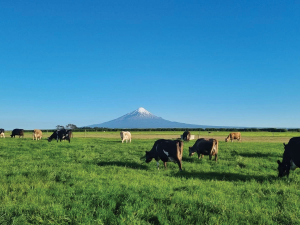
A spate of southerly winds bringing cold temperatures has presented challenges for Taranaki dairy farmers.
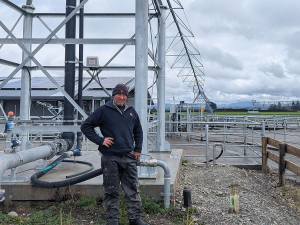
Converting a longstanding cropping farm to dairy was the only way to ensure the land stayed in the family long term, says new dairy farmer Rod May.
As the election heats up, Organics Aotearoa New Zealand (OANZ) has launched its election scorecard designed to help voters wanting to support policies that grow organic and New Zealand's organic sector.
A 'tsunami' of milk from key exporting countries is winding down and this may be good news for New Zealand dairy farmers.
Will the good times last? That's one of the key issues to come out of the latest Federated Farmers confidence survey.
Outgoing Fonterra Co-operative Council chair John Stevenson says that it has been a privilege to represent the co-op's farmer shareholders.