
Federated Farmers Welcomes ACT’s New Farming Policies
Federated Farmers has welcomed new rural policies released by ACT, saying they align closely with its own election priorities.
 increase font size
 NZ authorities are hoping to release a new strain of rabbit haemorrhagic disease, or calicivirus between March and June this year.
New Zealand is about to open a new front in the war on rabbits with the expected release of a new strain of rabbit haemorrhagic disease, or calicivirus.
The new variant, known as RHDV1 K5, is approved in Australia and is due for release there March-June this year. NZ authorities also hope to release it about that time.
Environment Canterbury says it is acting for a national co-ordinating group to obtain the three statutory approvals needed. Graham Sullivan, Environment Canterbury regional leader biosecurity, says RHDV1 K5 could be an important biological control tool.
“While exact figures are unknown, it is expected there will be improved knockdown in areas where the current strain of RHDV is less effective,” he told Rural News.
Rabbit haemorrhagic disease is widespread in NZ after its unapproved release in 1997, but rabbit numbers recovered in many areas after the initial spread.
Federated Farmers high country policy advisor Bob Douglas says rabbits can be a big drain on farms.
“Some stations in North Canterbury, southern Marlborough and certainly around Otago are spending close to $100,000 a year on rabbit control.”
Douglas explains that DOC, MPI and government departments are involved because rabbits are an “environmental pest, eating grass, cutting it down to nothing. Then the winds get up and the topsoil disappears. So there are environmental factors as well; it’s not just the productivity side of things.”
RHDV1 K5 is a Korean strain believed to better overcome the protective effects of a benign calicivirus – which also naturally occurs in feral rabbit populations and confers some immunity to the existing RHDV1.
“RHDV1 K5 is expected to boost the effects of the existing RHDV1 strain and help slow the increase in rabbit numbers,” Sullivan explains.
Although rabbit numbers vary nationwide, councils from Auckland to Southland are interested.
“You don’t need a Mackenzie or Otago situation to be interested in the virus…. Even in Canterbury rabbits are a nuisance. The Port Hills are a classic example; lifestyle blocks around cities where you can’t use traditional control tools such as poisons, trapping and shooting for obvious reasons.”
Sullivan says the new variant, like other RHD viruses, infects only the European rabbit and no other species. It has no human health risks. A vaccine is available to protect pet rabbits and MPI is expected to confirm the vaccine will also work on the new strain.
Sullivan says the release will be managed by the country’s 12 regional councils and probably take the form of freeze-dried product added to carrot bait. He believes a controlled release will ensure that a higher quality, commercially prepared product is made available and the release appropriately managed and monitored.
“This approach will increase the likelihood of success and maximise benefits to farmers and the environment,” Sullivan says.
“RHDV1 K5 is not the silver bullet for rabbit eradication in NZ. A long-term, integrated approach to controlling pest rabbits is required.”
The NZ Rabbit Coordination Group (RCG) includes representatives from regional and district councils, Federated Farmers, DOC, MPI and Land Information NZ.
On behalf of the RCG, ECan submitted a Hazardous Substances and New Organisms Act application to the Environmental Protection Authority in September 2016 and this is now being processed.
ECan will also lodge applications this month (February) for the other two required statutory approvals: registration under the Agricultural Compounds and Veterinary Medicines Act, and an unwanted organism permission under sections 52 and 53 of the Biosecurity Act.
Meanwhile, a Landcare Research Sustainable Farming Fund release strategy is in process for the participating regional and district councils. That will include pre- and post-release monitoring to measure impacts and inform future research.
Federated Farmers has welcomed new rural policies released by ACT, saying they align closely with its own election priorities.

Federated Farmers is backing Feilding High School’s call to keep Agriculture and Horticultural Science as a standalone subject in Year 11.
National’s pledge to introduce 19 new national standards shows the party is serious about getting Wellington out of farming, Federated Farmers says.
Mobile phone coverage and reliability are deteriorating in rural areas, and farming families are bearing the cost, according to a Federated Farmers survey.
Central Otago District Council (CODC) has voted against a plan to spread treated sewage sludge from Cromwell and Alexandra on farmland near Lauder, a decision Federated Farmers says reflects strong opposition from rural residents.


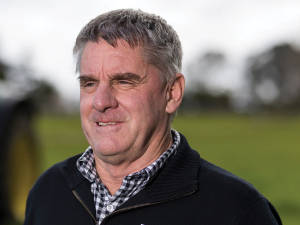
Federated Farmers has welcomed new rural policies released by ACT, saying they align closely with its own election priorities.

Rural Contractors NZ says proposed changes to land transport rules for agricultural vehicles are a welcome response by the Government to out of date regulations which have seen members hit with huge fines.
Alliance is calling for final applications for its 2027 Graduate Programme, with applications closing on Sunday 25 October.
Decades piloting planes has ensured vet and farmer David Hayes is focused on safety. So, after a serious accident while welding on farm, he is sharing his experience so others can learn from it.
Canterbury milk processor, Synlait Milk has confirmed Leon Fung as its chief executive officer.
OPINION: Making it easier to collect rainwater and use it to grow crops and livestock is a no brainer.