New Rural Recycling Scheme to Replace Voluntary Farm Plastics Programmes by 2027
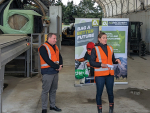
Environment Minister Nicola Grigg has announced details of a new rural plastics recycling scheme.
 increase font size
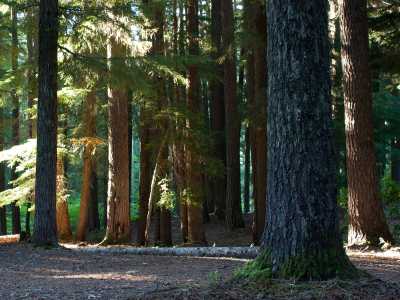
OPINION: That old saying about not being able to see the wood for the trees could well describe the government’s infatuation with forestry at the expense of farming.
Objections are growing stronger in rural New Zealand to the impact the ‘one billion trees’ programme will have on the regions’ farming landscapes, infrastructure and communities.
Concern is such that a new lobby group has formed, wanting to preserve the economy, health and welfare of the NZ provinces. Named 50 Shades of Green, it aims to convince politicians and decisionmakers that the current push to plant a billion trees will destroy the provinces and ultimately may endanger the national economy.
These are not non-productive or erosion prone areas of farms we are talking about. They are, in fact, entire productive food producing properties. Good productive farms are being bought out by often foreign owned entities and planted entirely in trees.
The government’s desire to use forests as carbon sinks to contribute to the country’s climate change commitments will impose devastating economic and social cost on rural NZ. This ignores warnings by the Parliamentary Commissioner for the Environment that planting pinus radiata is not a credible way of removing CO2 from the atmosphere.
It is ironic that the parties that make up the coalition government – Labour, NZ and the Greens – all promised at the last election to tighten the Overseas Investment Act. They did this in respect of housing and farm ownership. However, they loosened the rule under which overseas investors may come in and buy farmland and plant trees. So now overseas investors can come to NZ and buy up farmland, allowing the likes of oil companies, airlines and big power generators to use the land to carbon farm.
Once a tree is planted, little else is done with it for 30 years - aside from the odd pruning - until it is harvested (much longer if it is not a pine). Therefore jobs, communities and infrastructure in rural NZ will decline and fast. It is already estimated that the land now taken out of livestock production for forestry will mean the end of one meat processing facility. Consider the financial and social costs that will have on regional NZ.
As 50 Shades of Green warns: “Instead of revitalising the provinces this tree planting will destroy them.”
Environment Minister Nicola Grigg has announced details of a new rural plastics recycling scheme.
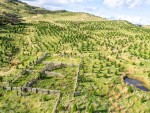
The New Zealand Institute of Forestry (NZIF) says unnecessary changes to New Zealand’s Emissions Trading Scheme (NZ ETS) will seriously erode investor confidence and result in significant reductions in forest planting rates.
For the first time in a quarter of a century, Federated Farmers has something positive to say about the Labour Party’s climate change policy leading into a general election.
The Ballance Farm Environment Awards are coming to the West Coast of the South Island.
Climate, nature and animal wellbeing make up Fonterra's refreshed sustainability roadmap released last week.


Farmer-owned fertiliser company, Ballance Agri Nutrients is welcoming National’s plan to negotiate security agreements with key supplier countries to protect New Zealand-bound products from export restrictions and greater supply chain certainty.

Carrfields has announced the appointment of Stu Hall to the newly created role of chief operating officer, Carrfields Ltd, reflecting the continued growth of their agribusinesses and the need to ensure the company has the leadership capacity and support in place as it pursues the emerging opportunities ahead.
New Zealand's role is not to compete with Indian growers, according to NZ Apples and Pears.
The potato industry is celebrating the success of two rising stars - James Blair, the 2026 Young Grower of the Year and runner-up and innovation award winner, Amber Davy.
Twenty-eight emerging leaders from across the horticulture sector spent two days last month learning valuable skills and connecting with industry experts.
There are five entrants in this year’s Young Horticulturist of the Year, competing in a series of technical, practical, business and leadership challenges.