NZ Forestry Exports to India Now Tariff Free
More than 95 per cent of New Zealand’s forestry and wood exports to India can now enter tariff free as the New Zealand-India Free Trade Agreement comes into force today.




 increase font size
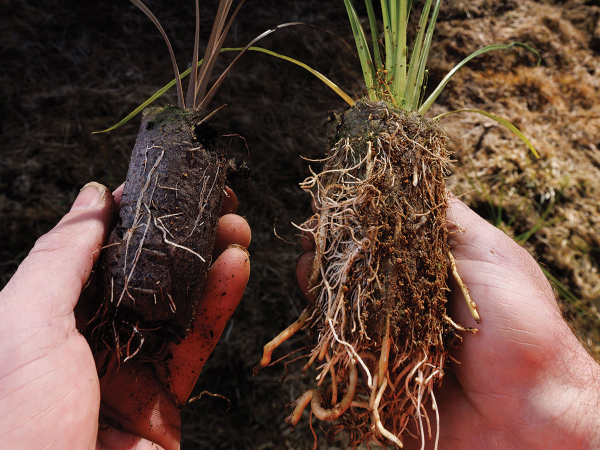 The root systems of two tī kouka seedlings grown in different containers.
A New Zealand-first native tree study has highlighted the Bioeconomy Science Institute's position as a forestry research leader.
Its work to improve propagation and increase the production of indigenous species in nurseries was the focus of a journal article published in 2025. This work investigated the impact of container grade size on the survival and field performance of 12 key native species - to better understand the link between containers and post-planting seedling survival and growth performance.
The study saw the Bioeconomy Science Institute team raise seedlings from the selected species in different container sizes and test how they performed in good-, average- or poor-quality sites. It was a collaborative effort with Te Uru Rākau - New Zealand Forest Service, Minginui Nursery, CNI Iwi Land Management, the Tumunui Land Trust, Timberlands, Rotorua Lakes Council and the Tipu Waiariki Charitable Trust (Tipu Wai), which provided the sites and helped with preparation and planting.
Industry-standard pots used for natives were compared with bigger containers such as 7cm and 8cm paper Ellepots and smaller forestry-grade pots. The effect of differences in the type of container were monitored to determine the impact on survival rates and tree growth across sites.
Programme lead David Siqueira says results showed variable patterns depending on tree species, container size and the quality of the respective planting sites. “Some species, such as manuka (Leptospermum scoparium), survived and grew well (>75%), even when raised in small containers, while others such as kowhai (Sophora microphylla) had low survival rates (< 5%), even when raised in revegetation container grade sizes.”
Other species such as cabbage tree (Cordyline australis) and totara (Podocarpus totara) appeared to depend more on site quality.
“The results show the importance of aligning the choice of container grade size to the needs of individual species and planting purpose,” Siqueira says.
“Nursery container systems for raising New Zealand native plants should be chosen based on the biology of the species, nursery management practices, quality of the planting site and a balance between cost and benefit for each situation.”
Nurseries have traditionally used large containers to successfully establish native species, but this means the trees take longer to grow – making this approach costly and labour-intensive at the planting stage. It also limits the rate of establishment.
“The conventional approach of sowing native seed, setting out and then growing in containers takes 12-36 months, adding significantly to native tree establishment costs over typical New Zealand-grown exotic forest trees,” Siqueira says.
“By enhancing our understanding of how container size affects native tree growth when planted in sites of varying qualities, we hope this research will result in more fit-for-purpose natives being raised in nurseries to generate our thriving future forests – conserving New Zealand’s biodiversity and contributing to the mitigation of climate change.”
More than 95 per cent of New Zealand’s forestry and wood exports to India can now enter tariff free as the New Zealand-India Free Trade Agreement comes into force today.
The New Zealand Institute of Forestry (NZIF) says unnecessary changes to New Zealand’s Emissions Trading Scheme (NZ ETS) will seriously erode investor confidence and result in significant reductions in forest planting rates.
New Zealand needs to make sure that it continues to focus on its own food security, according to HortNZ board member and blueberry grower Dermott Malley.
OPINION: It's a tough pill to swallow that bird flu (avian influenza) has finally arrived in New Zealand. This is a moment many of us have hoped would never come.
Bank of New Zealand (BNZ) and Pāmu (Landcorp Farming Limited) have developed a new way for landowners to earn revenue from existing native forests.


Alliance is calling for final applications for its 2027 Graduate Programme, with applications closing on Sunday 25 October.
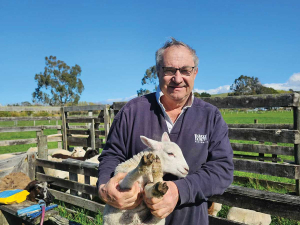
Decades piloting planes has ensured vet and farmer David Hayes is focused on safety. So, after a serious accident while welding on farm, he is sharing his experience so others can learn from it.
Canterbury milk processor, Synlait Milk has confirmed Leon Fung as its chief executive officer.
OPINION: Making it easier to collect rainwater and use it to grow crops and livestock is a no brainer.
As part of its Election 2026 coverage, Rural News asked political parties how they would help pull the arable sector out of the doldrums. Here's what they said:
Farmers are being encouraged to rethink how they manage waste on farm with the launch of ruralwastesorted.co.nz, a new website bringing together practical tips, real farmer experiences and resources.



OPINION: The same mainstream media muppets that brought you Jacindamania in 2017 have been flat out pimping for the Opportunities…
OPINION: Your old mate reckons the atrocious way farmers in the UK are treated by their lords and masters in…




