Fonterra CFO Andrew Murray Resigns
Fonterra Co-operative Group chief financial officer Andrew Murray has resigned to take up a role outside the dairy giant.
 increase font size
 Shane Jones.
Politician Shane Jones says his position as Associate Minister of SOEs, including Landcorp (Pāmu), gives him the right to have a crack at the quality of Fonterra’s farmer governance.
He would do well to look in his own backyard, or ministerial portfolios, for evidence of underperformance before attacking a privately owned company.
Landcorp just posted a net loss after tax of $11 million, quite a turnaround from the $34m net profit last year. Jones is noticeably quiet about this, preferring to draw attention to his favourite whipping horse, Fonterra.
Landcorp says the loss was due largely to a $22 million “fair value loss” on the valuation of livestock and forestry assets at June 30, 2019. The comparable result for 2017-18 included a $25m “fair value gain” on biological assets.
Chairman Warren Parker and chief executive Steven Carden said net profit suffered from the impact of the valuation write-downs. Revenue was impacted by lower milk production due to drought.
“Like other New Zealand farmers, Pāmu saw relatively high dairy and red meat prices through 2018-19 which were offset by weather extremes lowering production volumes,” said Parker.
“Most notably, summer and autumn rainfall was significantly below average across the North Island and parts of the South Island.”
Total revenue was down 2.4% to $241m (2017-18: $247m) because of lower milk, livestock and carbon credit revenues. Carbon credit revenue of $3m from a recent allocation of carbon units is less than half of that received last year ($8m).
Somewhat ironically, the company has declared a special dividend of $5m, largely due to a one off gain made on the sale of the company’s shares in Westland Dairy Cooperative. Jones has also attacked the quality of governance and recent sale of Westland.
Pamu’s poor result on behalf of its owner, the taxpayer, deserves an explanation from the ministers responsible, especially given the ongoing poor return on capital of this state owned asset.
Don’t expect one from Jones. Much easier to use Landcorp’s shareholding in Fonterra as an excuse to continue his attack on a farmer owned, private asset and use his power to issue veiled threats about forcing changes to DIRA.
Fonterra is being held to account by its shareholders.
And if accountability is the call, how about running the rule over outcomes from the Provincial Growth Fund -- Jones’ personal $3b slush fund?
Fonterra Co-operative Group chief financial officer Andrew Murray has resigned to take up a role outside the dairy giant.
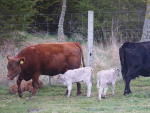
A major move is about to get underway to improve the quality and viability of dairy beef and cattle in NZ.
High country stations, mixed sheep and beef farms, Māori-owned farms, corporates and family operations are among the nine commercial farms taking part in the Livestock Innovation Farming Transformation programme, known as LIFT.
Pāmu has welcomed Taranaki student Paige Burston as its newest First Foundation Scholar, supporting her journey towards a career in agriculture and animal science.
Four candidates have been confirmed for two director positions on Fonterra’s board.


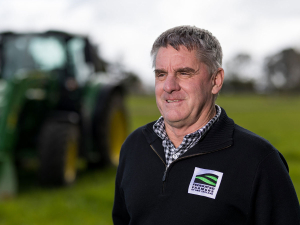
National’s pledge to introduce 19 new national standards shows the party is serious about getting Wellington out of farming, Federated Farmers says.
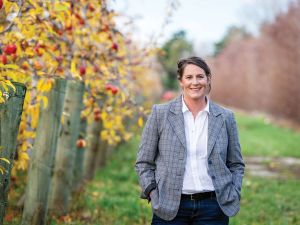
The National Party’s policies to make it easier to grow fresh vegetables, secure reliable water and energy and simplify farm planning are practical changes that will give growers the confidence to invest, according to Horticulture New Zealand (HortNZ).
Fonterra Co-operative Group chief financial officer Andrew Murray has resigned to take up a role outside the dairy giant.
A major move is about to get underway to improve the quality and viability of dairy beef and cattle in NZ.
Veterinarians say changes to the code of welfare for dairy cattle provides a positive foundation for improved cattle welfare across the country.
Today, 15 October, is the International Day of Rural Women, which recognises rural women’s contribution to farming, communities and the environment.