'Regulatory Middlemen'
OPINION: Groundswell's opinion of the incumbent farm industry representatives isn't high.
 increase font size
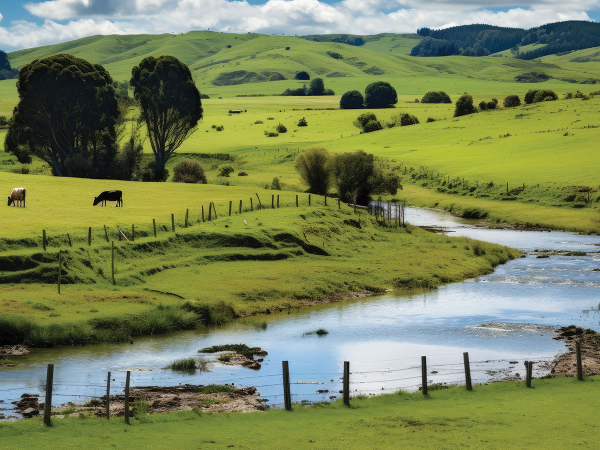 Sheep and beef farmers will be forced into a mandatory and more regulated freshwater farm plan regime.
OPINION: Many sheep and beef farmers will be worse off under the new environment legislation than they were under the Resource Management Act (RMA), claims Beef+Lamb New Zealand (B+LNZ) in an email to levy payers.
This will come as a surprise to farmers, who are under the impression the coalition Government is backing farmers, and committed to reducing government interference and red tape. So, what is going on?
B+LNZ’s email explains that sheep and beef farmers will be forced into a mandatory freshwater farm plan regime facing significantly higher administrative and regulatory burden than what they currently face. Our reading of the new legislation concurs with B+LNZ’s findings.
Under the existing Resource Management Act most sheep and beef farmers (and less intensive farms and those without irrigation) operate as a permitted activity, not requiring a consent. The presumption is that if the effects of your activity are no more than minor and you comply with any rules, then you can carry on free of government oversight. Another way of describing this is that regulators must provide justification for regulatory requirements on people. They can’t just regulate for the sake of regulation.
These restraints on regulators are one of the few good elements in the RMA and it is a major concern they have disappeared in the new legislation.
Under the new legislation, every livestock, horticulture and viticulture farmer over 50ha (arable is over 5ha) must have a Freshwater Farm Plan regardless of the region or catchment they are in, whether there are any freshwater issues or whether they operate as a permitted or consented activity. No regulatory or environmental justification is provided for this blanket requirement. The only reason the government have provided is that it is a compromise to quell the freshwater quality concerns of environmentalists and the public.
Reading through the fine print of the new legislation, intensive farming operations such as irrigators and dairy farmers may face less compliance, bureaucratic oversight and cost as the consent system is necessarily overhauled and an alternative, simpler freshwater farm plan pathway is provided. However, the government believes that in order for this to be acceptable to the public, all other farmers must now come under government oversight and essentially a consent to farm.
There are several alarming aspects to the proposed freshwater farm plan legislation.
It is not that farmers oppose farm plans as a useful management tool. Farmers have shown through industry initiatives and previous systems, e.g. catchment boards, they will embrace farm plans if used in the right context. But with a B+LNZ survey showing 83% of farmers opposed to mandatory government prescribed Freshwater Farm Plans, the legislation is doomed to fail.
With widespread adoption of industry led farm plans, the government’s proposal is completely unnecessary and shows they do not trust the rural sector to continue to take the lead in this space.
The Freshwater Farm Plan policy will be a key issue for farmers in the upcoming election and in the meantime, we are hoping that commonsense will prevail through the submission process.
OPINION: Groundswell's opinion of the incumbent farm industry representatives isn't high.

OPINION: Bouquets this week from the old mutt for Fed Farmers and Groundswell for continuing to resist the proposed Gore District plan and its intention to apply costly "cultural values" across the district and a raft of land classifications that are unworkable and counterproductive.
Three farmer lobby groups are applying the blowtorch to political parties on key issues facing the primary sector ahead of the general elections.
A drop in methane targets announced by the Government this month has pleased farmers but there are concerns that without cross-party support, the targets would change once a Labour-led Government is voted into office.
OPINION: This old mutt is loath to sound like Groundswell has been topping up his bowl with brisket off-cuts, but the ginger group makes a good point about the arguments raised in favour of toeing the Paris Agreement line.



Now in its fourth year, the 2026 Fencing Industry Awards, formed part of the proceedings of the FCANZ Conference, held in Nelson during August.
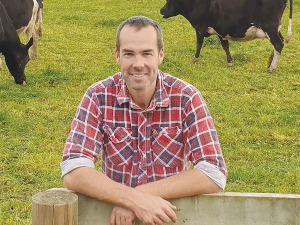
DairyNZ deputy chair Cameron Henderson has been re-appointed unopposed for another term.
OPINION: The stats speak for themselves.
Farms across the upper North Island are trialling different pasture mixes as part of a research programme that aims to build greater resilience into farming systems.
Election years are always a concerning time for farmers, according to DairyNZ chair Tracy Brown.
The Ballance Farm Environment Awards are coming to the West Coast of the South Island.