Milk Powder Prices Prop Up Farmgate Milk Price
Milk powder prices are keeping farmgate prices up, helping processors offset the dip in milk fat prices.
 increase font size
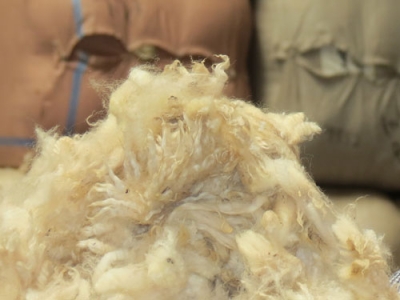
The first wool auction of the 2015/16 season saw a 92% clearance with a slightly softer tone, says NZWI general manager, John Dawson.
The auction, which offered 6800 bales, was made up of 80% short second shear wools.
Despite a weaker New Zealand dollar compared to the last sale on June 25, with the weighted currency indicator down 1.96%, the bulk of the offering was firm to 2% easier.
Dawson says that the seasonal slow-down is due to the approach of European vacation period and well-stocked supply lines in China. This is limiting new orders for wool temporarily.
Fine crossbred shears were firm to 2% cheaper.
Good colour coarse fleece were 1.5% down with average style firm to 1% firmer. Poor styles were up to 1% cheaper. Longer coarse shears were firm to 1% dearer with good colour short types firm to 3% dearer.
Oddments ranged from 2% cheaper to 3.5% dearer.
The auction saw good competition, with exporters continuing to cover orders mainly destined to China, Australasia and Western Europe, supported by India, United Kingdom and the Middle East.
The next sale on July 16 comprises about 7800 bales from the South Island.
Milk powder prices are keeping farmgate prices up, helping processors offset the dip in milk fat prices.

New Zealand wool is reaching new heights as air filtration companies move away from synthetic products to biodegradable alternatives.
Chinese beef trade quotas and a looming suspension of Brazilian beef imports into the European Union are expected to reshape global beef trade flows over the remainder of 2026, with implications for New Zealand exporters, according to Rabobank's Q3 Global Beef Quarterly report.
Will a stronger, more coordinated voice help rebuild confidence and improve returns in the wool sector?
Ballance Agri-Nutrients has released its latest fertiliser outlook, detailing some of the current global trends influencing fertiliser supply. Ballance head of procurement Shane Crean takes part in a Q&A in the report:



Federated Farmers has welcomed new rural policies released by ACT, saying they align closely with its own election priorities.

Rural Contractors NZ says proposed changes to land transport rules for agricultural vehicles are a welcome response by the Government to out of date regulations which have seen members hit with huge fines.
Alliance is calling for final applications for its 2027 Graduate Programme, with applications closing on Sunday 25 October.
Decades piloting planes has ensured vet and farmer David Hayes is focused on safety. So, after a serious accident while welding on farm, he is sharing his experience so others can learn from it.
Canterbury milk processor, Synlait Milk has confirmed Leon Fung as its chief executive officer.
OPINION: Making it easier to collect rainwater and use it to grow crops and livestock is a no brainer.
