Editorial: Wool's Back in the Black
OPINION: Confidence in the wool sector is rebounding as prices hit levels not seen in more than 15 years.
 increase font size
 The weighted indicator eased 1.1%, giving a small amount of support to local prices.
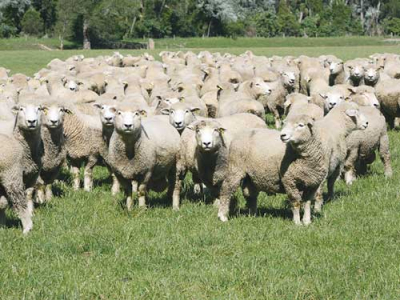
The South Island sale of 8565 bales comprising a wide range of wool types saw good support with 78% of the offering selling.
NZ Wool Services International Ltd’s chief executive John Dawson reports the a weakening NZ dollar compared to the main trading currencies saw the weighted indicator easing 1.1% compared to last week, giving a small amount of support to local prices.
Dawson advises pressure for quick shipment of orders and the diverse wool types on offer attracted good support, helping underpin the market.
Compared to last time offered at the South Island sale on September 22 merino fleece 16 to 19 microns were firm to 1.5% cheaper with 20 to 23 microns generally 1.5% easier and mid micron fleece 25 microns were 1% dearer with 25.5 to 29 microns 1 to 4% cheaper.
Compared to the North Island sale on September 29 fine crossbred fleece 32 to 35 microns were firm with early shorn and second shears 3 to 5 and 3 to 4 inches also remaining firm. Shears 2 to 4 inches were 2 to 3.5% cheaper with 2 to 3 inches firm to 1% cheaper.
Coarse crossbred full fleece were firm for good colour and 1% dearer for average colour.
Longer coarse shears were firm with 2 to 4 inches 3.5 to 5.5% cheaper and 2 to 3 inches 2.5% easier.
Short oddments were 4 to 6% cheaper with faulted lines discounted the most.
The next sale on October 20 comprises about 5600 bales from the North Island and 8150 bales from the South Island.
OPINION: Confidence in the wool sector is rebounding as prices hit levels not seen in more than 15 years.
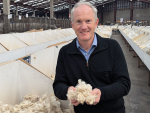
The recently signed free trade agreement with India is an invitation to strengthen relationships between the New Zealand and Indian strong wool industries, says Wool Impact chief executive Andy Caughey.
Strong competition and tightening supply have seen wool reach its highest prices paid at auction since 2011.
A collaboration between two New Zealand companies will see wool used as a renewable colour source for 3D printing.
OPINION: A bumper season all around.



OPINION: In politics, credibility is and should be big. It must surely rank higher than charisma, which is quite trite and superficial. Yet, voters nowadays are often wooed and influenced by how someone looks or talks at a superficial level. TV plays a huge role in this.

Farmers can spend less time on paperwork, thanks to a new data sharing agreement between DairyNZ’s DairyBase and LIC’s MINDA software.
Kaikōura families affected by July's severe storm have found a practical solution to a problem that's kept some children away from regular schooling for weeks: a washed-out section of Inland Kaikōura Road, which has stopped the local school bus from running its usual route.
Rural New Zealand is welcoming the Government’s recent package of rural healthcare initiatives.
Interest in agritech and production animal systems has prompted Massey University's School of Agriculture and the Environment to new majors to its popular animal science degree.
Ballance Agrinutrients chief executive Kelvin Wickham says despite a tough year, he is pleased the business has returned to profit.
