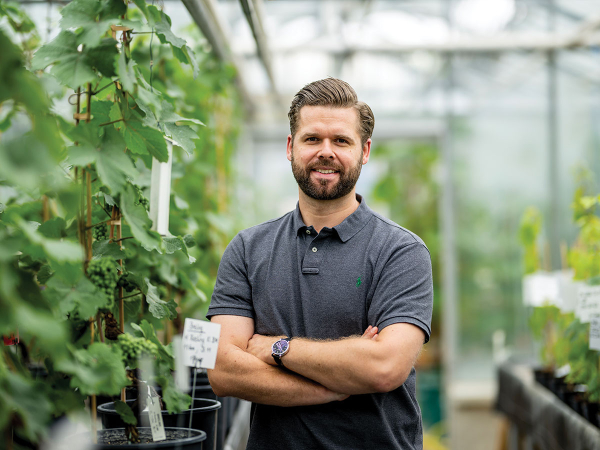
It’s a balancing act, says New Zealand Society for Viticulture and Oenology (NZSVO) committee member Dr David (DJ) Jordan, who was delighted to see the quality and spectrum of presentations at the symposium, held in Ōtautahi Christchurch in late January, from technical discussions to exciting research to philosophical views on cool climate winegrowing.
The NZSVO hosted the event for the third time in the symposium’s 42 year history, with the last New Zealand iteration in 2006. DJ says many attendees, domestic and international, will have left with hard and fast ideas of technology and research they could implement in their operations, such as spinning cone technology for low- and no-alcohol wines, robotics in vineyards, and “myth busting” perceptions of yield to quality ratios in Pinot Noir. Others took away insights into more distant “frontiers”, with “high risk, high reward” developments in the field, winery and research labs, such as plant breeding for better vineyard genetics, computer vision for vine management, and the influence of music on wine tasting.
NZSVO Chair Jeff Sinnott says another important aspect of these events is to inform researchers on what industry needs next. “The symposium gave researchers an opportunity to interface directly with those who will benefit.”
Attendees relished the collegiality of the event, with coffee stand conversations at Te Pae Christchurch Convention Centre often yielding as much as the seminars themselves. “When you’ve got people with a common interest or a point of connection, I think you actually get a very healthy exchange,” DJ says. He notes that cool climate winegrowing is holding up relatively well in the challenging marketplace. White wine styles made in cool climates, including sparkling wine, are “the shining light at the moment”, making the timing perfect for a deep dive into what’s new and what’s ahead for producers.
Experts Take The Stage
The programme began with a series of firsthand perspectives from around the world, including Nick Lane, from Defined Wine, based in Kent in the United Kingdom, discussing the challenges and opportunities of contract winemaking in that marginal climate, including easterlies off the North Sea, the heat emanating from London, the growth of hybrid varieties, and the boost to growing degree days as climate change progresses. As that happens, winegrowing areas of England, predominantly east of London, are looking at very similar climates to Burgundy and Champagne, he said. But his talk was named “Extracting the best from a marginal climate” for a reason. “Marginal means that sometimes you succeed, and sometimes you have to adapt. You can’t quite do all of the things that ideally you want to do.”
Anne Escalle, who runs Edmond de Rothschild’s Rimapere and Akarua operations in New Zealand, talked of transplanting her French wine roots into a beloved New Zealand context, and her continued passion for cool climate winegrowing. Jenifer Cugat, from the Catena Institute in Argentina, discussed the science-driven sustainability of Catenamics, including high-altitude viticulture, and research into soils and climate.
Jeff says that was one of the most acclaimed sessions, noting that producing cool climate wines under extreme resource constraints is increasingly pertinent. “Their work really digs into what levers we can use to influence quality. Obviously site plays a huge role, but there are other things they are doing under really tight water constraints, which is something New Zealand, and all cool climate regions, could end up facing.”
The morning sessions were followed by an afternoon of concurrent workshops, including Nick Lane, along with New Zealand winemakers Jane DeWitt and Andy Petrie, discussing cool climate sparkling autolysis, as attendees tasted a selection of wines and base research wines from around the world. Meanwhile, viticulturist Ivan Sutherland, winemaker Jules Taylor and wine scientist Dr Frank Benkwitz showcased the evolution of New Zealand Sauvignon Blanc, alongside a tasting that ranged from alternative styles to a high thiol example. Other workshops included an exploration of low- and no- alcohol wine, and a session on vintage resilience in the face of seasonal variation, expertly led by Jenifer Cugat and Dr Amber Parker, Director of the Centre for Viticulture and Oenology at Lincoln University.
What's Cool Right Now?
The second day progressed into a more technical portfolio, with Professor Richard Green, from University of Canterbury Computer Vision (UC Vision), updating delegates on a project that started 15 years ago with aspirations for robotic pruning, requiring a perfect 3D vine model with which to make decisions. The model proved far more challenging than he’d originally anticipated, but he hopes to have trials running in vineyards within two years. Meanwhile the UC Vision team has added yield monitoring to its projects, requiring an even more complicated 3D model, with “not just the structure of the canes but all the organs of a vine plant and how they are attached,” he said, talking of the 3D model capturing inflorescences, bunches and leaves, with fortnightly scanning able to show exact growth to submillimetre accuracy. That programme requires very complex coding, but should also be ready to roll in a few years as well, Richard said. “We’re getting pretty close.”
 |
|---|
|
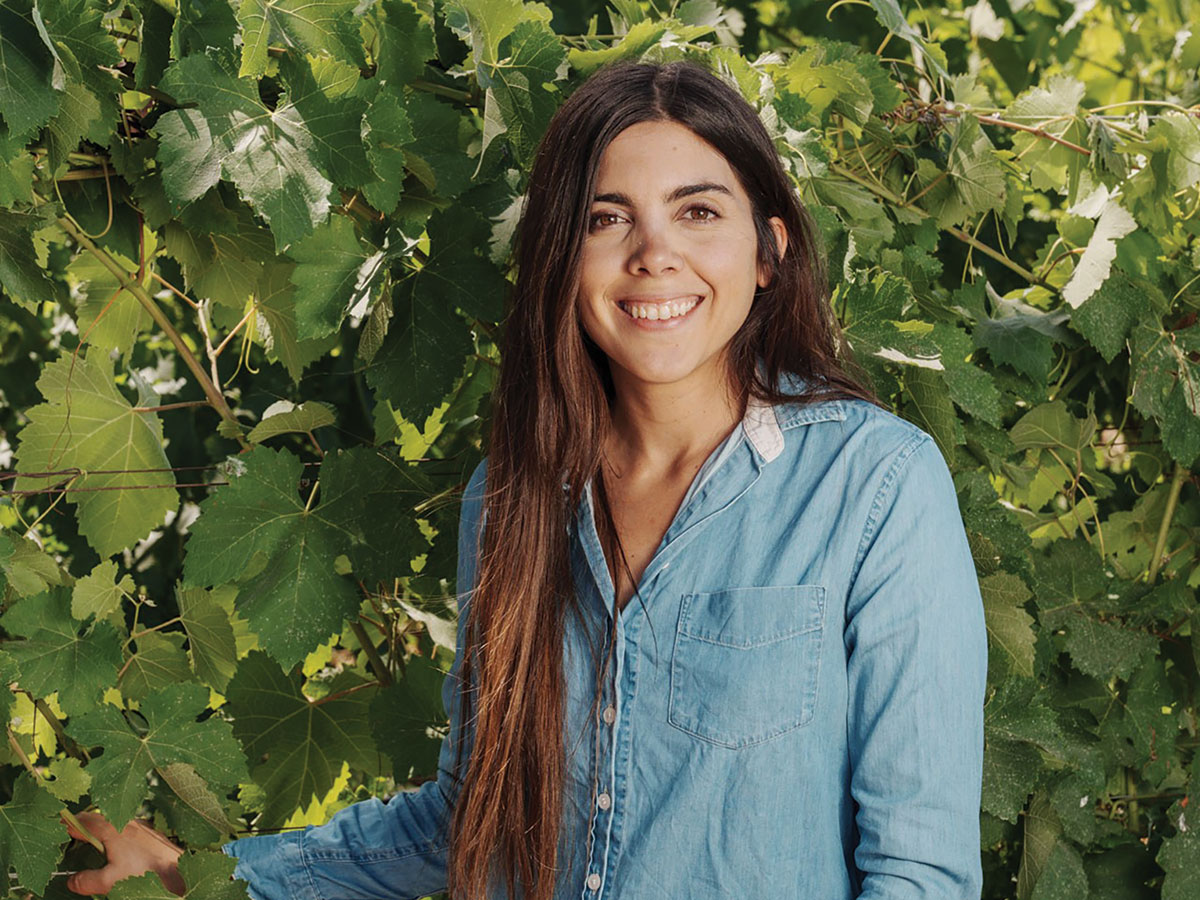
Jenifer Cugat, from the Catena Institute in Argentina.
|
Amber Parker then took to the stage, borrowing The Delorian from 1980s movie Back to the Future to cruise into the past and forward to winegrowing’s potential scenarios. Climate change is reflected in advancing plant phenology, so having a time machine (and/or phenology models and climate models) can help the industry adapt. She also looked at what makes a cool climate, canvassing several metrics used to explain the concept. As growing degree days step up under climate change scenarios, some winegrowing regions will no longer be considered cool climate. Others, such as Marlborough, might not meet the definition in terms of growing degree days, but are nonetheless “easily categorised” as cool, as other factors such as acidity and leaf senescence at harvest may remain, Amber said. “It might be warmer, but many cool climate regions still express wines that we would consider typical of cool climate.”
Dr Kai Voss-Fels, a professor at Hochschule Geisenheim University, discussed the real-world impact of grapevine breeding using precision and prediction tools, enabling selection decisions based on genome profiles. As with all the keynote sessions, the breeding seminar was layered with a workshop later that day, in which Kai was joined by Dr Ross Bicknell, Programme Leader in grape genetics at the Bioeconomy Science Institute (formerly Plant & Food Research), and Dr Darrell Lizamore, Bragato Research Institute Principal Research Scientist, who leads the Grapevine Improvement team based at Lincoln University. The trio discussed “future proofing through grapevine genetics” with engaged workshop attendees, who were keen to traverse the likes of CRISPR gene editing, New Zealand developments in plant breeding, and the impact of regulations and quarantine on both breeding and introducing new genetics, says DJ. New Zealand has “real talent” and it was great to showcase the work of researchers like Darrell and Ross in the workshops, he adds.
Dr Patricia Skinkis, from Oregon State University, talked about research showing that lower Pinot Noir yields don’t always result in higher quality wine, in a seminar followed by a workshop with Amber, and chaired by Dr Mark Krasnow, looking at grapevine physiology in a changing environment. Mark, who is on the NZSVO organising committee, says the workshops offered attendees opportunity to dig deeper into the research topics, with the vine physiology workshop delving into vine balance. The “myth busting” of Patricia’s seminar, and the consequent workshop, was a big takeaway for many attendees, says Jeff. “The outcome of cluster thinning does not necessarily always result in higher quality.” Patricia’s sensory research also showed that winemakers were influenced by their perception of yield versus quality, and judged the same wine differently when they knew what level it was cropped at.
That step into sensory science continued in the last session of day two’s seminars, with Dr Jo Burzynska, a sound artist, wine writer, researcher and curator, discussing how sounds and music influence the perception of wine characters for consumers and experts alike. In a workshop following her session, attendees, including many winemakers, tasted each wine in silence and then with two different pieces of music, and discussed how the flavour and mouthfeel changed, sometimes dramatically, as the soundscape shifted. In many cases there was a very similar response, with several attendees saying a wine became less or more acidic, for example, or became more balanced with a certain piece of music. Research indicates that the experience is likely to do with “cross modal correspondences” altering the perception of aromas, flavours, and textures when we’re listening to sound, said Jo in the workshop, noting that the complexity of wine appears to make the sound influence more pervasive.
Future Focused
Day three was another frontier showcase, with a series of short presentations from researchers, including new insights into the effectiveness of machine shaking, AI forecasting for downy mildew, and high-speed, low-energy cold stabilisation. Meanwhile, Jane Skilton MW, along with winemakers Warren Gibson and Murray Cook, ran a tasting exploring the “next generation” of New Zealand Chardonnay, with a “mosaic of styles”, while Jenifer Cugat and Marlborough District Council Senior Environmental Scientist Matt Oliver discussed the use and protection of water.
A tech session canvassed the potential “applications for robotics and precision tools” in vineyards, with Brock Campbell, Cloudy Bay Viticulture Operations and Project Manager, talking about the success of V3, an inhouse autonomous tractor that has achieved 3,000 hours of work in Marlborough. This growing season V3 was running 14 hours a day. Brock was joined by Dr Oliver Batchelor and Dr Ritchie Ellingham, from Canterbury University, who discussed the progress of UC Vision, illustrating the technical work behind the 3D model of a grapevine, segmented to separate out the grapes, leaves and vines.
The business part of the day ended with what DJ introduced as “three key components” driving people in the wine industry, with sustainability, understanding the market, and insights into the future. “I think it’s the energy and excitement of what’s around the corner that energises how we approach the day, what we’re thinking about in that year or that vintage, and what lies ahead,” he said. Yealands Wines Sustainability Manager Andree Piddington discussed the Marlborough company’s emissions journey (see page 26), with detailed insights into how to reduce Scope 1 and 2 emissions, for which they have control, as well as Scope 3, referring to upstream and downstream suppliers. Jane Skilton talked of “what’s hot” in cool climate wine, and the ever-eloquent Nigel Greening, from Felton Road, approached some “forks in the road”.
 |
|---|
|
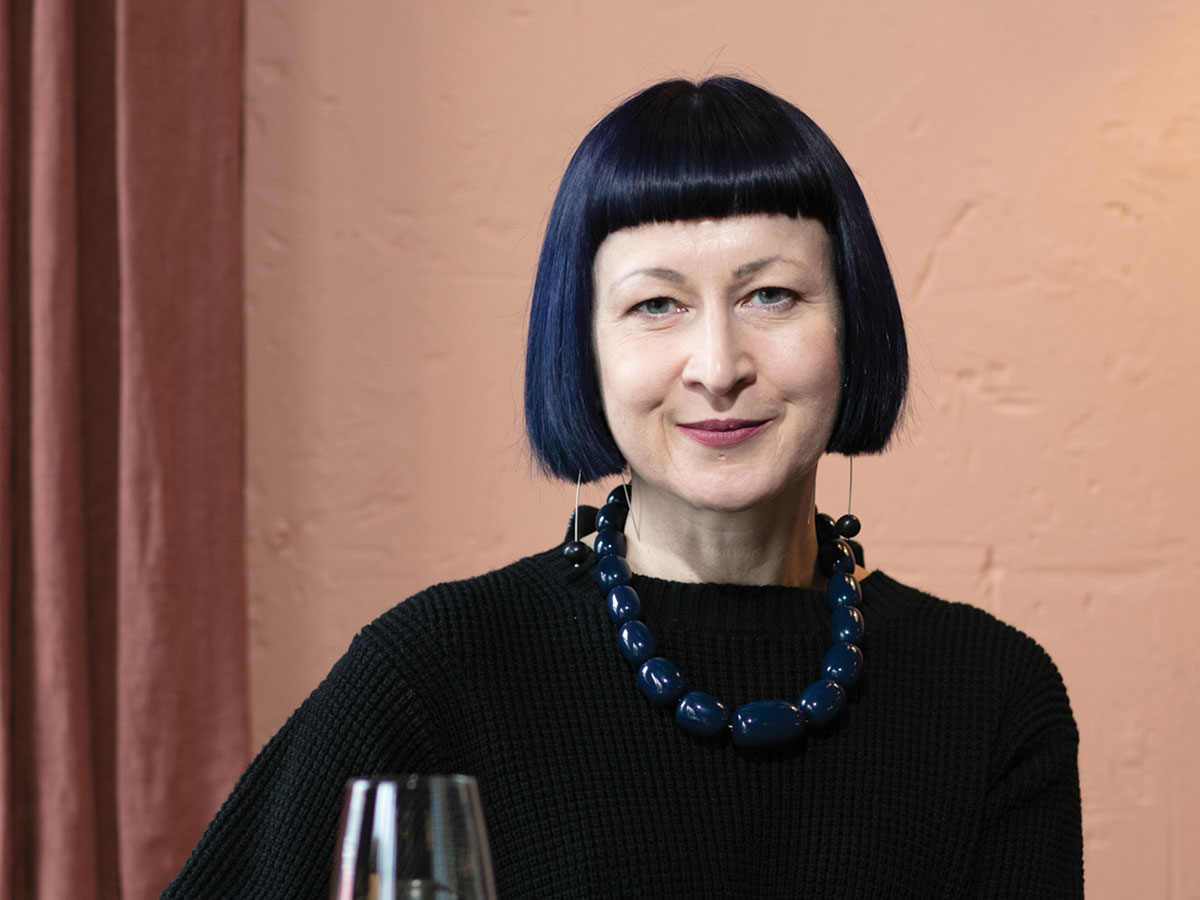
Jo Burzynska revealed the influence of sound on wine sensory experiences. Photo Credit: Babiche Martens.
|
Organisers wove together a complex programme of concurrent sessions, with 12 keynote speakers, dozens of workshop experts and facilitators, and an array of “hot off the press” presentations offering cutting edge research. There were also more than 40 posters, revealing exciting early-stage research with demonstrable, repeatable results. “I expect we’ll see some of these researchers as keynote speakers in the future,” Jeff says.
Beyond the technical and coffee cart highlights, social session included Jo Burzynska’s ‘Sonic Aperitif’, pairing musical genres with specific wines at Christchurch Art Gallery Te Puna o Waiwhetū, access to the extraordinary Banksy exhibition at Te Pae, and a gala dinner celebrating cool climate wine and New Zealand kai.
Lower registration numbers of 260 were originally a concern for the committee, but proved to be a substantial benefit, says NZSVO Executive Officer Stephanie McIntyre. “Participants actively engaged with one another, discussing wines and sharing insights rather than focusing solely on their individual experiences. This collaborative approach enhanced the learning experience for everyone involved.”
DJ says the committee behind the event was driven by the same “cooperation and collaboration” he’s enjoyed since joining the NZSVO 37 years ago. “Everybody just rolls up their sleeves and does stuff to make it happen… There’s huge amount of effort for that group of volunteers to pull off an international event like the Cool Climate Symposium.”
Sessions from keynotes speakers and some workshops are available to New Zealand Society for Viticulture and Oenology members: nzsvo.org.nz.