DWN joins forces with Deosan
Dairy Women’s Network has signed on a new dairying partner in Waikato-based company Deosan this month.
 increase font size
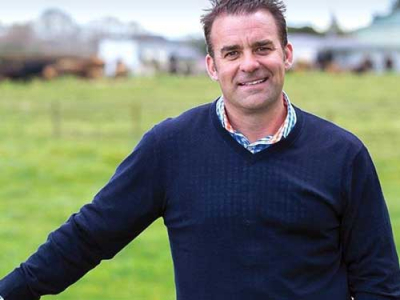 Deosan chief executive Kip Bodle.
Research at the universities of Otago and Auckland is aimed at developing and field testing new teat sanitising products within two-three years, to control bovine mastitis.
The $1.7 million Ministry of Business, Industry and Enterprise-funded study, which also involves animal health company Deosan, will use microbiology and medicinal chemistry to advance new anti-mastitis molecules. The result will be “entirely new” teat care formulations.
Mastitis costs the NZ dairy industry at least $280m per year in treatment and discarded milk.
The dairy industry now relies on just two antimicrobial sanitisers to control mastitis, administered through teat sprays, the universities’ research teams say.
Both formulations contain bioactive ingredients (chlorhexidine or iodine) also used to control infection in hospitals. But because of the mounting threat of antimicrobial resistance in clinical environments and lower acceptance of chemical residues in consumer products, there is a call for new types of products for the dairy industry.
Previous research, supported by Agmardt, uncovered a new class of molecules with potent antimicrobial activity against mastitis-causing microorganisms; these have the potential to work with current treatments, and they are not harmful to mammal’s cells.
Deosan chief executive Kip Bodle says this project can help support NZ’s global leadership in producing quality milk.
“Our success in commercialising products could have global significance…. NZ innovation in milk quality resonates well with emerging dairy markets.”
The Otago research team is led by professor Greg Cook, Michelle McConnell and Adam Heikal; the Auckland University team has professor Margaret Brimble, Deosan, and others.
Dairy Women’s Network has signed on a new dairying partner in Waikato-based company Deosan this month.

Two Waikato agribusinesses, Deosan and Waikato Milking Systems, have joined with the province's rugby stars to promote sport in schools.


There has been another twist to the Federated Farmers annual election fiasco.
Analysis of decades of research has revealed the implementation of good farming practices plays a critical role in reducing nutrient losses to improve freshwater outcomes.
Yesterday the Government used the opening of Fieldays to announce a major investment, as part of its Land Use Flexibility package, to support a more productive and sustainable future across six sectors including dairy.
Dairy farmers need to be high quality partners to the beef industry, says Prem Maan, the co-founder and executive chairman of the dairy corporate Southern Pastures.
The regions that will host clinical training for the University of Waikato's new medical school from 2028 have been confirmed, alongside a new nationwide approach to clinical placements for medical students.
The bumpy road you travel on teachs you a lot, believes Don Watson. And that’s the message he and wife Kirsten, supreme winners of the Auckland Ballance Farm Environment Awards, aim to pass on to their three sons.