What Would Synlait Be Worth to Fonterra or a2 Milk?
Speculation of a possible joint move by Fonterra and a2 Milk to buy Synlait raises a much bigger strategic question, says agribusiness expert Dr Nic Lees.
 increase font size
 Hayley Moynihan
A new report cautions taking the lucrative Asian infant formula and liquid milk market for granted.
In a recently released report ‘Magnetic milk – the lure of dairy investment down under’, Rabobank says a specific focus for overseas investors in New Zealand dairy has been on securing access to liquid milk and ingredients for infant formula.
In 2014 there was a flurry of inbound investment activity by Asian dairy companies, mostly from China, into the New Zealand and Australian dairy sectors. However Rabobank warns that ongoing growth in import requirements by Chinese and other Asian dairy companies shouldn’t be taken for granted.
The report co-author, Rabobank’s director of dairy research, New Zealand and Asia, Hayley Moynihan, says a quest to secure access to a high-quality, safe milk pool is driving international investment in dairy down under.
“Between 2014 and 2020 we expect China and South East Asia combined to account for almost one third of the increase in global dairy imports,” Moynihan says.
“For the New Zealand and Australian dairy sectors – collectively known as Oceania – preferential market access, reputation for quality and geographical proximity are the magnetic forces supporting the investment flows into this region, and they will continue to do so.”
With demand growth in Asia expected to outstrip local supply growth capabilities, and hence drive global trade over the medium-term, many New Zealand and Australian dairy exporters are positioning themselves towards Asia, the Rabobank report says.
“Many company strategies are heavily focused on capitalising on the growing opportunity presented by dairy demand in Asia.
“For Oceania processors, the strategic desire is often about building links to extensive distribution networks and local knowledge to tap into key growth export markets. Strategic partnerships can help smooth market access and thwart the impost of regulatory trade barriers.”
However, for all dairy exporters looking to engineer export strategies towards dairy markets in China, a level of caution is now required particularly over nutritional powders and liquid milk markets, Rabobank warns.
Moynihan says that spectacular rates in recent years growth have fuelled investment within Oceania and further afield as companies recognise the opportunity.
“Import volume growth is expected to expand, but the rate of growth will be slower over the medium-term as the dairy market matures and retail price points challenge consumers who are facing lower rates of income growth.
“At the same time, there is significant investment in capacity in many parts of the world generating intense competition and the risk of oversupply.
Complicating matters, regulation has been tightened, particularly in the Chinese infant formula category, and is still proving challenging.”
Looking forward, Moynihan notes companies inside and outside the Asian region will further deepen market relationships and boost cooperation.
Speculation of a possible joint move by Fonterra and a2 Milk to buy Synlait raises a much bigger strategic question, says agribusiness expert Dr Nic Lees.

OPINION: Media reports say global recalls tied to cereulide toxin contamination in milk-based nutrition brands could inflict combined financial losses exceeding $1 billion.
OPINION: As soon as RNZ realised MP Andrew Hoggard's sister worked for Dairy Companies Association of NZ (DCANZ) and was, shock horror, lobbying government on behalf of its members, it wasted no time accusing him of not managing conflicts of interests.
Manufacturers of infant formula are largely supportive of a proposed new domestic labelling standard for their products.
The once-lucrative Chinese infant formula market is shrinking.



Red meat farmers are welcoming Labour’s plan to review the Emissions Trading Scheme and not to campaign on pricing agricultural emissions.
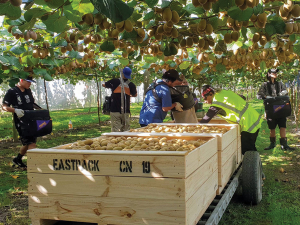
Where any worker in the kiwifruit industry is mistreated, we expect the authorities to take action.
Mid Canterbury Federated Farmers arable chair, Bevan Lill, said Beef + Lamb NZ data indicated that for the last six years, the average arable return on investment was about 0.8% while inflation ran about 4% - so the average arable farm was going backwards at about 3% a year.
Seed and grain companies share the concerns of arable farmers about the viability of their sector, says Seed and Grain New Zealand chief executive Dr Sarah Clark.
The New Zealand Institute of Forestry (NZIF) says unnecessary changes to New Zealand’s Emissions Trading Scheme (NZ ETS) will seriously erode investor confidence and result in significant reductions in forest planting rates.
For the first time in a quarter of a century, Federated Farmers has something positive to say about the Labour Party’s climate change policy leading into a general election.