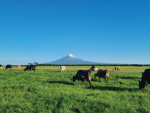
World's first hybrid clover
Plant breeder Germinal has announced the release of the world’s first hybrid of white and Caucasian clover.
 increase font size
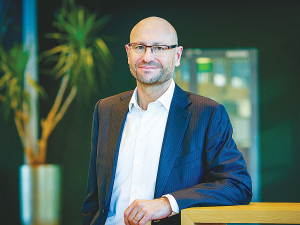
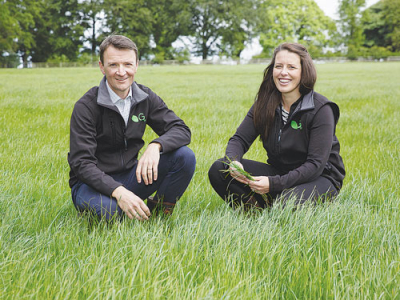 Sarah Gard, newly-appointed Trials and Product Development Manager for Germinal NZ with Germinal managing director William Gilbert.
International seed business Germinal is increasing its presence in New Zealand, appointing Sarah Gard, of North Canterbury, as its trials and product development manager.
Gard will manage the development of Germinal’s new Aber High Sugar Grass (AberHSG) and clover varieties specifically for NZ conditions, working from a 4ha trial site at Yaldhurst, near Christchurch.
Germinal Holdings Ltd was founded in Northern Ireland in 1825, and is now the largest family-owned British and Irish forage and amenity seed company, active in 25 countries.
It has the worldwide production and marketing rights to all varieties of grass and clover bred by the Institute of Biological Environmental and Rural Science (IBERS), at Aberystwyth University in Wales. It is owned by the Gilbert family, with John Gilbert as chairman and his son William managing director.
Until recently, Genetic Technologies acted as Germinal’s agent in NZ, with Gard as its product development agronomist. Then came an amicable split under which Genetic Technologies will concentrate on crop seeds, while Germinal manages its own NZ pasture seed marketing and development led by Gard.
She has just returned from a trip to Germinal’s headquarters in Belfast and to IBERS in Wales.
“It was great to meet the breeding team at IBERS and get a firsthand view of the R&D they do for Germinal that eventually benefits NZ dairy farmers.
“In NZ I’ll be doing practical selection work to help improve future results of Germinal’s AberHSG varieties on the Dairy New Zealand Forage Variety Index and in other measurements, so sheep, beef and dairy farmers can make informed, confident and profitable decisions.”
Gard, BAgSc (Hons) from Lincoln University, was raised on a sheep and beef farm. She and her husband Will manage a 1400-milking cow dairy farm at Swannanoa, North Canterbury.
Gard said all Germinal’s seed breeding was done in Britain in the past but under the new set-up she will be able to develop varieties especially to suit the NZ climate.
“There are many climatic differences between Wales and NZ, and they breed their grasses to shut down a lot more over winter in the United Kingdom.”
Growing seed in isolation blocks at Yaldhurst, she will be selecting for traits like more early spring growth.
“It’s important that we’re doing those selections in NZ now, which is not something we’ve done in the past.”
She says Germinal’s AberHSG strains are bred for a high level of water-soluble carbohydrate content, with all the benefits that go with that.
“The high sugar in the grass works by giving more energy to the microbes in the rumen and they’re able to utilise more of the protein from the grass. Therefore they excrete less of it out the back end.”
Germinal’s ryegrasses tend to have dense and prostrate habits for less pugging on dairy pastures, but also suit all farm systems.
“Some farmers say our ryegrasses have a bit more drought tolerance than some other ryegrasses. So there’s a lot of use on North Canterbury sheep farms as well.”
Another product is AberLasting clover -- a cross between white and Caucasian clovers -- which Gard says many breeders had been trying for decades to achieve before IBERS achieved it.
Plant breeder Germinal has announced the release of the world’s first hybrid of white and Caucasian clover.
A new high sugar grass now available in NZ has the potential to significantly lift animal production and reduce farmer’s environmental footprint.
A new higher-fat variety of ryegrass could help farmers boost production while lowering methane emissions, says agricultural seed company Germinal.
UK seed company Germinal’s plant breeding programme in New Zealand is progressing well, says general manager Sarah Gard.

Farmer-owned fertiliser company, Ballance Agri Nutrients is welcoming National’s plan to negotiate security agreements with key supplier countries to protect New Zealand-bound products from export restrictions and greater supply chain certainty.

Carrfields has announced the appointment of Stu Hall to the newly created role of chief operating officer, Carrfields Ltd, reflecting the continued growth of their agribusinesses and the need to ensure the company has the leadership capacity and support in place as it pursues the emerging opportunities ahead.
New Zealand's role is not to compete with Indian growers, according to NZ Apples and Pears.
The potato industry is celebrating the success of two rising stars - James Blair, the 2026 Young Grower of the Year and runner-up and innovation award winner, Amber Davy.
Twenty-eight emerging leaders from across the horticulture sector spent two days last month learning valuable skills and connecting with industry experts.
There are five entrants in this year’s Young Horticulturist of the Year, competing in a series of technical, practical, business and leadership challenges.