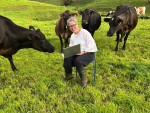
International Day of Rural Women: Two DairyNZ Farmers’ Stories
Today, 15 October, is the International Day of Rural Women, which recognises rural women’s contribution to farming, communities and the environment.
 increase font size
 Kate Stewart, DairyNZ.
Mastitis control must be front of mind for farmers preparing to dry off cows for winter.
It’s best practice only to use antibiotic dry cow therapy (DCT) to treat cows that display mastitis symptoms. For other animals, use alternatives such as internal teat sealants to prevent mastitis infection.
Interestingly, research has found that internal teat sealants are just as effective as DCT. They reduce rates of new infections over the dry period and reduce rates of clinical mastitis in the subsequent lactation.
Here are a few tips when using ITS:
• use good hygiene practices to avoid pathogens being introduced into the mammary gland
• work with your vet to ensure anyone administering ITS receives thorough training first.
How do you determine which cows need antibiotic DCT versus ITS?
The best way to identify which cows need antibiotics is to individually test your herds SCC, which can be done through a herd test or culture test by a vet.
A good case study is Manawatu dairy farmer Christine Finnigan who used milk testing to improve her mastitis control.
Finnigan two years ago was having to treat up to a quarter of her herd (about 50 cows) with antibiotic DCT, but this year she’s only had to use it to treat five cows.
She achieved these results thanks to the support of her local vet who recommended she milk test cows with mid-high SCC to identify the type of bacteria causing the infection and develop a tailored treatment plan based on the results.
She believes it’s equally important to target cows with a mid SCC, which can sometimes “go under the radar” as they pose just as big a risk to infect other cows with Staph aureus as those with a high SCC.
Finnigan used internal teat sealants for her whole herd and followed best management practice in the milking shed to avoid mastitis.
She recommends farmers talk to their vet about the benefits of milk testing as part of their strategy to prevent mastitis.
“If you don’t know what’s causing it, it’s difficult to deal with it. Milk sampling has given us a lot of information that’s been really helpful and given us a pathway to reduce our SCC and the use of antibiotics.”
She says the milk sampling was relatively inexpensive and saved her money in the long run.
“Milk tests (through our vet) cost about $10 a sample, whereas the cost of DCT antibiotics is about $12 a cow. It’s worth doing as you’ll save 30% of your cows needing antibiotics. You’ll be in no worse a position this year and in a better position next year.”
“Our average bulk SCC used to be about 150,000 cells/ML, which wasn’t bad. But we’ve managed to drop that even lower, to less than 100,000 cells/ML.”
For more information on drying off and preventing mastitis visit dairynz.co.nz/mastitis
• Kate Stewart is a DairyNZ consulting officer in Palmerston North.
Today, 15 October, is the International Day of Rural Women, which recognises rural women’s contribution to farming, communities and the environment.
The first major update to the Dairy Cattle Code of Welfare in more than a decade has been released, marking what DairyNZ describes as an important step in ensuring animal welfare standards continue to evolve alongside scientific evidence and on-farm realities.
Have a plan in place for your cows and staff.
DairyNZ deputy chair Cameron Henderson has been re-appointed unopposed for another term.
OPINION: The stats speak for themselves.



Alliance is calling for final applications for its 2027 Graduate Programme, with applications closing on Sunday 25 October.
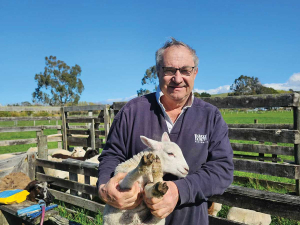
Decades piloting planes has ensured vet and farmer David Hayes is focused on safety. So, after a serious accident while welding on farm, he is sharing his experience so others can learn from it.
Canterbury milk processor, Synlait Milk has confirmed Leon Fung as its chief executive officer.
OPINION: Making it easier to collect rainwater and use it to grow crops and livestock is a no brainer.
As part of its Election 2026 coverage, Rural News asked political parties how they would help pull the arable sector out of the doldrums. Here's what they said:
Farmers are being encouraged to rethink how they manage waste on farm with the launch of ruralwastesorted.co.nz, a new website bringing together practical tips, real farmer experiences and resources.