Westpac Urges Farmers to Prepare Now for El Niño Drought
Westpac NZ is calling on farmers and growers to start preparing now for the possibility of a dry summer, as likely El Niño conditions raise the risk of drought across parts of the country.




 increase font size
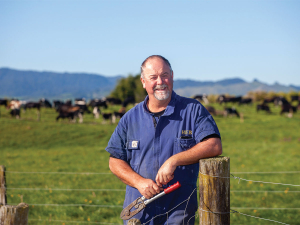
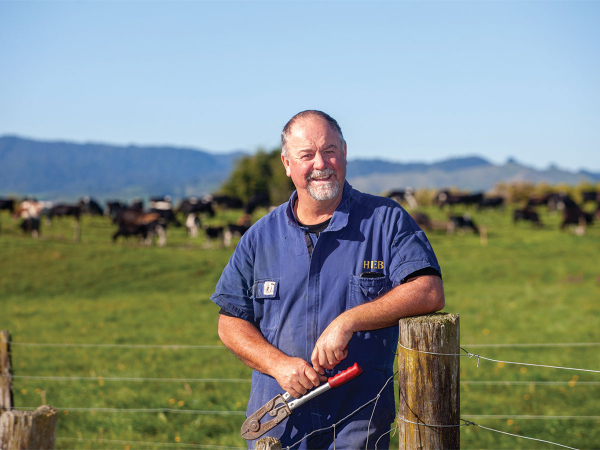 Matthew Zonderop, Waikato, is urging farmers to have a plan in place for their animals and staff.
Have a plan in place for your cows and staff.
That's the advice from Waikato Federated Farmers dairy chair Matthew Zonderop as DairyNZ warns a very strong El Niño could push farm working expenses higher.
The industry-good body warns that farm working expenses could rise to $6.78/kgMS and the national breakeven milk price to $9.07/kgMS.
DairyNZ is also urging farmers to prepare for tighter margins and potential feed shortages should an El Niño materialise.
Zonderop, sharemilking 400 crossbred cows in Te Poi near Matamata, told Dairy News that the industry good organisation has summed it up well.
"Get a plan in place, watch both the feed and financial budgets and talk with your bank and farm consultants," he says.
"The golden rule is that it's 90% planning and 10% execution."
Zonderop says it's also important for farmers to have a plan for all their livestock and staff.
"Don't forget them and your staff: cows don't perform well under heat stress and neither do we.
"Have a plan in place for both."
Zonderop is also calling for farmers to be realistic about the situation.
"Don't think rain is around the corner and 'she'll be right'. Be sensible and think of next season and not the here and now."
DairyNZ modelling shows the anticipated El Niño event adds a layer of uncertainty to a dairy season already marked by major global events and cost pressures, with the potential for drier conditions to affect pasture growth, feed supply and milk production.
Earth Sciences New Zealand (ESNZ) has confirmed El Niño conditions are developing in the tropical Pacific, with the event expected to strengthen through spring, peak in early summer and influence New Zealand's weather into autumn 2027.
DairyNZ head of economics Mark Storey says farmers are now facing the prospect of weather-related challenges on top of existing cost pressures.
"Three months ago, our focus was on the Strait of Hormuz and the impact of higher fuel, fertiliser and feed costs on farm," says Storey.
"While those pressures remain, another challenge has emerged in the form of the strong El Niño. We now need to consider what the weather could mean for pasture growth and feed supply on farm."
ESNZ chief scientist Chris Brandolino explains that this is shaping up to be a very strong El Niño, and more likely than not, the strongest on record.
"When considering previous very strong El Niño events, as well as what long-range modelling is indicating, drier-than-usual conditions are favoured over northern and eastern areas of New Zealand during spring and summer," says Brandolino.
"However, for western and lower parts of the South Island, spring and summer is likely to feature wetter than usual conditions. It's important that people stay up-to-date and regularly check for the latest outlooks and forecasts, as things may change."
In its EconTracker quarterly update, DairyNZ has modelled two El Niño scenarios - 'strong' and 'very strong' - comparing against a baseline season without significant El Niño impacts.
The modelling shows the national breakeven milk price could increase from $8.62/kgMS under the baseline scenario, to $8.90/kgMS under a strong El Niño, and $9.07/kgMS under a very strong El Niño.
Farm working expenses are also modelled to increase from $6.18/kgMS under the baseline scenario to $6.57/kgMS under a strong El Niño and $6.78/kgMS under a very strong El Niño.
"Pasture will take the first hit, creating the biggest driver of the additional cost pressure, with national feed expenses modelled to increase from $1.56/kgMS under the baseline scenario to $2.02/kgMS under a very strong El Niño," explains Storey.
Milk production is also expected to dip, rather than collapse, with national production modelled to be around 2.1% lower under a strong El Niño and around 3.3% lower under a very strong El Niño.
Westpac NZ is calling on farmers and growers to start preparing now for the possibility of a dry summer, as likely El Niño conditions raise the risk of drought across parts of the country.
Drench Options are become increasingly limited for sheep farmers, highlighting the importance of proactive parasite management planning within the wider farm system to stretch the longevity of drench as a tool.
If you're thinking about investing in ways to push feed forward, this is the year to do it.
Kiwifruit growers are watchful but remain optimistic as concerns around the potential effects of the El Niño weather pattern this season.
DairyNZ deputy chair Cameron Henderson has been re-appointed unopposed for another term.


New Plymouth-based Manuka honey exporter Egmont Honey has completed its acquisition of Taihape beekeeping business Tweeddale's Honey, with settlement finalised on Friday, 18 September.
Westpac NZ is calling on farmers and growers to start preparing now for the possibility of a dry summer, as likely El Niño conditions raise the risk of drought across parts of the country.
Fonterra Co-operative Group has confirmed the independently assessed candidates standing for election to its board in 2026.
Fonterra has revised its Farmgate Milk Price forecast for the 2026/27 season, lifting the midpoint and narrowing the range on the back of improving global dairy commodity prices.
New Zealand's citrus growers were challenged to build their future on the value embedded in their fruit rather than the volume they produce, at Citrus New Zealand's annual gathering in Gisborne on 17 September.



OPINION: It seems Canterbury processor Synlait is still in the doldrums.
OPINION: Get offside with New Zealand First leader Winston Peters at your own peril.