A Rural Vote Splitting Headache
OPINION: Farmers have felt increasingly disempowered and disregarded of recent decades. Larger farms and fewer owners have reduced the rural population.




 increase font size
 Independent fertiliser importer, Marnco's managing director Mark Been.
An independent importer says National’s fertiliser security policy will only work if protects all players.
Marnco managing director Mark Been says National’s plan has the intent right, but the risk is in its design.
As part of the election campaign, National this month announced that it would negotiate fertiliser security agreements with key supplier countries in a bid to reduce our exposure to volatile global fertiliser markets.
Marnco supplies farmers and rural retailers across both islands with imported nitrogen, phosphate and potash. It also operates in Australia.
“What has happened there is why we are speaking up now,” Been told Rural News.
This year the Australian Government set up a A$10 billion Fuel and Fertiliser Security Facility.
Been claims there was no visibility and no transparency in how it was set up.
“Access was limited to a select few, and nobody was told how they were chosen or why others were left out.
“Everyone else in the market is now competing against the Commonwealth balance sheet. The damage we have seen was caused by a taxpayer-backed facility that supports the incumbents and leaves everyone else carrying the full market risk.
“That is not security of supply. It concentrates supply,” he says.
Been points out that New Zealand already plans for fuel and energy security, and fertiliser belongs in the same category.
“Much of the nitrogen, phosphate and potash used on our farms comes across the water, and a disruption would hit every farmer.”
For New Zealand farmers, the question is what a security agreement with supplier countries protects, he says.
“If it protects every importer’s supply, farmers benefit.
“If it protects only the co-operatives, then in a disruption the market belongs to two players.”
Been adds that competition in NZ fertiliser is thin as it is.
“Independents are the reason many farmers have a second price to look at. Take them out when supply tightens and that second price disappears, at exactly the moment farmers need it most.”
Been isn’t arguing against National’s policy.
For him, it is an argument about how it gets built.
“It is far cheaper to get the design right at the start than to fix it after the first shortage, and Australia has shown how easily a well-meant facility can end up serving a narrow group.”
He has written to Agriculture Minister Todd McClay seeking equal access for every licenced bulk NZ fertiliser importer.
He also wants eligibility rules, and any list of participants made public and independent importers consulted in the design along with the two co-operatives.
“These are not big asks. They cost the taxpayer nothing and they keep the market honest.
“Farmers want fertiliser when it counts. That means supply that reaches every paddock, whoever brought it in, and a policy built with every importer in the room from day one. Getting that right now will matter a great deal more than getting the announcement right.”
OPINION: Farmers have felt increasingly disempowered and disregarded of recent decades. Larger farms and fewer owners have reduced the rural population.
OPINION: As election day looms, rural NZ seems to have pressed the pause button – held somewhat in limbo on an orange light.
Farmer lobby Groundswell believes that farmers are worried about the implications of a potential centre-left government.
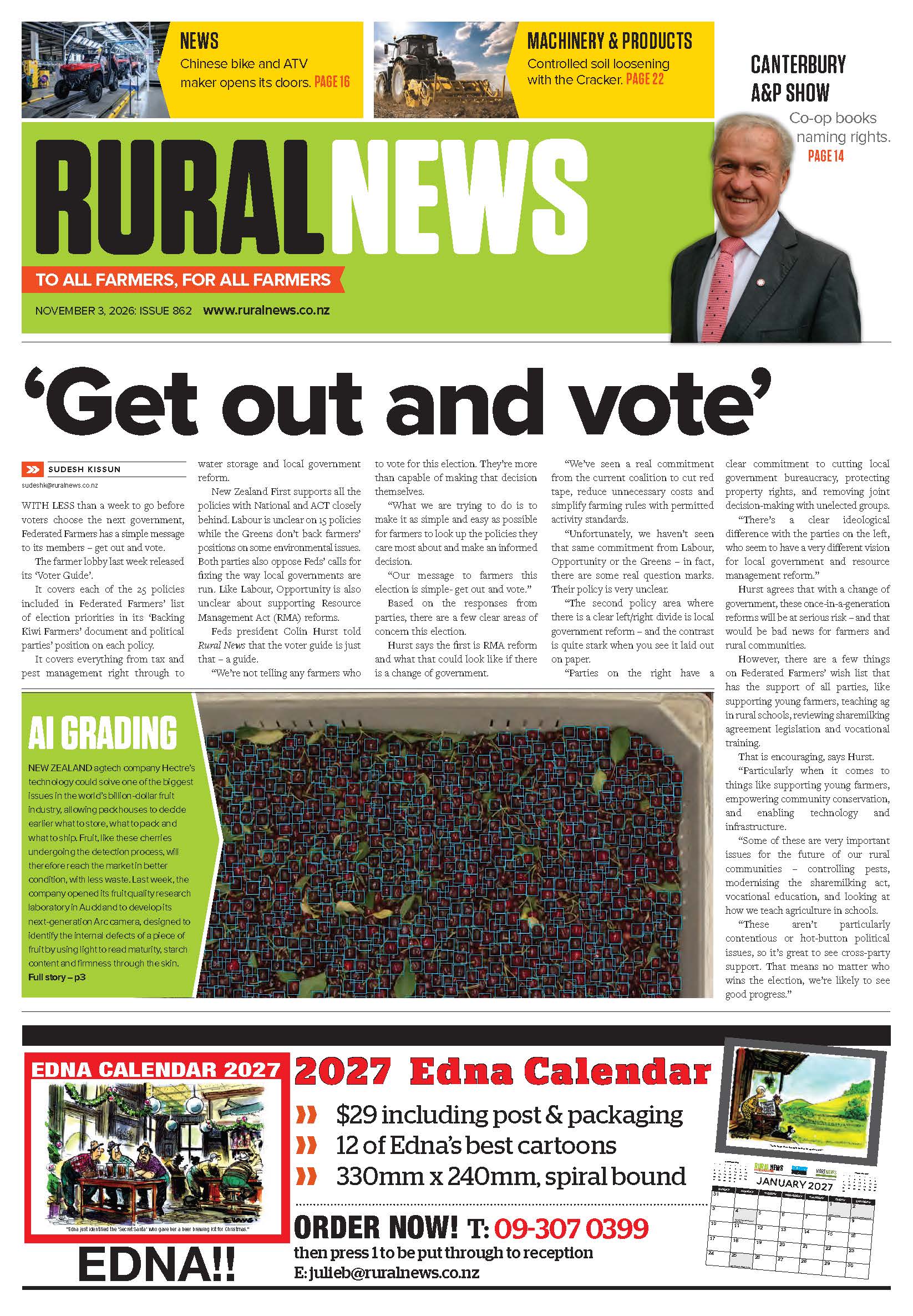
With less than a week to go before voters choose the next government, Federated Farmers has a simple message to its members - get out and vote.
For years, IrrigationNZ has called for a coordinated national approach to water security, backed by enabling regulation, strategic infrastructure investment and sound technical practice. As the 2026 general election approaches, many of these priorities are now reflected in political commitments and legislative reforms. That represents significant progress, but the real measure of success will be turning policy into practical outcomes, says IrrigationNZ principal technical officer Stephen McNally.
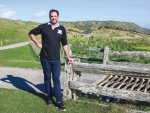


An independent importer says National’s fertiliser security policy will only work if protects all players.
Nesting birds are behind around $1.2 million worth of tractor fire claims every year, according to rural insurer FMG, which is urging farmers to check under the bonnet before starting work.
Having Ravensdown as the naming rights sponsor of the Canterbury A&P Show demonstrates their confidence in the show as a long-term venture, says Canterbury Agricultural and Pastoral Association (CAPA) board chair Sir David Carter.
OPINION: As election day looms, rural NZ seems to have pressed the pause button – held somewhat in limbo on an orange light.
Will drones be the answer to tackling the problem of wasp and hornet nests high up in trees and other inaccessible places?
Canterbury milk processor Synlait has come through tough times and is now ready to scale up from a stable base, says its newly confirmed CEO Leon Fung.


OPINION: The same mainstream media muppets that brought you Jacindamania in 2017 have been flat out pimping for the Opportunities…
OPINION: Your old mate reckons the atrocious way farmers in the UK are treated by their lords and masters in…