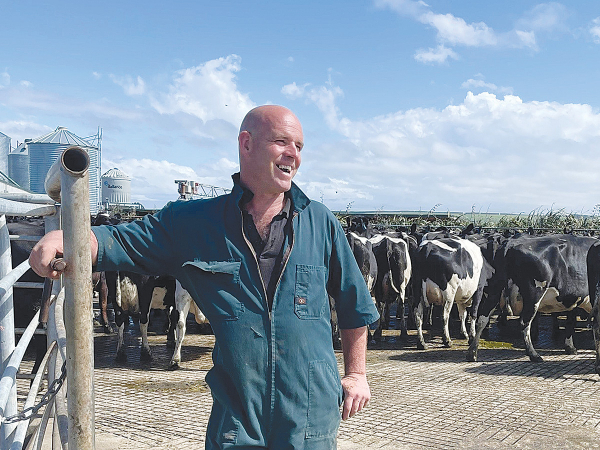
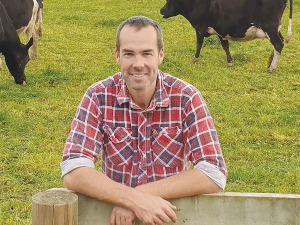
North Otago farmer Francois Tillard is among farmers who have signed up for LIC’s female genotyping service to identify their best heifer calves long before they step up to the milking platform.
When selecting the right bulls for its Sire Proving Scheme, LIC has, for the past decade or so, used DNA information to complement ancestry information – making for more accurate decisions on which young bull progeny should best-serve the industry in future.
But now the same leading-edge genomic technology is being offered to farmers who are interested in knowing who their best heifer calves are likely to be, long before the young stock steps up to the milking platform.
Knowing the DNA make-up of young progeny, including how key traits are shaping up, provides improved reliability of the young animals’ breeding values, together with an opportunity to breed from the best animals earlier (to breed the next generation of replacements at a younger age).
Farmers using the technology can utilise the same tissue sample sent to LIC for DNA parentage testing.
“For years it’s been all very well to access the best bulls through genetics suppliers like LIC, and they produce very good outcomes,” Tillard says.
“But what we as farmers control are the cows, and we just want to look after that side of the genetic equation. I want to create the very best cow I can on farm, and I’ll do that through the breeding choices I make… I’ll do that by looking at the traits I want my cows to express the most.”
Tillard is a system 5 farmer whose crossbred cows weigh between 500-520kg and produce an average of 650kg milksolids a year. He wants to breed a better cow, taking that average up to 700kg milksolids a year, without adding to the average liveweight of the cows.
“We started by getting rid of our bottom cows,” he says.
“Our next step has been nominating a bull for every cow, using Customate Plus. Once we’ve done that, we go in with genotyping and embryo transfer, and when you’re down that path there’s a fair bit of money involved, so you want to put all chance on your side to only get your above-average performers.”
He exclusively uses AB replacement semen to mate the top-50% of his 800-strong, split-calving, herd.
The new genotyping service helps him to make more secure decisions about what cows and yearlings should be used for breeding.
To form an overall picture for final decisions, Tillard says he still relies on cow-family information, which he rates as highly as the genotype information.
“I have a great daughter of a cow, 1066… all her daughters have been really good, she’s been amazing.
“She’s had a heifer and the genotyping is looking really good; that heifer has gone straight away into our ET programme before she has even been mated, because I know she’s going to be fine… there’s no way her progeny will be under performers.
“There are about 400 cows we don’t keep progeny from. In the autumn and spring, we produce 100 embryos from ET activity, so usually 40-50 of those cows will be carrying embryos. Remaining nonreplacement stock are mated to beef or short gestation dairy (final 10 days of AB)."
In terms of what he wants from his replacements, Tillard says he’s ruthless: “I want a cow that looks perfect, if there’s any suspicion about cows that are under two years old, they get culled in the autumn.”
Tillard says he chases strong udders, strong capacity, and high fat and protein breeding values.
This article first appeared in Getting the Basics Right 2023 edition.