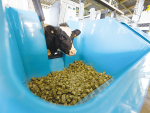
Climate-friendly cows closer
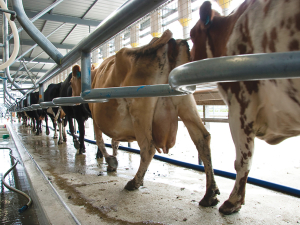
Dairy farmers are one step closer to breeding cow with lower methane emissions, offering an innovative way to reduce the nation's agricultural carbon footprint without compromising farm productivity.
 increase font size
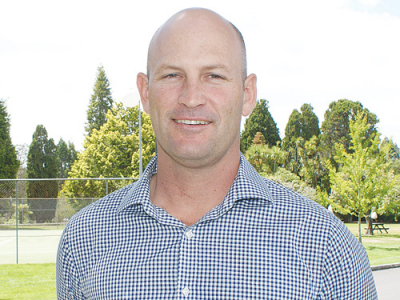 Joe McGrath.
From next dairy season CRV Ambreed will offer genetics that will guarantee the birth of polled calves.
The company reports the recent births of three homozygous polled bulls as part of its genetic development programme – the culmination of several years of controlled breeding.
R&D manager Phil Beatson says the goal was to “breed bulls that had two copies of the polled gene”.
“When the bull has two copies of the polled gene, you are guaranteed the bull’s progeny will all be polled, as all get one copy of the poll gene. Conversely, bulls with only one copy of the polled gene are referred to as heterozygous and their progeny has only a 50% chance of being polled.”
The progeny of the polled bulls will not need disbudding – a costly and time-consuming intervention increasingly under scrutiny. For instance, 200 replacements in a herd may cost as much as $1400 to disbud.
“Farmers also require their dairy cattle to have reasonably high indexes. Our three polled bulls, just born, are high indexing. Breeding polled cattle while at the same time having acceptable index is the trick,” Beatson says.
Tokoroa organic dairy farmer Ged Goode started using semen from polled bulls on his 750 Kiwi-cross herd this dairy season. He is looking forward to CRV Ambreed’s offering next season.
“The aim is to have the whole herd polled and producing A2 milk,” Goode says.
“Horns are a health and safety issue as far as the staff and animals are concerned.”
Two of CRV Ambreed’s polled bulls are Holstein-Friesian/Jersey crossbreds and one is a Holstein-Friesian bull.
Dairy farmers are one step closer to breeding cow with lower methane emissions, offering an innovative way to reduce the nation's agricultural carbon footprint without compromising farm productivity.
CRV has produced the first homozygous polled bull to make New Zealand’s prestigious Ranking of Active Sires (RAS) list, demonstrating the strides the company is making in breeding top-quality polled bulls.
As Mycoplasma bovis (M. bovis) resurfaces in Canterbury, CRV is reassuring dairy farmers it has rigorous production processes and health testing programmes in place within its supply chain.
A Canterbury Hereford stud specialising in providing beef genetics for the dairy industry is claiming a major breakthrough in breeding for more environmentally friendly animals, with reduced urinary nitrogen emissions.
Some dairy farmers could be missing out on up to 160 kgMS of production because they are not herd testing.
DairyNZ deputy chair Cameron Henderson has been re-appointed unopposed for another term.
Farms across the upper North Island are trialling different pasture mixes as part of a research programme that aims to build greater resilience into farming systems.
Election years are always a concerning time for farmers, according to DairyNZ chair Tracy Brown.
The Ballance Farm Environment Awards are coming to the West Coast of the South Island.
Most dairy regions around the country have had a pretty good season so far says Tracy Brown.