International Day of Rural Women: Two DairyNZ Farmers’ Stories
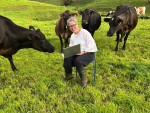
Today, 15 October, is the International Day of Rural Women, which recognises rural women’s contribution to farming, communities and the environment.
 increase font size
 It’s important to hit BCS targets at calving and minimise BCS loss before mating.
You've worked hard to get your cows in great condition for calving. Next, it’s time to make sure they stay on track for mating.
That's the message from DairyNZ animal developer Samantha Tennent.
Cows that lose more than a full body condition score (BCS) in early lactation take longer to get back in calf and are more likely to be empty.
Cows at BCS target of 4.0 (4.5 for two and three year olds) at planned start of mating have a four to five percent higher 6-week in-calf rate than cows at BCS 3.0. Put simply, cows below target BCS at mating have lower pregnancy rates.
What happens after calving?
After calving, a cow’s energy demands for lactation, maintenance and activity are greater than her energy intake. To fill this energy deficit, she mobilises body tissue (fat and muscle) and uses this to generate energy. When a cow is in this state, she’s said to be in negative energy balance and will lose body condition.
All cows enter a state of negative energy balance for six to eight weeks after they’ve calved, but it’s important they’ve stopped losing condition and are in positive energy balance before mating starts. There’s little that can be done in the first four to five weeks after calving to prevent BCS loss, and the biggest driver of BCS loss after calving is BCS and feed management pre-calving.
Keeping control
The key is to maintain adequate intakes of good-quality feed through early lactation. Cows grazing high-quality pasture during the period from calving to balance date and achieving residuals of 1500 to 1600 kilograms of dry matter per hectare, or 3.5 to 4.0 centimetres compressed height, should meet BCS targets.
 |
|---|
|
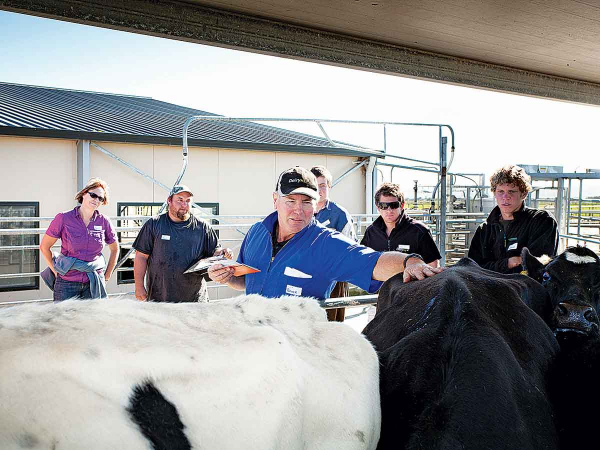
Samantha Tennent. |
It’s important to identify cows or heifers below target BCS before mating starts and implement management strategies to help them meet targets. It’s difficult to lift BCS in an early-lactating cow, but milking once daily for several weeks, while meeting energy demands, will help to improve energy balance and can lift BCS.
Even if you keep milking twice daily, separate younger, thinner cows from the herd and feed them high-quality pasture and supplements, if necessary. This eliminates competition from more dominant cows and improves the skinnier cows’ energy status and BCS.
Using supplements
If cow BCS and pasture residuals are on target, adding supplements to the diet won’t improve reproduction. However, if you need supplements, use good-quality supplements that are free from spoilage.
There’s no reproductive benefit of feeding high-starch supplements, such as grains, compared with high-fibre feeds (e.g. palm kernel expeller or pasture silage; see our article in last month’s Inside Dairy). Therefore, your decisions on supplement type should be based on the cost/benefit of the predicted milksolids response.
• Learn more at dairynz.co.nz/reproduction
Today, 15 October, is the International Day of Rural Women, which recognises rural women’s contribution to farming, communities and the environment.
The first major update to the Dairy Cattle Code of Welfare in more than a decade has been released, marking what DairyNZ describes as an important step in ensuring animal welfare standards continue to evolve alongside scientific evidence and on-farm realities.
Have a plan in place for your cows and staff.
DairyNZ deputy chair Cameron Henderson has been re-appointed unopposed for another term.
OPINION: The stats speak for themselves.



Federated Farmers has welcomed new rural policies released by ACT, saying they align closely with its own election priorities.

Rural Contractors NZ says proposed changes to land transport rules for agricultural vehicles are a welcome response by the Government to out of date regulations which have seen members hit with huge fines.
Alliance is calling for final applications for its 2027 Graduate Programme, with applications closing on Sunday 25 October.
Decades piloting planes has ensured vet and farmer David Hayes is focused on safety. So, after a serious accident while welding on farm, he is sharing his experience so others can learn from it.
Canterbury milk processor, Synlait Milk has confirmed Leon Fung as its chief executive officer.
OPINION: Making it easier to collect rainwater and use it to grow crops and livestock is a no brainer.