Susan O'Regan Appointed New Chair of QEII National Trust
Minister of Conservation Hon Tama Potaka has appointed Susan O'Regan as Chair of the Queen Elizabeth II National Trust (QEII) for a three-year term.
 increase font size
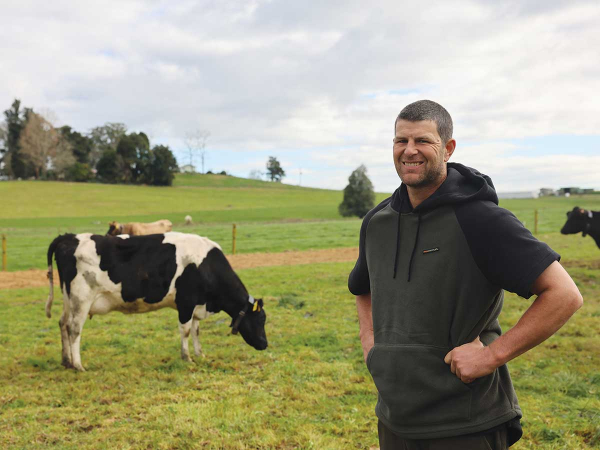 Fraser Hasnip opted for Short Gestation Length (SGL) semen through LIC to gain more days in milk.
When Fraser Hasnip returned to his family farm in Pirongia, Waikato, he saw an opportunity to do things differently.
He and his wife Claire bought the neighbouring farm with Fraser’s parents in 2013, expanding the family operation. But with his father Peter stepping back from the day-to-day running of the farm, Claire working as a nurse, and the couple raising three young children, Fraser says he had to build a farming system that was productive, efficient and simple enough to run largely on his own.
“We’re all about driving efficiencies. Whether that’s production, labour or pasture, we’re always trying to make the system better.”
One of the first changes was introducing Short Gestation Length (SGL) semen through LIC, helping tighten his calving pattern, gain more days in milk and give cows more time to recover before mating.
More than a decade later, SGL remains a key part of his breeding programme.
While many farmers reserve SGL semen for the tail end of mating, Fraser starts using it much earlier. After mating the cows he wants replacements from, he begins using SGL over the lower-performing portion of the herd from week two before switching the remainder of the herd to SGL from week four for another six weeks.
Last season, Fraser says calves conceived using SGL arrived around 12 days earlier than those conceived with conventional dairy semen. Around 80% of the herd calved within the first three weeks, giving the cows more time in milk.
"When you multiply that across your herd, it’s worth a couple of kilograms of milksolids per cow. At a good milk price, that’s worth more to me than rearing and selling a beef calf.”
Fraser has used beef genetics in the past and sees a place for beef-on-dairy where it suits other farming systems. For his own business, compact calving remains the priority.
“It’s about tightening the calving spread as much as we can, getting more days in milk and making the money.”
For Fraser, one of the biggest advantages of SGL is that cows have more time to recover before the next mating.
But he knows those extra days only create value if cows are healthy.
“If cows aren’t right, it doesn’t matter what semen you’re using. You’re going to have problems getting and keeping them in calf.”
A few seasons ago, his empty rate climbed to around 18%, forcing him to take a closer look at everything happening in the lead-up to mating.
Preparing cows for mating now starts well before AB begins. Fraser focuses on maintaining rumination through the dry period, keeping cows in good body condition with quality feed and a feed pad, and getting cows back into peak production as quickly as possible after calving.
If needed, he’ll move selected cows onto once-a-day milking for the week before mating. He also carries out regular metrichecks and gives cows a multivitamin around a month before mating.
Wearable technology has become another important tool. Fraser and Peter were among the first farmers to adopt Halter, and Fraser says using the technology to identify cows that need attention before they become a problem has been a huge help.
“The data tells you where to look. I can see whether a cow is cycling, and if she’s a good producer that I want replacements from, I can step in earlier if she needs a bit more support.”
Together, SGL, good transition management and targeted interventions have helped lift his herd’s reproductive performance. Fraser’s empty rate has fallen from around 18% to closer to 10%, while his six-week in-calf rate has lifted to around 75%.
“We’ve found a system that works. We try to keep it simple and get things right early, rather than spending heaps of money on interventions later.”
Fraser Hasnip believes genetics will play one of the biggest roles in helping him reach his next goal - increasing production from around 510kg of milksolids per cow to 550kg while keeping the system simple enough to continue running largely on his own.
His next focus is genomic testing, allowing him to identify his best replacement heifers earlier and make more informed breeding decisions. That information will help him decide which animals receive sexed semen, and which bulls are the best fit to balance the traits he wants to strengthen across the herd.
SGL will continue to play an important role alongside those decisions to keep things manageable.
“Once you’ve decided how you want to feed cows, genetics is probably one of the biggest drivers you’ve got. You’ve got to run the numbers and give things a go. We’re just always trying to improve every part of the system, so if we can get a better result by doing something differently, then it’s worth having a look."
Minister of Conservation Hon Tama Potaka has appointed Susan O'Regan as Chair of the Queen Elizabeth II National Trust (QEII) for a three-year term.
Bovine Viral Diarrhoea (BVD) is sometimes viewed as a dairy industry issue, but the reality is that the disease can have serious consequences for beef breeding herds as well.
OPINION: The stats speak for themselves.
Farms across the upper North Island are trialling different pasture mixes as part of a research programme that aims to build greater resilience into farming systems.
The Government has announced it will pause key parts of Waikato Plan Change 1 (PC1) in a decision that is set to give Waikato farmers a reprieve from new consenting and farm-planning requirements while the wider resource management system is overhauled.


Synlait has swung to second-half profit as operations stabilise, but the dairy processor still posted a $75.4m annual loss.
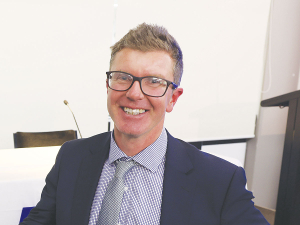
LIC shareholders have elected a new North Island representative to the co-operative's Board, along with five representatives to its Shareholder Reference Group (SRG), following the company's Annual Meeting held in Invercargill.
Farmers across parts of Southland and South Otago are continuing to deal with difficult conditions after a prolonged run of wet weather, with pressure building around feed supply, stock management, pasture damage, farm infrastructure and everyday workloads.
Federated Farmers says it welcomes Labour's commitment to reviewing the Sharemilking Agreements Act, calling on other major parties to do the same.
For Canterbury dairy farmers Sian Meijer and Rick Wobben, wearable technology has become one of their most valuable on-farm tools - helping manage 1850 cows across an expansive, high-performing dairy operation while improving efficiency, mating outcomes and day-to-day decision making.
Fonterra has unveiled its annual results for the 2026 financial year, posting $27 billion in revenue and close to $20 billion returned to New Zealand farmer owners and unit holders.