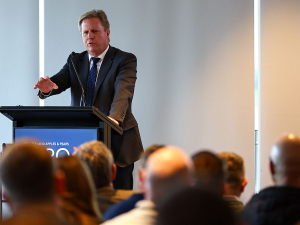
That was the message from LIC’s farm solutions manager in Whanganui/Rangitikei/Northern Manawatu, Sam Tennent.
She told a Beef + Lamb NZ dairy integration seminar near Marton last week that short-gestation semen is one way for dairy farmers to increase financial gain and create long term benefits in a herd.
Tennent says research into short-gestation semen has been going on for about ten years at LIC, across all the dairy breeds and Hereford and Angus bulls. Gestation is about 40% heritable and LIC has emphasised breeding bulls with shorter gestation breeding values.
A good example of the benefits of short-gestation semen is a farmer with 500 cows who chooses to extend the AI period by two weeks using LIC’s ‘Marker’ product. This dairy cross Hereford sire is designed to produce marked offspring highlighting the end of replacement calves being born.
“If normal submission and conception rates are assumed, this farmer could mate about 130 cows to this marker semen and have them calve on average five days earlier.
“This equates to 360 more days in milk for this herd. If we predicted the cows were averaging 1.5kgMS, and on a $6 payout, the farm could expect just over $3000 extra income, not to mention the increased time the cows have to get back into cycle before the next mating period.”
Tennent cites, as a good example, a farmer who regularly uses short-gestation semen, doing six weeks AI to premier sires, generating his replacement calves, followed by three weeks natural mating with the bull.
“He then he pulls the bulls out and tails off with a further two weeks AI to short gestation Jersey semen. He claims he is mating over 11 weeks to calve in nine weeks and enjoys how well those tail-end calves recover from calving – a lot better than using an induction.”
Tennent says short-gestation semen is popular in her region, giving farmers another option to improve profit.