Last month we talked about why dry cow management is critical, though often overlooked. This month I wanted to dive further into the dry period’s importance to udder health.
During this time, the cow’s udder repairs itself, her immune system gets back on track, and her body builds up reserves for the next lactation. If this recovery time is too short or poorly managed, cows are more likely to develop mastitis, produce lower-quality colostrum, and struggle with milk production after calving.
Understanding what happens inside the udder during the dry period helps to explain why ensuring cows have the right conditions for recovery is so important.
How the udder recovers during the dry period
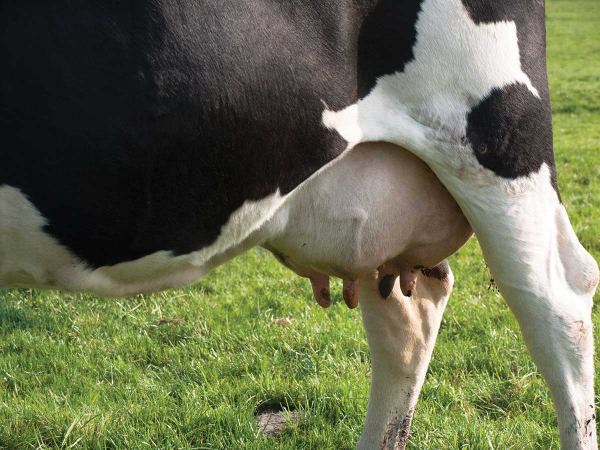
Once milking stops, the udder goes through three key stages: involution (shutting down milk production), recovery, and colostrum development.
- Involution (shut-down phase) – In the first few days after dry-off, the milk-producing cells stop working and the body begins breaking them down. The immune system responds by sending white blood cells into the udder to clear out old milk and bacteria.
- Recovery phase – Over the next few weeks, the udder rests and repairs itself. New cells develop and lactoferrin, a protein that fights bacteria, increases. If cows are milked too long into the dry period, this process is cut short, leaving them susceptible to infections like mastitis.
- Colostrum development – About three weeks before calving, the udder starts preparing for milk production again. New milk-producing cells form and colostrum starts developing. This stage is key for both the cow’s udder health and the calf’s immune system.
The role of the immune system
During lactation, a cow’s immune system is under pressure. She’s putting so much energy into milk production that her ability to fight infections weakens. The dry period is a chance for her immune system to recover, but only if she has the right support.
Mastitis risk is highest in the first few days after dry-off because the teat canal is still open, making it easy for bacteria to enter. Cows that have subclinical mastitis (an infection without obvious signs) at dry-off are more likely to carry infections into the next lactation.
Minerals such as selenium, zinc, and vitamin E help support immune function during this time. If a cow doesn’t get enough of these, her immune system won’t work as well, making it harder to clear bacteria from the udder. Research shows cows with low selenium or vitamin E levels at calving have a higher risk of mastitis.
How mineral balance affects udder health
Minerals also play a direct role in udder recovery. If levels are out of balance, cows are more likely to face health issues that impact the next lactation.
- Calcium and phosphorus – These minerals help with cell repair and muscle health, including those that keep the teat canal closed. If calcium levels drop too much at calving (milk fever), the teat canal won’t close properly, allowing bacteria into the udder. A phosphorus deficiency can build up over time and suddenly cause problems at calving, making cows slow to get up and start eating.
- Body condition and energy balance – Cows that are over-conditioned at dry-off are more likely to develop metabolic issues like ketosis in early lactation. High non-esterified fatty acids (NEFAs) from fat breakdown weaken the immune system and increase mastitis risk.
Colostrum quality and udder health after calving
Colostrum quality depends on how well the udder has recovered during the dry period. Colostrum is rich in antibodies that help protect the newborn calf from infections. If a cow has ongoing udder infections or stress during the dry period, her colostrum will be lower in antibodies, meaning her calf gets less immune protection.
The dry period is an incredibly important time for udder regeneration, immune system strengthening, and building back reserves for the next season. Rushing this recovery time or failing to provide the right nutritional support increases the risk of mastitis, weak colostrum, and poor milk production.
If we understand these biological processes, we can make better decisions to support cow health, leading to healthier cows, stronger calves, and better production in the long run.
Chris Balemi is Agvance Nutrition founder and managing director.