The farmer-owned co-op LIC says the $20 million cost to transform the business has been money well spent.
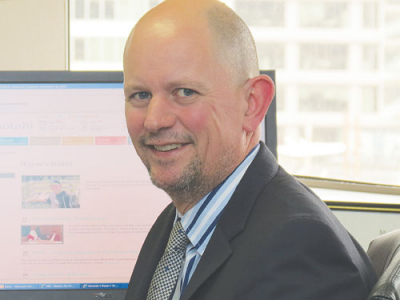
LIC chief executive Wayne McNee says the revamp is contributing to the co-op’s success: it posted record total revenue of $236m in 2017-18 -- up 16% on the previous year.
McNee, a former director-general of the Ministry of Primary Industries, says new processes put in as part of the transformation are working well.
The LIC annual meeting in Hamilton this month heard that the transformation delivered a one-off benefit of $30m and recurring benefits of $60m annually.
In his report to shareholders, LIC shareholders council chairman Mark Meyer questioned the $20m bill. He asked if the same results could have been achieved at lower cost.
LIC chairman Murray King told the meeting he didn’t believe “we could have achieved it for less”.
“If you give me an opportunity to invest $20m and turn it into $60m, surely that would be a good investment I would have thought.
“The $60m benefits are recurring; the $20.7m is a one-off cost and it won’t recur.”
Over the last year, LIC separated into two businesses -- a herd improvement company (LIC) and an agritechnology subsidiary (LIC Agritechnology Company). LIC’s core products Minda, AB and herd testing remain with the co-op. Minda is owned by the co-op but operated by the subsidiary.
It has also sold its Deer Improvement subsidiary in Otago and its herd testing and diagnostics laboratory facilities in Riverlea, Hamilton which included a leaseback arrangement to allow continued operation of LIC services at the site.
In July, LIC simplified its share structure, bringing together its existing two classes of shares into a single class of shares.
McNee says the changes accelerate LIC developing products and getting them faster to markets.
“It’s also helping us keep costs down, reflected in part in our underlying earnings.
“We definitely think it has been money well spent; we couldn’t have done as well by spending less.”
LIC embarked on the transformation after recording its first-ever loss in 2015-16 and starting to make cuts into its R&D spend.
“We didn’t want to do that so we decided to make big changes in the business.”
LIC has an ambitious R&D spending programme that will drive its sustainable growth and profitability into the future and deliver more value to its farmer shareholders.
King says LIC’s spending on R&D and innovation ($13.2 million last year) is over 5% of its revenue – well above the NZ primary sector average of 1%.