Farmers feeling less bank pressure — survey
Farmers are feeling slightly more satisfied and under less pressure from their banks, according to a new survey.
 increase font size
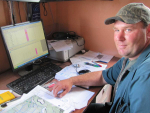
 Alastair Flett.
A farm accountant says he is getting more calls for help from dairy farmers forced to review budgets because of the lower payout.
Alastair Flett, agribusiness principal in the national accounting firm Crowe Horwath, says pressure from banks is the trigger: they want to know how much overdraft their clients need.
Flett says dairy farmers’ budgets must now be more detailed to assure the banks they are realistic. His firm spends much more time on farmers’ budgets so as to get them to ‘own’ their budgets.
“It’s not to produce a budget from figures from the past or wherever. In the past, things have been buoyant and there hasn’t been [quite the same insistence] on accurate budgets; but now the banks are requiring them.”
Often the focus is not so much on reviewing a budget as on initiating, in effect, a zero-budgeting exercise.
“For example, a sharemilker client in the South Island had a massive $500,000 cashflow deficit to try to manage. They’ve had to look at every item and strategise to change the way they operate.
“They’ve gone back to the owners supporting them but still they have an $80,000 budget deficit. They are working harder and managing the budget better to make sure everything happens.”
Flett says many farmers dislike budgeting; financial management is a weakness in the primary sector. He’d like to say 50% of his clients do cashflow budgets but he admits it’s fewer than that.
Dairy farmers don’t monitor and manage their budgets to the extent they should, given the asset value they are managing. In managing budgets he is often amazed at what he sees and the trends emerging. Careful monitoring allows action before a minor problem becomes a major issue.
“Remember also that farmers are price-takers. They sell product at the gate and co-operatives determine what they will be paid; they can’t influence what they will get on a dollar/kg basis. So a farmer must be as efficient as possible inside the farmgate, to make the biggest profit before it goes to the processing plant.”
Hard times flush out cowboys
Flett hopes the present downturn in the dairy sector will prompt a rise in farm efficiency and in the quality of business management, but he doubts it will.
“If there is a long-term downturn, yes it will happen. But if it is only short-term people will revert [to neglecting] financial management at the level required.
“Remember that most dairy farms are significant assets and dairy farmers are millionaires by default. The problem is they are not cash-rich businesses so they require a lot of hard work.
“Most farmers are very good at hands-on, but paperwork… there are few any good at it. Farmers love farming but they’re not farming because of the paperwork.”
Flett predicts 2% of dairy farmers will go out of business because of this downturn. Historic debt problems and poor financial planning and management will sink them.
Many farmers are in trouble now because they run their farms as an extension of their lifestyle rather than a business. Some farmers who have inherited a farm are not as sharp financially as they ought to be.
He gives a pungent critique of how the honey and kiwifruit industries dealt with their problems.
“When the honey industry was hit by the varroa mite, the end result was it got rid of the rogue operators and cowboys out of the industry.
“The same happened in kiwifruit: it made people more conscious of their systems and processes and of not leaving things undone.”
Farmers are feeling slightly more satisfied and under less pressure from their banks, according to a new survey.
Farmers are feeling slightly more satisfied and under less pressure from their banks, according to a new survey.
Banks should act sensibly when dealing with debt-ridden farmers, says economist Cameron Bagrie.
OPINION: High farm debt levels have cast a shadow over the Ministry for Primary Industry's positive predictions for agriculture in 2020.
The Minister of Agriculture has entered the debate on the actions of the banks labelling them as fair-weather friends.



LIC shareholders have elected a new North Island representative to the co-operative's Board, along with five representatives to its Shareholder Reference Group (SRG), following the company's Annual Meeting held in Invercargill.
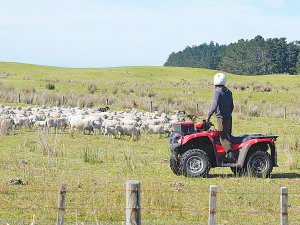
Farmers across parts of Southland and South Otago are continuing to deal with difficult conditions after a prolonged run of wet weather, with pressure building around feed supply, stock management, pasture damage, farm infrastructure and everyday workloads.
Federated Farmers says it welcomes Labour's commitment to reviewing the Sharemilking Agreements Act, calling on other major parties to do the same.
For Canterbury dairy farmers Sian Meijer and Rick Wobben, wearable technology has become one of their most valuable on-farm tools - helping manage 1850 cows across an expansive, high-performing dairy operation while improving efficiency, mating outcomes and day-to-day decision making.
Fonterra has unveiled its annual results for the 2026 financial year, posting $27 billion in revenue and close to $20 billion returned to New Zealand farmer owners and unit holders.
The first major update to the Dairy Cattle Code of Welfare in more than a decade has been released, marking what DairyNZ describes as an important step in ensuring animal welfare standards continue to evolve alongside scientific evidence and on-farm realities.