What's driving the confidence drop?
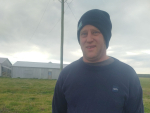
The 'longevity of uncertainty' is what's driving the lowest level of farmer confidence in more than a decade, says farming leader Ben Allomes.
 increase font size
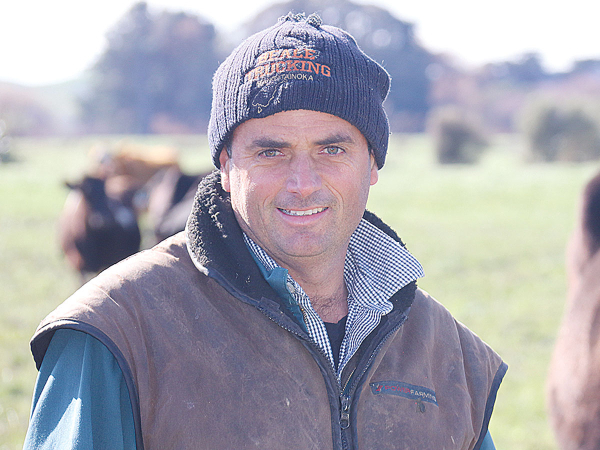 Ben Allomes says farmers can to some degree control their costs, but when it comes to income, they are price takers.
I'd rather have cost inflation than income deflation, says Woodville dairy farmer and former industry leader, Ben Allomes, in response to the present crisis facing dairy farmers.
Farmers were recently told by Fonterra that the forecast milk price midrange was dropping by $1 to $7/kgMS.
Allomes told Dairy News that over the last 20 years he’s been through this sort of cycle at least five times.
He says people have to remember that it’s almost a year until the final payout day for the sector and, in the meantime, farmers should be prudent in regards to farm expenses.
But he admits that farming today is much harder than it was 20 years ago because the standards are higher.
“There are certainly more hoops to jump through. We expect more from ourselves, but I also think the expectations of our community are higher,” he says.
Allomes says farmers should be looking at ways of boosting their incomes while at the same time reducing their costs, and they need a very accurate picture of where they are financially.
He says farmers can to some degree control their costs, but when it comes to income, they are price takers. Allomes points out that it is income that drives profit and when this drops below the cost of running the business, that’s when there are problems.
“Personally, we are looking at rearing extra calves this year to try to boost our income. At the same time, we are running through line by line – what do we need. But you can’t cut into the essential stuff because that just puts more risk on the business in the future,” he says.
He says downturns are cyclical and in the past the good years have made up for the bad years. But the current situation is different because farmers have run out of ‘get out of jail free cards’.
Allomes says, in the past, increasing land values and land-use changes helped to get farmers through tough times.
He says in the present tough environment with high interest rates and other costs, it is almost impossible to make any fundamental changes on farm.
“As I see it, the only way to get out of the present situation is to farm our way out of it with hard yakka,” he says.
Status Quo No Longer Works
In his own case, Ben Allomes has redesigned his business over the last five years to create a new system, far more sustainable for people, the environment and his animals.
He’s involved in a trial that is putting all that to the test through Farmax, Overseer and Dairy Base. He’s also in a trial using plantain, and has adapted a more flexible roster system for staff.
“Looking after staff and retaining them is key to the business because in time they get to know the systems and the levers that need to be pulled to keep it on track.
Another key survival tool, says Allomes, is having good data and using it properly. He says it’s about understanding the specific soils of the farm and the various weather patterns – be it El Nino or La Nino.
While we may not be 100% accurate in this regard, it will help, he adds.
“We must focus on trying to develop systems which fit the environment, rather than hoping the environment will fit our systems.”
He says they have to be more logical and efficient and focus on the direction of travel, meeting the demands of the market.
He says people need to go with change and not advocate for the status quo. “Any farmer who thinks they can live with the status quo is just fooling themselves,” he says.
The 'longevity of uncertainty' is what's driving the lowest level of farmer confidence in more than a decade, says farming leader Ben Allomes.
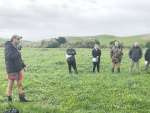
Woodville dairy farmer Ben Allomes says the adoption of plantain has been a game changer for his farm system and business.
Democracy by stealth – that’s how a highly-respected dairy industry leader Ben Allomes is describing the present Government’s consultation with farmers over agricultural emissions and other issues.
A dairy industry leader is calling on Prime Minister Jacinda Ardern to take the pressure off farmers and give them more time to properly understand and digest the huge raft of changes that the Government is trying to push through before next year's election.
Under pressure from drought and COVID-19, Woodville dairy farmer Ben Allomes says: ‘we can’t shut our doors and just walk away’.
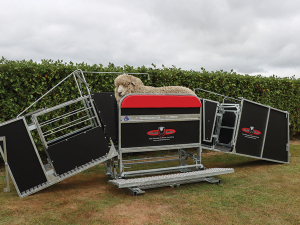
Oamaru-based livestock handling specialist Te Pari has bought Combi Clamp, the New Zealand manufacturer of Combi Clamp manual sheep handlers.
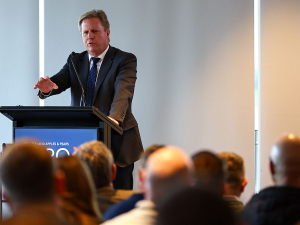
Agriculture Minister Todd McClay has admitted that a scheme bringing workers from Pacific nations to work on orchards has become too hard to navigate but says changes are coming.
A new app designed in New Zealand aims to help sheep, beef and deer farmers capture, analyse and use body condition score data more effectively.
Canterbury farmer Andy Macfarlane has been appointed to the board of AgriZeroNZ, the public-private partnership designed to accelerate the development and deployment of emissions reduction tools for New Zealand farmers.
For over 50 years Mel Ewers has been supporting the apple sector navigate through compliance and quality assurance issues.
The apple sector is enjoying a bumper harvest season.