Early Weaning Lambs: What the Massey Trials Found
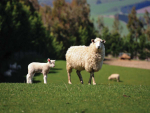
Farmers with high-quality feed available in late spring could consider weaning at least a proportion of their lamb crop early to benefit both lambs and ewes.
 increase font size
A dairy industry leader believes eradicating the common and costly disease, Bovine Viral Diarrhoea (BVD) is within reach.
LIC chief executive David Chin says farmers are doing a great job in tackling BVD, pointing out that when LIC launched BVD testing in 2009, the percentage of herds with a positive BVD animal was as high as 29% in some regions. That figure is now down to under 5%.
He attributes this to many years of Kiwi dairy farmers “doing the hard graft of testing, culling and staying on top of it”.
“BVD has been a handbrake on productivity in this country for too long. This is proof we can take that handbrake off,” he told Dairy News.
The NZ dairy industry is a world leader when it comes to eradicating and containing diseases. It eradicated Enzootic Bovine Leucosis (EBL), which caused cancerous tumours in cows, in 2009 from a 12-year campaign.
The industry remains on track to eradicate Mycoplasma bovis by 2028 after a 10-year campaign
LIC, though its growing diagnostics testing business, monitors diseases like BVD.
“We are not seeing the rates of infection that we were when we first started the scheme,” says Chin.
“We’ve got that prevalence down to such a low level.
“Why don’t we get together and eradicate this disease? It’s yet another thing we don’t have to worry about on farm. I think it’s absolutely possible.”
Chin points to the industry’s track record in dealing with diseases.
“We’ve eradicated EBL from the herds. That’s a disease which causes cancerous lymphoma. We’ve done a great job of M. bovis.
“No one in the world thought that you could eliminate M. bovis. I reckon we’re almost there: we’re not seeing positive bulk milk tests.
“BVD would seem to me to be the next thing that we can eliminate.”
If achieved, a BVD-free herd would save the country nearly $200 million a year, according to a report from the BVD Free Committee.
Chin believes eradicating BVD should be on everyone’s agenda.
Farmers also need to be vigilant. For example, if they bring in a natural mating bull with BVD, the disease can spread through the herd. Once BVD returns, a farmer needs to start all over again to eradicate the disease from the farm.
Chin says every farmer he speaks to wants to eradicate BVD.
He attributes the success with tackling BVD so far to good understanding between farmers, vets, and the testers about what’s required.
Chin adds that BVD is a relatively straightforward disease to get rid of.
“And we’ve evolved the testing: we’ve gone from individual animal testing to bulk milk testing.
“So, we’ve got monitor programs in place already. Farmers already see the value of doing it.”
His message to farmers is to insist on a BVD test before buying a bull.
“Farmers must say that if you’re selling me bulls, I’m not even looking at them unless you confirm a BVD test.
“That’s just what’s required now. It’s like when you’re buying a car, it’s just got to have a seatbelt. It’s not a thing that we want to negotiate on.”
Farmers with high-quality feed available in late spring could consider weaning at least a proportion of their lamb crop early to benefit both lambs and ewes.

LIC shareholders have elected a new North Island representative to the co-operative's Board, along with five representatives to its Shareholder Reference Group (SRG), following the company's Annual Meeting held in Invercargill.
The first major update to the Dairy Cattle Code of Welfare in more than a decade has been released, marking what DairyNZ describes as an important step in ensuring animal welfare standards continue to evolve alongside scientific evidence and on-farm realities.
Bovine Viral Diarrhoea (BVD) is sometimes viewed as a dairy industry issue, but the reality is that the disease can have serious consequences for beef breeding herds as well.
Animal health company Bovonic is gearing up for its next stage of growth after increasing New Zealand sales of QuadSense by more than 50% in the last 12 months, including a record quarter for the business this year.

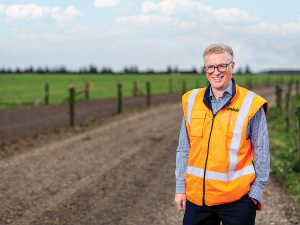
Synlait's longest serving employee – a man who joined the Canterbury-based milk processor even before it began processing milk – is now its newest executive.
A dairy industry leader believes eradicating the common and costly disease, Bovine Viral Diarrhoea (BVD) is within reach.
A farmgate milk price of $10/kgMS this season is firming up as milk powder prices soar and the New Zealand dollar weakens.
Federated Farmers has welcomed new rural policies released by ACT, saying they align closely with its own election priorities.
Rural Contractors NZ says proposed changes to land transport rules for agricultural vehicles are a welcome response by the Government to out of date regulations which have seen members hit with huge fines.
Alliance is calling for final applications for its 2027 Graduate Programme, with applications closing on Sunday 25 October.